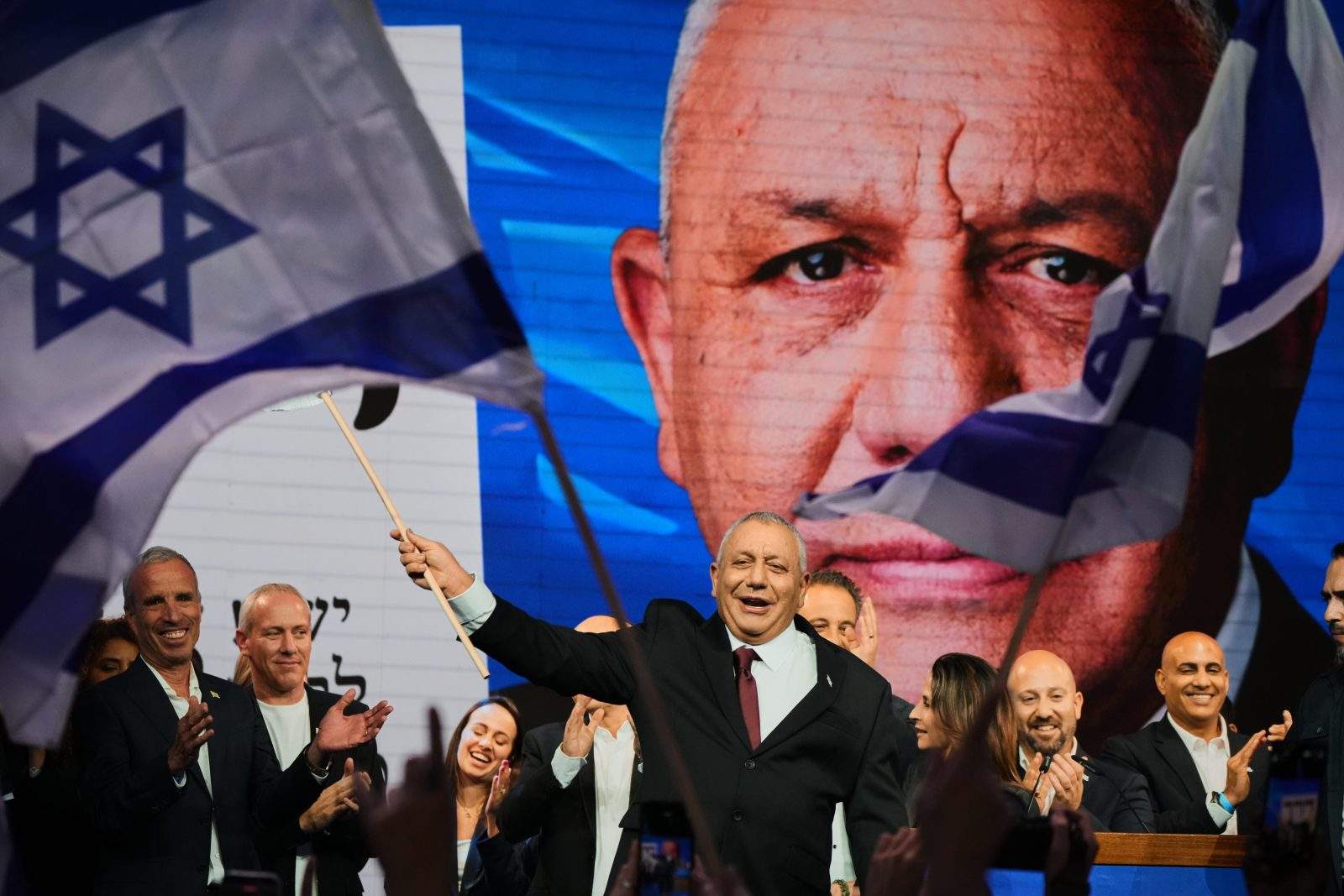
Every political pundit in Washington is treating the idea of Dana White at the White House podium like a punchline. They see a fight promoter in a black t-shirt yelling at reporters and assume it is just another celebrity stunt designed to troll the establishment press corps.
They are completely missing the point. If you found value in this post, you should check out: this related article.
According to reports circulating around political and sports media—referencing a moment where Donald Trump playfully urged the UFC CEO to "please take the job" of White House Press Secretary—the mainstream reaction has split into two predictable, lazy camps. On one side, critics view it as the final collapse of institutional decorum. On the other, loyalists cheer it as the ultimate middle finger to legacy media.
Both sides are asking the wrong question. They are debating whether Dana White could do the job, or whether he should be allowed near the James S. Brady Press Briefing Room. The real story is structural: the modern White House press apparatus is fundamentally broken, Dana White’s specific brand of media warfare actually exposes why, and—most importantly—the economics of combat sports make taking a government salary one of the worst business decisions a human being could possibly make. For another perspective on this event, check out the recent coverage from BBC News.
The Lazy Consensus on Political Communications
To understand why the Beltway press class misunderstands the UFC boss, you have to look at how traditional political communications actually operates. For decades, the role of the Press Secretary has been built on a foundation of controlled ambiguity. You hire a polished operative—someone trained at Georgetown or seasoned on Capitol Hill—whose primary function is to absorb hostile questions, recite pre-approved talking points, and survive the news cycle without creating an unforced error.
I have watched corporate communications teams and political shops burn millions of dollars on this exact playbook. They hire crisis consultants to sand down every sharp edge until a leader sounds like a press release read aloud by a text-to-speech engine. The assumption is that polish equals credibility.
In practice, that polish has destroyed public trust. When an audience watches a spokesperson dodge a simple yes-or-no question for four minutes using bureaucratic syntax, they do not see discipline. They see evasion.
Dana White represents the exact inverse of that model. Over more than two decades leading the Ultimate Fighting Championship, White built a global combat sports empire not by soothing the press, but by treating sports journalists as an active foil in his promotional ecosystem. When a reporter asks a question he dislikes at a post-fight press conference, he does not pivot to a talking point. He attacks the premise of the question, calls out the reporter’s outlet by name, and turns the exchange itself into viral content.
Political commentators look at that behavior and assume it would fail in Washington because it violates the rules of the briefing room. What they fail to recognize is that the rules of the briefing room only matter if the audience still respects the room.
Deconstructing the Dana White Media Doctrine
If you strip away the profanity and the fight-week theatrics, White’s communications strategy relies on three distinct mechanics that modern political operatives rarely execute well:
- Direct-to-Audience Bypass: Long before politicians realized they could skip network interviews for long-form podcasts, White understood that traditional gatekeepers were losing distribution power. He used the UFC’s own digital channels, raw behind-the-scenes vlogs, and direct social media responses to speak straight to fans, rendering hostile sports columnists largely irrelevant to his bottom line.
- Asymmetric Conflict Framing: In traditional public relations, if a journalist writes a hit piece, the standard advice is to issue a measured statement or ignore it so you do not amplify the criticism. White does the opposite. He amplifies the critic, puts their face and words on blast in front of millions of followers, and forces the public to choose sides. In an attention economy, polarization is fuel.
- Radical Clarity on Business Reality: Whether defending fighter pay structures, pushing through live events during global lockdowns, or negotiating broadcast rights deals with ESPN and TKO Group Holdings, White rarely hides behind corporate jargon. Even when critics fiercely disagree with his position, they never leave a press conference wondering what his position actually is.
Imagine a scenario where that exact operating system is dropped into the West Wing briefing room. A correspondent from a major network asks a leading question framed around an anonymous source. Instead of saying, "I don't have anything for you on that today," the person at the podium asks the reporter to name the source on live television, questions the network's ratings, and moves on to an independent podcaster in the back row.
For traditionalists, that is a nightmare. For a populist political movement built on fighting institutional media, it is pure rocket fuel. That is why Trump floated the idea in the first place. It was not random banter; it was an acknowledgment that White already runs the exact communications playbook that populist politics aspires to replicate.
Why the Critics Are Actually Right About One Thing
Here is where the contrarian argument requires an honest reality check. While White’s style would dominate the attention economy, transplanting a fight promoter into the West Wing comes with massive structural liabilities that supporters conveniently ignore.
A UFC press conference and a White House briefing serve fundamentally different purposes. When White misstates a detail about a lightweight title contender or gets into a shouting match with a beat writer, nobody’s currency devalues and no diplomatic treaties unravel.
In the White House, the Press Secretary is not just a domestic media brawler. Every word spoken from that podium is parsed in real time by foreign intelligence agencies, central banks, bond markets, and military allies. Ambiguity in Washington is not always cowardice; often, it is deliberate strategic deterrence. When a spokesperson refuses to answer a hypothetical question about troop movements or trade tariffs, they are preserving diplomatic maneuvering room for the President.
A communications style built on absolute bluntness and zero filter collides violently with national security realities. You cannot tell a foreign adversary to "go start their own country" the way you tell a disgruntled fighter to go start their own promotion. Furthermore, the federal government operates under strict statutory frameworks—the Hatch Act, Freedom of Information Act rules, and formal interagency clearance processes—that make unilateral, off-the-cuff governance a legal minefield.
The Real Reason It Will Never Happen
Even if you ignore the diplomatic risks and the institutional friction, there is one undeniable fact that ends the entire conversation before it starts: the math does not work.
Political pundits love talking about power and proximity to the presidency as the ultimate currency. In reality, high-level executives look at compensation, equity, and operational control.
Let’s look at the numbers:
| Metric | White House Press Secretary | CEO of UFC (TKO Group Holdings) |
|---|---|---|
| Annual Cash Compensation | ~$180,000 (Executive Schedule ceiling) | Multi-million dollar base + performance bonuses |
| Equity & Wealth Creation | Zero (strict ethics divestment rules) | Significant equity stake & massive payout history |
| Operational Control | Serves entirely at the pleasure of the President | Complete command over matchmaking, media & brand |
| Public Scrutiny & Ethics Rules | Total financial disclosure & divestment mandates | Private sector autonomy (subject to SEC governance) |
Taking a senior White House role is not a promotion for someone sitting at the top of a multi-billion-dollar publicly traded sports conglomerate. Under federal ethics laws, accepting a senior executive branch appointment requires extensive financial disclosures and often forces appointees to divest from assets that present conflicts of interest. Given the massive scale of TKO Group Holdings, the UFC's global sponsorship roster, and White's personal business ventures, untangling those holdings to take a government salary capped under $200,000 a year would be financial self-sabotage.
Worse than the pay cut is the loss of autonomy. At the UFC, Dana White is the undisputed boss. When he speaks, he is speaking for the organization he built from a $2 million distressed asset into a global juggernaut. As Press Secretary, you do not own the message. You are an employee executing someone else's strategy, forced to defend policies you did not design and clean up messes you did not make. No alpha executive who has spent twenty-five years answering to no one voluntarily signs up to be a human shield for a government bureaucracy.
What People Actually Miss About the Trump-White Dynamic
When people search for why Donald Trump wants Dana White in his administration, they usually look for a transactional political favor. They assume it is about rewarding a loyal ally who spoke at multiple Republican National Conventions and stood by him during moments of intense political isolation.
That misses the deeper symmetry between the two men. Both built their public personas in industries—New York real estate and prize fighting—where spectacle, bravado, and direct confrontation are survival skills. Both understand that in modern media, being hated by the right people is just as profitable as being loved by your base.
Trump does not actually need Dana White behind the White House podium to get the benefit of Dana White. Having the head of the UFC sitting cageside with the President at Madison Square Garden, broadcast to millions of young male viewers who never watch cable news, is infinitely more valuable to a political brand than having him field questions about agricultural subsidies from the White House press corps.
The pundits obsessing over whether Dana White will ever trade his black t-shirt for a suit and tie at the Brady Briefing Room are watching the wrong fight. White already has the exact job he wants, the exact platform he needs, and total control over his own empire. Why on earth would he take a 99% pay cut just to argue with reporters he already ignores for free?