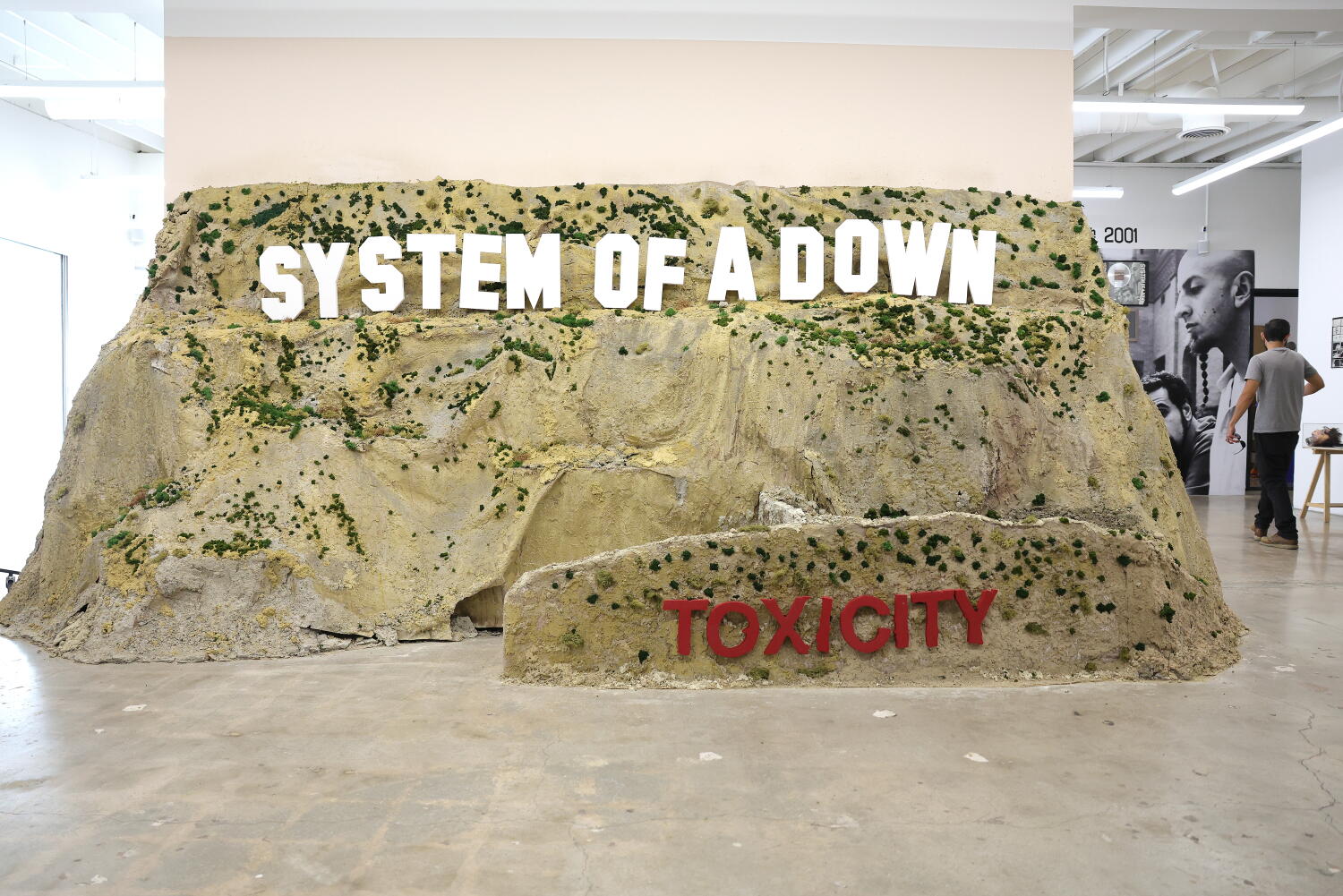
System of a Down released Toxicity on September 4, 2001, debuting at number one on the Billboard 200 chart with initial sales exceeding 220,000 units in its opening week. The album achieved multi-platinum status, eventually crossing global sales figures of over 12 million copies. Beyond raw commercial metrics, the record established a structural anomaly in modern heavy music by marrying discordant Armenian folk scales, rapid tempo shifts, and politically subversive lyricism with mainstream hard rock production. Two and a half decades later, the twenty-fifth-anniversary exhibition hosted by Beyond the Streets in Los Angeles offers an opportunity to deconstruct the operational mechanics behind the album's longevity and cultural footprint.
The Tripartite Architecture of Commercial Longevity
Cultural artifacts that survive twenty-five years of industry fragmentation typically share three distinct structural advantages. Toxicity is no exception, relying on a framework that unites technical precision, sociopolitical timing, and branding independence.
The first pillar is sonic dissonance framed by high-accessibility hooks. Daron Malakian and Serj Tankian constructed compositions where aggressive thrash structures collapse directly into melodic vocal harmonies. Tracks like Chop Suey! and Toxicity bypass standard verse-chorus predictability through mathematical rhythm changes, yet anchor themselves with vocal cadences that remain memorable. This structural tension prevents auditory fatigue, allowing listeners to discover new layers across repeated exposures.
The second pillar involves the synchronization of lyrical themes with systemic global anxiety. Released immediately prior to the geopolitical shifts of late 2001, the album's commentary on state incarceration, mass media manipulation, and urban decay was not speculative fiction; it was an accurate diagnosis of late-capitalist friction. By avoiding temporal pop-culture references, the lyricism retained its diagnostic utility. A song critiquing prison-industrial expansion in 2001 retains identical structural relevance during contemporary legislative debates over mass incarceration.
The third pillar is visual and aesthetic sovereignty. From the iconic billboard layout of the album cover to the subversive music videos directed by major auteurs, the visual language of the era avoided standard rock tropes. Collaborating with subculture institutions like Beyond the Streets for milestone retrospectives works because the band's initial brand positioning was rooted in fine art, graffiti aesthetics, and anti-establishment iconography rather than traditional corporate merchandising pipelines.
The Economic and Cultural Cost Function
Evaluating the legacy of a record requires analyzing the trade-offs inherent in its creation. Mainstream success in the early 2000s major-label ecosystem typically demanded conformity to radio formatting constraints, lyrical sanitization, and continuous promotional touring. System of a Down rejected these operational standards while operating inside a major label structure.
[Underground Alternative Roots]
       │
       ▼ (Dissonant Scales + Political Lyricism)
[Major Label Distribution (American/Columbia)]
       │
       ▼ (Zero Radio Formatting Conformity)
[Commercial Outlier: Billboard #1] ──► [Long-Term Cultural Asset]
This dynamic generated a high-friction environment. The band's refusal to moderate their political messaging or smooth out their stylistic edges created a high-risk operational model. Had the target demographic rejected the jarring shifts between thrash metal and choral harmonies, the album would have faced commercial failure. The risk was offset by absolute internal creative control, an asset rarely granted to multi-platinum acts.
Furthermore, the physical archive of the era—showcased in recent institutional retrospectives—reveals an obsessive attention to ephemera, hand-written lyric sheets, and distinct visual design. In an industry where digital streaming compresses musical output into undifferentiated data streams, physical artifacts act as scarcity anchors. They provide measurable proof of an era when physical formats demanded tangible manufacturing investment.
Systemic Limitations of Retroactive Cultural Analysis
Attempting to quantify the impact of a twenty-five-year-old album through modern curatorial lenses introduces analytical blind spots. Institutionalizing counter-cultural artifacts inside urban art galleries creates an inherent paradox. A record born out of vehement opposition to corporate commodification is subsequently celebrated via commemorative vinyl variants and high-profile gallery pop-ups.
This transition from active disruption to historical artifact changes the consumption mechanism. Modern audiences engage with Toxicity not as an immediate threat to the status quo, but as a finalized historical monument. The raw unpredictability that defined their live performances in 2001 cannot be fully replicated within the sterile parameters of a controlled museum installation.
Strategic Forecast and Long-Term Value Retention
As the catalog value of legacy rock assets continues to appreciate through institutional archiving and premium physical reissues, the economic model of bands like System of a Down offers a clear blueprint for modern creators. True asset durability does not stem from trend alignment, but from structural refusal to conform to prevailing market norms.
Creators seeking multi-decade relevance must prioritize uncompromising stylistic differentiation over algorithmic optimization. The long-term retention of cultural equity requires building works dense enough to withstand repeated deconstruction by successive generations of analysts, musicians, and listeners.


