The return of fallen service members to United States soil is not merely a ceremonial event; it is a high-stakes intersection of Department of Defense (DoD) logistical precision, executive signaling, and the reinforcement of the social contract between the state and its volunteer force. When an incumbent or incoming Commander-in-Chief attends a "dignified transfer" at Dover Air Force Base, the action functions as a primary mechanism for validating the human cost of specific foreign policy objectives. This process, governed by Air Force Instruction 34-160 and various mortuary affairs protocols, represents the final tactical movement of a deployment, shifting from active combat operations to the administrative and honors-based phase of military service.
Understanding the gravity of these events requires a deconstruction of the Repatriation Value Chain, which involves the rapid transition from the theater of operations to the Port Mortuary at Dover. This facility serves as the sole point of entry for all fallen Department of Defense personnel, ensuring a standardized level of forensic identification and preparation that eliminates regional variance in honors.
The Structural Components of the Dignified Transfer
A common misconception is that a dignified transfer constitutes a "funeral service" or a "ceremony." In technical military terms, it is a "transfer of remains" from an aircraft to a waiting vehicle. The distinction is critical for maintaining the neutrality of the Air Force Mortuary Affairs Operations (AFMAO). The process is defined by three specific operational pillars:
- The Custodial Chain of Command: From the moment of death, a Summary Court Officer (SCO) is appointed to manage the personal effects and legal transition of the deceased. The physical movement is overseen by a carry team, typically consisting of six service members from the same branch as the fallen.
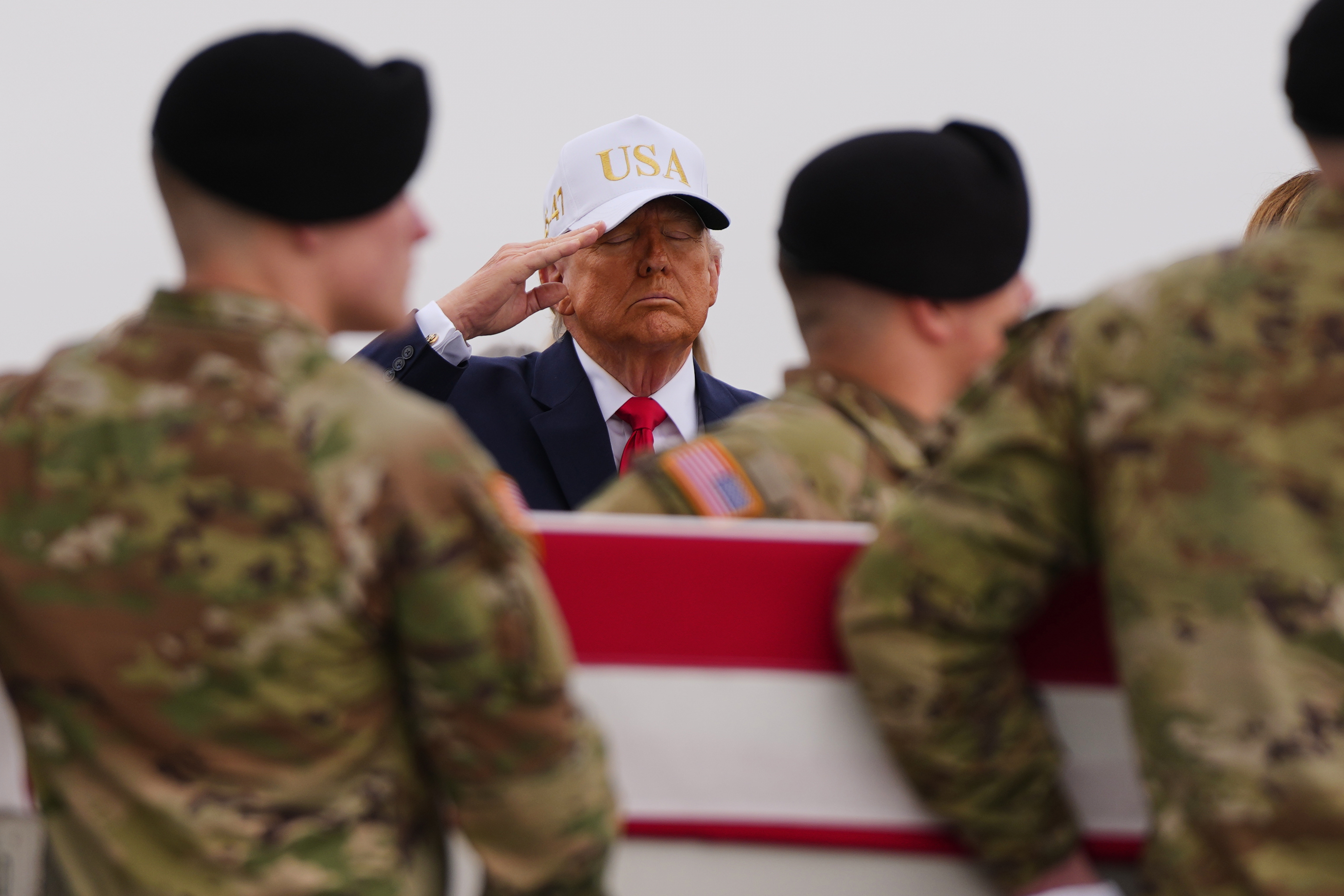
- The Executive Presence Variable: While the presence of the President is not a regulatory requirement, it serves as a qualitative weight to the event. The decision to attend is a strategic choice that aligns the executive branch with the consequences of the National Command Authority’s (NCA) directives.
- The Media Access Protocol: Historically, the "Doover Ban" (enforced from 1991 to 2009) prohibited media coverage of these transfers. Current policy allows for media presence only if the primary next of kin (PNOK) grants explicit consent. This creates a data-driven reflection of national sentiment; the percentage of families opting for media coverage often correlates with public perception of the conflict’s legitimacy.
Logistics of the Dover Port Mortuary
The Port Mortuary at Dover Air Force Base is the largest of its kind in the world, operating under a high-intensity throughput model during periods of active kinetic conflict. The facility operates with a dual-track objective: forensic certainty and aesthetic restoration.
The process begins with Inbound Tactical Arrival. The aircraft, often a C-17 Globemaster III, is met by the official party. The silence maintained during this movement is a mandatory atmospheric constraint, designed to eliminate the distraction of military pomp in favor of somber technical execution.
Following the transfer, the remains enter the Forensic Integration Phase. This involves:
- DNA Verification: Utilizing the Armed Forces Medical Examiner System (AFMES) to ensure 100% accuracy in identification, a baseline requirement for legal death certification.
- Restorative Art: Specialized mortuary technicians perform reconstructive procedures to facilitate "viewable" remains for the family whenever possible, a factor that significantly impacts the long-term psychological resilience of the Gold Star families.
- Uniform Preparation: Precise adherence to uniform regulations, including every earned decoration and ribbon, serving as a final audit of the individual’s professional contributions to the state.
The Geopolitical Signaling of Executive Attendance
When a political leader, such as a President-elect or a sitting President, stands on the tarmac at Dover, they are engaging in a form of Kinetic Accountability. The act of witnessing the transfer of six soldiers, for instance, provides a physical quantification of policy failure or sacrifice.
This attendance affects three distinct audiences:
- The Internal Military Audience: It reinforces the "leave no one behind" ethos, signaling to the rank-and-file that the highest level of command recognizes the ultimate price of their mission set.
- The Domestic Electorate: It serves to humanize or justify the costs of interventionism. The visual of flag-draped transfer cases (not "coffins," in military parlance) is a powerful rhetorical tool that can either dampen or galvanize support for continued military engagement.
- Adversarial State Actors: It signals a nation’s resolve. The willingness to publicly acknowledge and honor significant losses can be interpreted by adversaries as a commitment to a protracted conflict, rather than a sign of weakness.
Casualty Patterns and Force Protection Metrics
The return of six soldiers in a single event typically indicates a specific failure in force protection or a successful high-yield attack by an adversary, such as an Improvised Explosive Device (IED) on a high-occupancy vehicle or a "Green-on-Blue" incident.
In analyzing the impact of such losses, military planners look at the Casualty Replacement Ratio and the Unit Integrity Factor. The loss of six personnel from a single squad or platoon can render a unit combat-ineffective (COMIN) due to the loss of specialized skill sets and the psychological degradation of the remaining force. This necessitates an immediate assessment of the Operational Tempo (OPTEMPO) and whether the mission parameters need to be adjusted to prevent further attritional losses.
Structural Limitations of the Repatriation Process
Despite the precision of AFMAO, several bottlenecks and limitations exist within the system:
- The Geographic Latency: Depending on the theater of operations (e.g., Central Command vs. Africa Command), the time between the casualty event and the dignified transfer can vary from 48 to 96 hours. This delay affects the "freshness" of the forensic evidence and the timeline for family notification.
- The Identification Bottleneck: In cases of catastrophic trauma, the AFMES may require extended periods for dental or DNA matching, delaying the transfer and creating a period of "liminal grief" for the families.
- The Political Instrument Risk: There is a persistent risk that the dignified transfer becomes a tool for political theater. When the focus shifts from the service member to the attendee's reaction or the optics of the event, the protocol’s primary purpose—honoring the fallen—is compromised.
The Economic Cost of Military Mortality
While the human cost is immeasurable, the institutional cost is quantifiable. The DoD provides a Death Gratuity—a tax-free payment of $100,000—within 24 to 36 hours of the death. This is followed by the Servicemembers' Group Life Insurance (SGLI) payments, which cap at $500,000.
Beyond direct payments, the "Replacement Cost" of a trained soldier involves:
- Initial Entry Training (IET): Averaging $50,000 to $75,000 per soldier.
- Specialized Skill Training (MOS): Can range from $100,000 to over $1,000,000 for technical roles or special operations.
- Combat Experience Value: The most significant, yet least quantifiable, loss is the "Tacit Knowledge" acquired during deployments, which cannot be replaced by new recruits.
The repatriation of six soldiers thus represents a multi-million dollar loss in human capital investment, alongside the profound social and familial disruption.
Strategic Implications for Command Decisions
The movement of remains through Dover is the final data point in a mission’s lifecycle. For leadership, the "Dover Test" remains the ultimate gauge of foreign policy sustainability. If the rate of dignified transfers exceeds the public's "Tolerance for Attrition," the political viability of the mission collapses, regardless of the tactical successes on the ground.
Future operations must prioritize the Survivability Envelope of ground forces through increased investment in autonomous logistics and remote sensing to reduce the frequency of these transfers. The objective is not just to win the conflict, but to minimize the volume of throughput at the Port Mortuary, thereby preserving both the force and the domestic political will required to sustain long-term national security objectives.
The strategic play here is a pivot toward Over-the-Horizon (OTH) capabilities. By reducing the physical footprint in high-threat environments, the National Command Authority can achieve its objectives while mitigating the specific casualty events that necessitate the somber proceedings at Dover. Command must balance the necessity of "boots on the ground" with the inevitable reality that every deployment carries the statistical probability of a return through the Port Mortuary—a reality that requires the highest level of executive discipline and logistical excellence.