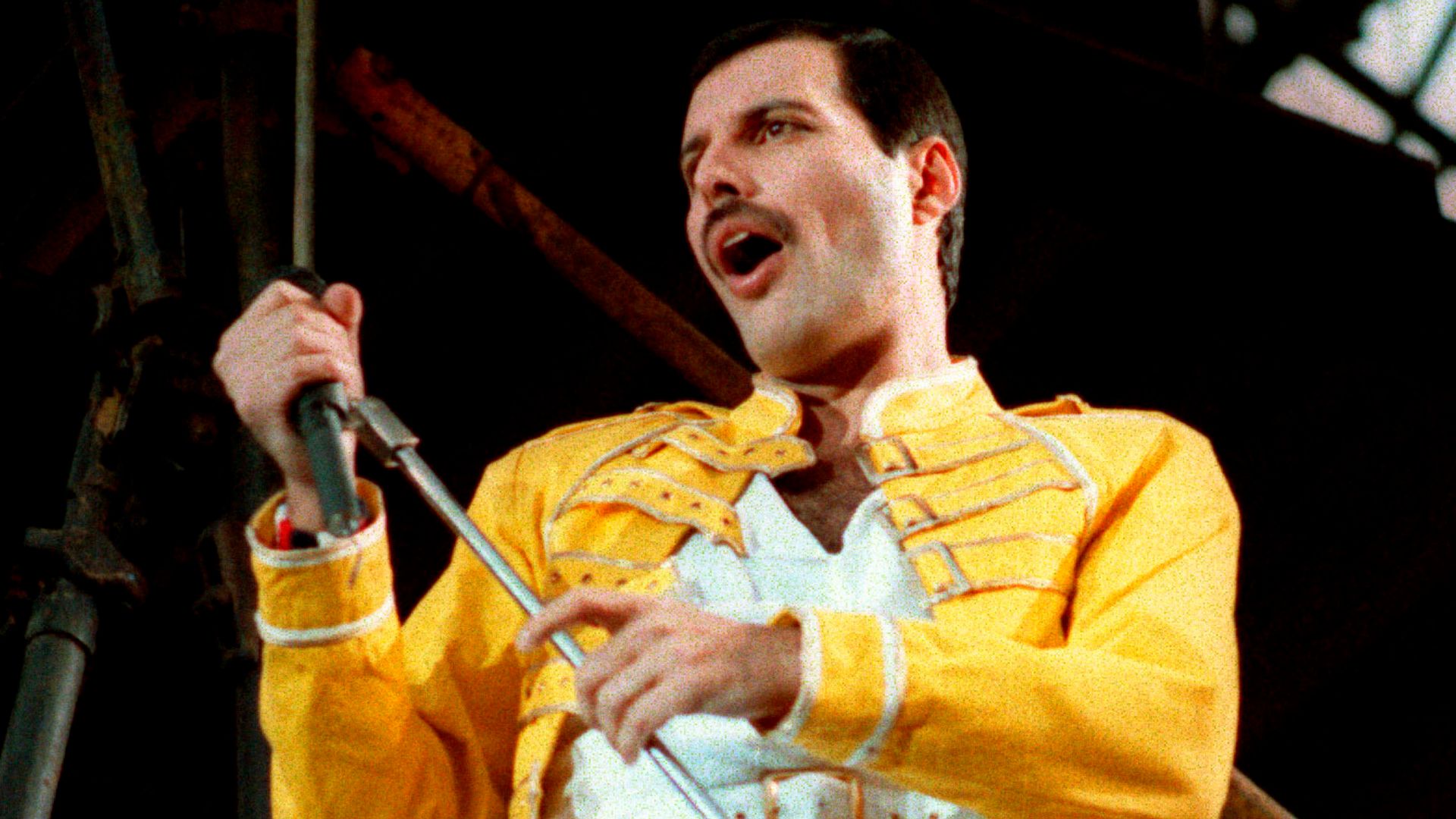
The physical artifact economy operates on a distinct set of valuation principles that diverge sharply from traditional asset classes. When Sotheby's hammered down Freddie Mercury’s working manuscript for Bohemian Rhapsody at £277,000, the transaction served as a diagnostic case study in cultural asset pricing. To understand why a collection of scribbled draft lyrics commands six figures, one must examine the underlying mechanics of scarcity, provenance verification, and the psychological premium attached to tactile human intention.
In standard consumer markets, price is a function of utility and manufacturing cost. In the market for rock and roll memorabilia, utility is entirely symbolic, and manufacturing cost is negligible. The economic engine driving these auctions is a confluence of supply inelasticity and concentrated demand among ultra-high-net-worth individuals and institutional archives.
The Tripartite Framework of Cultural Asset Valuation
Valuing a unique creative artifact requires isolating the variables that drive competitive bidding behavior. The market does not price the paper or the ink; it prices the historical proximity to a creative genesis. Three core variables dictate the valuation ceiling of any given manuscript.
The first variable is cognitive transparency. A clean, finished lyric sheet has lower collectible value than a heavily revised working draft. Revisions, cross-outs, and marginalia provide buyers with a direct window into the cognitive architecture of the artist. When Mercury crossed out "Mongolian Rhapsody" and replaced it with "Bohemian Rhapsody," he documented the exact micro-decision that altered pop music history. This evidence of iteration transforms a static document into a dynamic historical record, exponentially increasing its informational and emotional yield for the collector.
The second variable is provenance integrity. The market demands an unbroken, verifiable chain of custody. When an entire estate—in this case, Mercury's Garden Lodge collection consigned by Mary Austin—comes to auction directly from the primary source, authentication friction drops to zero. Institutional buyers and serious collectors discount heavily for provenance ambiguity. Direct-from-source consignments eliminate counterfeit risk and elevate the psychological security of the investment, compressing bidding spreads and driving higher hammer prices.
The third variable is cultural saturation and liquidity potential. Assets do not exist in a vacuum; their future secondary market liquidity depends on the enduring relevance of the intellectual property they represent. Queen’s catalog benefits from continuous generational transmission through film, streaming, and global licensing. A manuscript tied to an ephemeral cultural artifact carries high liquidity risk. A manuscript tied to a universally recognized anthem operates as a blue-chip cultural bond, attracting a deep pool of global capital during auction cycles.
Supply Inelasticity and the Monopoly of the Unique
The primary driver of price escalation in the manuscript market is absolute supply inelasticity. Unlike fine art, where an artist might produce dozens of paintings in a distinct period, or literature, where multiple drafts may survive, a definitive song manuscript is typically a singular output.
Modern digital production has further constrained the supply of future physical artifacts. As songwriters transition from legal pads and hotel stationery to cloud notes and digital audio workstations, the physical paper trail of modern music creation is disappearing. This technological shift acts as a massive deflationary pressure on future supply, which retroactively inflates the scarcity premium of analog-era manuscripts.
When supply is fixed at a quantity of one, pricing ceases to be a marginal utility calculation and becomes a function of wealth concentration among potential buyers. At Sotheby's, the auction dynamics shifted from open-market price discovery to a sealed-bid psychological auction where participants were bidding against their own desire for absolute exclusivity. The £277,000 final price for the Bohemian Rhapsody working pages reflects not an objective appraisal of historical worth, but the clearing price of the marginal billionaire willing to outlast competing capital pools.
Institutionalization and the Financialization of Heritage
The maturation of the rock memorabilia market reflects its transition from a subcultural hobby into an institutionalized asset class. Major auction houses have successfully positioned rock and roll manuscripts alongside traditional fine art and historical documents, attracting buyers who view these acquisitions through both aesthetic and capital preservation lenses.
Museum acquisitions and corporate archives alter the supply dynamics permanently. When an artifact is acquired by a state institution or a corporate foundation, it is effectively removed from the circulating supply for generations, creating a ratchet effect on the remaining market inventory.
This financialization process introduces rationalized risk management into an inherently emotional market. Buyers analyze historical comp sets—previous sales of comparable Beatles, Dylan, or Hendrix manuscripts—to establish valuation baselines. However, unlike traditional equities, cultural assets lack standardized dividend yields. Their return on investment is deferred, relying entirely on the future appreciation of cultural memory and the structural scarcity of physical history in a digitized world.
Strategic Capital Allocation in Cultural Assets
For collectors and investors navigating this asset class, valuation requires decoupling emotional resonance from structural market fundamentals. The error novice buyers make is overpaying for high-volume, late-career artifacts while ignoring the scarcity and cognitive density of peak-era creation phases.
To maximize capital efficiency within the memorandum market, acquisitions must target inflection points where an artist's output permanently altered cultural trajectories. The Bohemian Rhapsody manuscript commanded its valuation because it represents the structural blueprint of a masterwork at the exact moment of its conception. Future market performance will continue to favor artifacts that document paradigm shifts over those that merely represent routine output. The underlying asset is not paper; it is compressed genius backed by verifiable provenance and absolute structural scarcity.