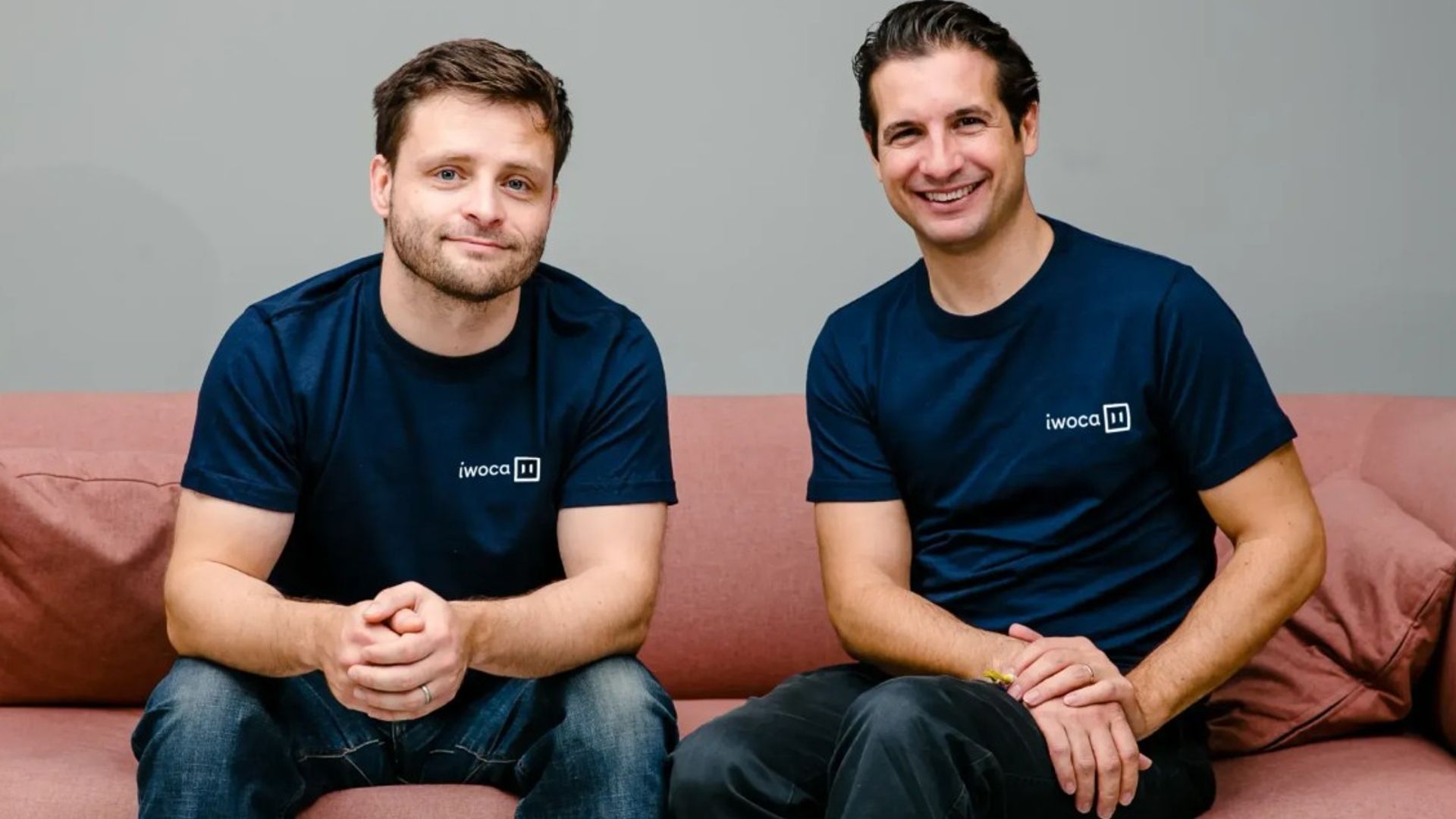
Billionaire-backed research labs aren't supposed to run out of runway. Yet in early November 2026, the Ellison Medical Institute—the high-profile West Los Angeles cancer research center funded by Oracle co-founder Larry Ellison—filed a formal state notice revealing plans to permanently eliminate 88 jobs.
The cuts hit on January 3, 2027. Most of those affected work at the institute's headquarters at 12414 Exposition Blvd. in West L.A., though remote staffers in Illinois and Arizona are also losing their roles. If you've followed Ellison's decade-long push into medicine, this doesn't look like a routine belt-tightening. It looks like a quiet, deliberate pivot away from a sprawling Los Angeles research footprint while Ellison pours billions into an entirely different scientific empire across the Atlantic.
The Exact Numbers Behind the WARN Notice
Let's strip away the rumors and look at what the paperwork actually says. Under California law, employers with 75 or more workers must give at least 60 days' advance notice before executing a mass layoff. Erika McClain, the institute's head of human resources, submitted that Worker Adjustment and Retraining Notification (WARN) letter to the California Employment Development Department on November 4, 2026.
Here is what the filing confirms—and what it doesn't:
- Total headcount reduction: 88 permanent positions eliminated, taking effect January 3, 2027.
- Primary impact zone: The institute's West Los Angeles headquarters at 12414 Exposition Blvd., with secondary cuts hitting remote biomedical and research workers in Arizona and Illinois.
- What stays open: McClain explicitly noted in the filing that the entire facility isn't shutting down. Patient-facing care, specifically the Ellison Clinic and its related operations, will keep running.
- The missing explanation: Unlike public biotech companies that blame failed Phase 2 trials or cash burn in press releases, Ellison Medical Institute offered no public rationale for why it's gutting its research staff.
That silence matters. When a publicly traded drugmaker lays off 88 scientists, analysts immediately dissect its quarterly burn rate. Because Ellison's institute operates as a private entity (registered in state filings as Ellison Institute, LLC dba Ellison Medical Institute), it doesn't owe Wall Street an earnings call. Staffers and local observers are left reading between the lines.
Why a Billionaire-Funded Institute Cuts Staff Anyway
People assume that when a tech titan worth hundreds of billions writes the checks, money never becomes an issue. That's a misunderstanding of how billionaire-backed science actually works.
Private research institutes rarely run on blank checks forever. Even founders with massive personal fortunes expect milestones, clinical translation, or a clear commercial path. Back in 2016, Larry Ellison donated $200 million to the University of Southern California to launch what was originally called the Lawrence J. Ellison Institute for Transformative Medicine of USC. Led by founding CEO and prominent oncologist Dr. David Agus, the center promised to break down walls between biology, engineering, physics, and patient care.
Things shifted. The institute eventually separated from USC to operate as an independent organization, rebranding as the Ellison Medical Institute around 2024. While it maintained ties to the university—even signing an exclusive licensing deal with USC in April 2025 to commercialize a novel prostate cancer drug—running an independent, interdisciplinary wet-lab operation in West Los Angeles is staggeringly expensive.
Think about the overhead involved. You're paying coastal California salaries, maintaining specialized lab infrastructure, funding early-stage computational biology, and carrying administrative bloat without the shared grant infrastructure of a massive research university. When an independent institute transitions from "blue-sky discovery" to focused clinical commercialization, early-stage research teams are almost always the first casualties.
Follow the Money From West L.A. to Oxford
You can't look at the Los Angeles layoffs in a vacuum. Look at where Larry Ellison's attention—and capital—has moved over the past three years.
While the Los Angeles center trims 88 roles, Ellison has been bankrolling a massive expansion in the United Kingdom through the Ellison Institute of Technology (EIT) Oxford. In late 2023, Ellison Institute, LLC poured roughly $1.27 billion into real estate and R&D assets at The Oxford Science Park, part of a broader multi-billion-pound commitment aimed at four pillars: health and generative biology, food security, clean energy, and artificial intelligence.
By late 2026, EIT Oxford was aggressively recruiting AI and robotics leaders, launching graduate scholar programs, and building out a massive multidisciplinary campus.
See the pattern?
- Geographic consolidation: Instead of running sprawling, overlapping basic-science teams in Los Angeles, Ellison's broader philanthropic and commercial apparatus has built a flagship global hub in Oxford.
- AI-first biology: Modern drug discovery has shifted sharply toward computational models, autonomous labs, and generative biology—the exact mandate of EIT Oxford—rather than traditional, labor-intensive wet-lab setups.
- Clinical focus in L.A.: Keeping the Ellison Clinic open in West Los Angeles while cutting research staff signals that L.A. is being narrowed down to clinical care and targeted drug commercialization rather than broad exploratory research.
Meanwhile, Ellison's core wealth engine, Oracle, has faced intense capital pressures of its own throughout 2026 as it pours tens of billions into AI data center infrastructure. Even when a founder's foundation or LLC is legally separate from their public company, macro capital allocation priorities tend to rhyme. Every dollar gets scrutinized for return on impact.
What This Means for Los Angeles Biotech Workers
For years, civic leaders in Los Angeles have pitched the region as California's third biotech hub—a sunnier, slightly cheaper alternative to South San Francisco and San Diego's Torrey Pines mesa. Losing 88 biomedical and research roles at one of West L.A.'s highest-profile private institutions is a real gut punch to that narrative.
Unlike the Bay Area, where laid-off researchers from Genentech or a folded startup can walk across the street and interview at five other venture-backed biotechs, West L.A.'s life sciences cluster is thinner. The talent pool is anchored by UCLA, Cedars-Sinai, USC, and a handful of mid-sized firms like Kite Pharma or Amgen up the 101 freeway in Thousand Oaks. Absorbing nearly 90 specialized cancer researchers and lab technicians at once won't happen overnight.
If you're a biotech professional in Southern California—or one of the researchers caught in this specific reduction—the reality on the ground in late 2026 requires a different playbook than it did during the 2021 life-sciences boom. Academic medical centers are wrestling with tight federal grant budgets, and venture-backed biotechs are heavily favoring candidates with computational, AI-assisted, or clinical-trial execution experience over pure wet-lab discovery backgrounds.
Practical Steps If You Are Affected by a California WARN Layoff
Whether you're among the 88 staffers at Ellison Medical Institute or watching your own biotech employer file a state notice, that 60-day statutory window between the November filing and the January 3 termination date is your primary source of leverage. Don't waste it waiting for HR to schedule an exit interview.
Audit Your Notice and Severance Timeline
California's WARN Act requires employers with 75 or more employees to provide a full 60 days' notice before a mass layoff of 50 or more workers. Because Ellison's HR team filed on November 4 for a January 3 effective date, they cleared that 60-day threshold. Keep copies of every written notice you receive, because the exact termination date governs your COBRA health coverage election window and unemployment insurance eligibility. If your severance agreement includes a non-disparagement clause or IP assignment review, have an employment attorney look it over before signing—especially if your name is on pending patents or USC-licensed research.
Lock Down Your Publication and IP Trail
In cancer research, your career currency is your data, your protocols, and your authorship credit. Before your institutional email and electronic lab notebook access are revoked on January 3, document every project you contributed to, save copies of your own non-proprietary manuscripts or preprints, and confirm in writing with your principal investigator how authorship will be handled on papers still in review.
Target Clinical and Translational Hubs Immediately
Don't wait until January to start your search, because academic and hospital hiring committees move notoriously slowly around the winter holidays. Reach out directly to department administrators at UCLA Health, Cedars-Sinai, City of Hope in Duarte, and USC Norris Comprehensive Cancer Center before mid-December. Mentioning active grant transitions or specific translational skills—like clinical trial coordination, bioinformatics, or regulatory affairs—will get you past automated HR filters far faster than a generic resume drop.
You can also watch the Ellison Medical Institute job cuts report for a quick local broadcast recap of the West L.A. filing.