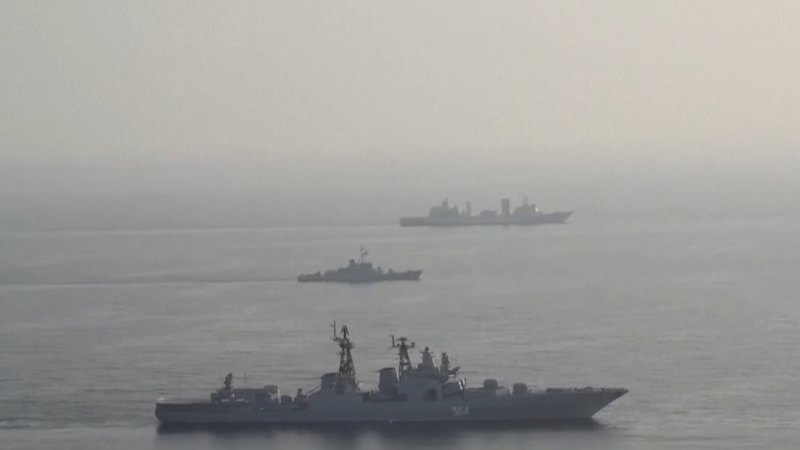
The assumption that a direct conflict involving the United States, Israel, and Iran would mirror previous regional skirmishes ignores the fundamental restructuring of global energy markets and maritime logistics since 2022. While historical "oil shocks" were primarily driven by supply-side restrictions from OPEC, a modern Iranian conflict introduces a multifaceted inflationary threat: the simultaneous degradation of the Strait of Hormuz, the weaponization of the Bab el-Mandeb, and the systemic failure of the "Just-in-Time" global insurance model.
The Triple-Axis Supply Shock Framework
To quantify the inflationary potential of such a conflict, the situation must be viewed through three distinct structural bottlenecks.
1. The Energy Pass-Through Mechanism
The Strait of Hormuz facilitates the transit of approximately 21 million barrels of oil per day, representing roughly 20% of global liquid petroleum consumption. Unlike the localized disruptions in the Red Sea, a closure or significant kinetic threat within the Strait offers no viable maritime detour.
- The Risk Premium Elasticity: Markets price in "fear" before a single barrel is lost. A full-scale kinetic engagement would likely trigger an immediate $20 to $30 premium on Brent Crude.
- The LNG Displacement Factor: Iran’s proximity to Qatari gas fields places nearly 20% of the world’s Liquified Natural Gas (LNG) at risk. For European and Asian markets already decoupled from Russian pipeline gas, the loss of Qatari LNG would force a regressive shift back to coal or ultra-expensive spot-market purchases, driving up industrial electricity costs.
2. The Insurance and Maritime Logistics Tax
Inflation is not merely a product of commodity prices; it is a product of the cost of movement. In a high-intensity conflict zone, the "War Risk" insurance premium for tankers and container ships does not increase linearly—it jumps by orders of magnitude.
When a ship’s hull and cargo insurance rise from 0.01% to 1.0% of the vessel’s value per voyage, that cost is passed directly to the consumer via the Cost, Insurance, and Freight (CIF) valuation. This creates a "shadow tariff" on every good passing through the region, from Saudi crude to Emirati electronics.
3. The Re-routing Congestion Ripple
If the Persian Gulf becomes a restricted zone, global shipping capacity is effectively reduced through "ton-mile" expansion. Ships must travel longer distances to source energy from the Atlantic Basin or West Africa. This creates a shortage of available hulls, driving up the Baltic Dry Index and the Shanghai Containerized Freight Index (SCFI), even for routes that do not touch the Middle East.
The Monetary Policy Paradox
Central banks typically look through "transitory" energy shocks. However, the current economic environment lacks the slack to absorb a significant price spike without triggering a secondary wage-price spiral.
The Fiscal Dominance Constraint
The United States is currently operating with a debt-to-GDP ratio exceeding 120%. A regional war requires significant emergency supplemental spending. This fiscal expansion, occurring while the Federal Reserve is attempting to maintain a restrictive or neutral stance, creates "Fiscal Dominance." The Treasury’s need to fund the war effort may force the Fed to keep interest rates lower than the inflation rate would otherwise dictate to prevent a debt-servicing crisis, thereby embedding inflation into the long-term expectations of the market.
Currency Devaluation in Emerging Markets
As the US Dollar strengthens during a geopolitical flight to safety, emerging market (EM) currencies collapse. Since most global commodities are priced in USD, these nations face "Imported Inflation." They must pay more in local currency for the same volume of energy and food, leading to social instability and further supply chain breakdowns in the manufacturing hubs of Southeast Asia and India.
The Technological and Kinetic Degradation of Trade
A conflict with Iran introduces a "Low-Cost Denial" variable that was absent in 1991 or 2003. The proliferation of one-way attack drones and anti-ship cruise missiles allows a mid-tier power to achieve sea denial at a fraction of the cost of the US Navy’s sea control operations.
- The Attrition Ratio: If a $2 million interceptor missile is required to down a $20,000 drone, the economic sustainability of protecting trade routes becomes a liability.
- The Port Infrastructure Bottleneck: Targeted strikes on desalination plants or loading terminals at Ras Tanura or Jebel Ali would take months, if not years, to repair. This is not a "flow" problem that can be solved by releasing Strategic Petroleum Reserves (SPR); it is a "capital" problem that permanently reduces global export capacity.
Structural Vulnerabilities in Global Agriculture
The most immediate "human" inflationary pressure stems from the Haber-Bosch process. Natural gas is the primary feedstock for nitrogen-based fertilizers.
- Fertilizer Price Spikes: High natural gas prices in the Middle East—or the inability to export urea and ammonia—lead to immediate price hikes in global fertilizer markets.
- The Harvest Lag: There is a six-to-nine-month delay between fertilizer price increases and food price inflation at the grocery store. This creates a "long tail" of inflation that persists even after the kinetic conflict might have subsided.
- The Protectionist Pivot: As food prices rise, nations instinctively move toward export bans to protect domestic supply (as seen with Indian rice or Ukrainian grain). This protectionism further reduces global supply, creating an artificial scarcity that compounds the original inflationary shock.
Deconstructing the "Soft Landing" Narrative
Current market sentiment assumes a "Goldilocks" path for the US economy—cooling inflation with steady growth. A US-Israel-Iran war is the ultimate "Black Swan" because it attacks the very inputs that allowed inflation to fall in late 2023 and 2024: energy stability and supply chain normalization.
The inflationary feedback loop is self-reinforcing. Higher energy prices lead to higher transportation costs; higher transportation costs lead to higher food and consumer good prices; higher cost of living leads to demands for higher wages; higher wages lead to "sticky" service-sector inflation.
Tactical Strategy for Institutional Positioning
Investors and policy planners must move beyond the binary "oil up/stocks down" mentality. The strategy requires a granular focus on the "Second-Order Beneficiaries" and the "Structural Losers."
- The Logistics Pivot: Prioritize investments in Atlantic-based supply chains and "Near-shoring" initiatives that bypass the Afro-Eurasian maritime chokepoints.
- The Energy Hedge: Move beyond crude oil futures into energy infrastructure and service providers capable of rapid deployment in non-OPEC regions (Guyana, the Permian Basin, the North Sea).
- The Currency Defense: Institutional portfolios must hedge against EM currency volatility. The "Imported Inflation" in these regions will likely trigger aggressive, localized interest rate hikes that will stifle growth in those markets for a decade.
The true cost of a conflict with Iran is not the price of a gallon of gasoline in June; it is the systemic re-pricing of global risk and the permanent elevation of the floor for "acceptable" inflation. We are moving from an era of 2% targets to a reality where 4% is the unavoidable baseline, driven by the permanent friction of a fractured geopolitical landscape.
Monitor the "Spread" between Brent and WTI crude as the primary indicator of regional risk isolation. If the spread widens beyond $10 per barrel, it signals that the market is actively discounting the total loss of Persian Gulf flow. Immediate deleveraging of high-growth tech assets in favor of physical commodity producers and domestic-focused utilities is the only logical defensive play before the liquidity premium evaporates.