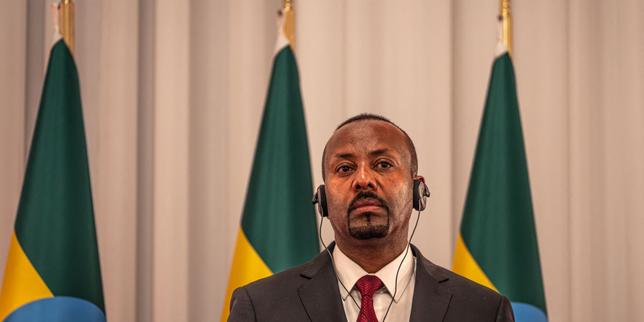
Western journalism loves a tidy morality play. Take a complex geopolitical theater spanning a horn-of-Africa powerhouse, strip away centuries of statecraft, ethnic federalism, and shifting regional alliances, and boil it down to a single villain narrative. That is the exact trap international outlets fell into when covering Abiy Ahmed’s return to power. The lazy consensus screams of an embattled autocrat clinging to wreckage amid perpetual civil strife.
It is a comfortable narrative for foreign desks. It is also entirely detached from the ground reality in Addis Ababa. For an alternative look, check out: this related article.
Look past the shallow headlines framing his reappointment merely through the lens of ongoing internal conflicts. What is actually happening is a brutal, high-stakes restructuring of a multi-ethnic state that refused to die on schedule. Ethiopia is not collapsing; it is being aggressively re-engineered. And understanding why requires tearing up the lazy assumptions dominating mainstream foreign policy analysis.
The Myth of Centralized Monoliths
The primary flaw in international reporting is treating Ethiopia as if it operates like a traditional Western parliamentary democracy experiencing turbulence. It never has. For nearly thirty years prior to 2018, the state was run as a tightly managed ethnic-federalist oligarchy dominated by the Tigray People's Liberation Front (TPLF). When Abiy Ahmed dismantled that architecture, he did not just shuffle cabinet ministers; he detonated the foundational power-sharing matrix that kept a hundred million people under a single political thumb. Similar coverage on the subject has been provided by NBC News.
Critics love to frame his political survival as an anomaly of authoritarian grip. They ignore structural mechanics. Ethiopia is a mosaic of powerful regional nationalisms—Oromo, Amhara, Tigray, Somali—each with distinct historical grievances and armed factions. No single leader holds this country together through sheer brute force alone. To survive a term defined by existential regional warfare and emerge with a parliamentary majority for the Prosperity Party, a leader requires something far more potent than suppression: a realignment of transactional loyalty across fractured geographic lines.
The foreign press treats ethnic federalism as a sacred democratic text violated by an overreaching prime minister. Ground-level analysts know the opposite is true. That very system institutionalized division, turning administrative borders into ethnic tripwires. Abiy’s push toward a centralized national identity is viewed by western pundits as dangerous centralism, while locals often see it as the only alternative to Balkanization.
Dismantling the Economic Fallacy
Another favorite talking point of the commentariat is that military expenditures and internal instability have rendered Ethiopia an economic ghost town. Analysts point to inflation, foreign debt, and structural adjustments as proof of imminent failure.
Data tells a more nuanced story. Despite compounding shocks—from global supply chain fractures to domestic security crises—Ethiopia's macro-economic reforms, including the opening of the telecommunications sector and financial market liberalizations, represent the most aggressive structural pivot the Horn of Africa has seen in a generation. Safaricom’s entry into the telecom market and the privatization of state-led monopolies are not the actions of a regime frozen by war. They are calculated bets on long-term market capture.
When foreign observers predict economic ruin because the state spends heavily on defense, they misunderstand the calculus of sovereign survival in a volatile neighborhood. A state must exist before its balance sheet can be optimized. Sovereign states do not balance budgets while redesigning their geopolitical borders; they absorb shocks, redirect capital, and rewrite the rules of resource allocation.
The Real Danger Is Not What You Think
If the international media’s obsession with autocratic regression misses the mark, what is the actual risk? It is not that Abiy will become an unmitigated dictator. The real vulnerability lies in over-correction.
When a state faces centrifugal forces pulling it apart from every corner—from northern factions to western insurgencies—the temptation is to institutionalize absolute administrative control. If the central government mistakes local resistance for existential treason, it risks recreating the exact centralized exclusion machinery it fought to dismantle in 2018.
Furthermore, alliances in East Africa are notoriously transactional. Today's strategic partner is tomorrow's regional rival. Managing relations with Eritrea, navigating the Nile dam hydro-politics with Egypt and Sudan, and keeping domestic ethnic militias from turning the country into a permanent proxy war zone require a diplomatic tightrope walk that leaves zero margin for error.
Stop Asking the Wrong Questions
People ask how long a leader can survive a civil war. It is the wrong question. The right question is how a multi-ethnic federation successfully transitions from an ethnic-cartel model to a national civic model without tearing its own institutional fabric apart in the process.
Abiy Ahmed’s renewed mandate is neither a triumph of unblemished democracy nor a simple consolidation of tyranny. It is the continuation of a high-risk structural transition. Until foreign commentators drop their simplistic moral frameworks and start analyzing Ethiopia through the lens of institutional metamorphosis rather than Western electoral standards, they will continue to be blindsided by every major political shift in the Horn of Africa.
Stop looking for a hero or a villain. Look at the machinery of the state being rebuilt in real time.