The Pacific Ocean is vast, spanning nearly a third of the globe, yet it has never felt smaller than it does right now.
Consider a single cargo container sitting on the rain-slicked deck of a vessel cutting through the dark waters between Shanghai and Long Beach. Inside are five thousand boxes of consumer electronics, or perhaps industrial components destined for an assembly plant in the American Midwest. That metal box is more than freight. It is a stitch in a massive, frayed quilt that covers two nations, keeping them bound together even as they pull apart with terrifying force. For a deeper dive into this area, we suggest: this related article.
For decades, the relationship between Washington and Beijing was described with the easy optimism of globalization. Trade would democratize. Commerce would erase borders. Supply chains would weave a permanent peace. But history is rarely so linear. The threads began to snap, replaced by tariffs, export controls, technology bans, and a cold, creeping paranoia. Two economic titans found themselves locked in a security dilemma, where every defensive move by one was interpreted as an existential threat by the other.
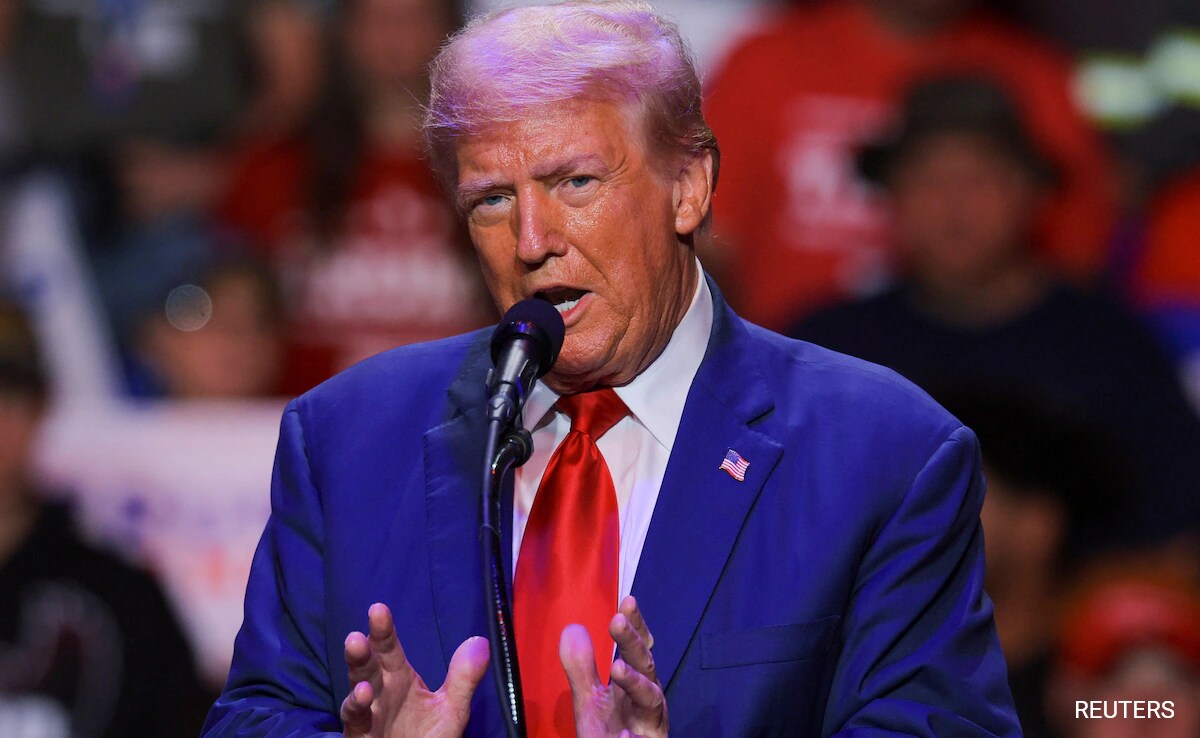
Now, the calendar turns toward Washington. Preparations are underway for a summit. President Xi Jinping and President Donald Trump are set to meet, and the world holds its collective breath. To get more details on this development, in-depth coverage can be read on The Guardian.
This is not a story about handshakes and photo ops. It is a story about the invisible architecture of modern life, the weight of domestic politics, and the terrifying cost of getting this wrong.
To understand why this upcoming encounter matters so desperately, you have to look away from the podiums and down to the ground.
Meet David. He owns a four-generation family farm in central Iowa. On a crisp autumn morning, David stands inside a massive corrugated steel grain bin, watching golden kernels cascade from an overhead auger. A few years ago, a massive portion of those soybeans was bound for ports in Tianjin and Qingdao, feeding a booming Chinese livestock sector. Then came the trade wars, the retaliatory tariffs, and the sudden silence of international buyers who found alternative suppliers in South America. David didn't care about geopolitics. He cared about his balance sheet, the price of diesel, and whether his grandchildren would inherit a functioning farm. When relations freeze, David feels the frost in his bones.
Half a world away, in the bustling electronics hub of Shenzhen, another person watches the news with a knot in his stomach. Lin manages a mid-sized component supplier that builds specialized microchips for automotive sensors. His factory floor hums with robotic arms and the quiet focus of hundreds of workers in dust-free bunny suits. Lin’s entire business model relies on a delicate ecosystem: American software design, Taiwanese silicon fabrication, Chinese assembly, and global consumption. When Washington tightens export restrictions on advanced semiconductors, Lin’s phone lights up with anxious emails from European and American clients asking if he can guarantee supply.
David and Lin will never meet. They speak different languages, worship differently, and live under entirely distinct political systems. Yet their livelihoods are tethered to the same fragile cable. When Washington and Beijing stumble into open hostility, both men feel the tremors.
This is the reality facing the two leaders as they prepare for their summit. They are not meeting because they like one another, or because a sudden wave of romantic reconciliation has swept through their respective capitals. They are meeting because the alternative has become too expensive to bear.
In statecraft, gravity always wins. For years, political strategists on both sides flirted with the fantasy of complete decoupling—the notion that the world’s two largest economies could simply pack up their toys, build high walls, and live independent lives. But economic reality is a stubborn thing. You cannot neatly slice apart supply chains that have spent forty years intertwining like old oak roots without bringing down the entire forest.
Inflation stalks the streets of American cities. Property markets and local consumer demand face heavy headwinds in China. Both administrations carry the heavy burden of domestic expectations. A leader cannot look weak at home. If Xi appears to yield too much to American pressure, the hardliners in his party will brand him a capitulator. If Trump appears soft on Beijing, his domestic critics will paint him as an appeaser.
So they dance. It is a high-stakes tango performed on the edge of a precipice. Every word uttered by a press secretary, every bureaucratic tightening of a visa rule, every naval patrol through the Taiwan Strait is a step in this intricate, dangerous choreography.
History offers sobering lessons here. When rising powers and incumbent superpowers lock horns without guardrails, the descent into conflict is often driven not by malicious intent, but by miscalculation. A minor collision at sea, a misunderstood signal in cyberspace, an aggressive domestic policy enacted for short-term political theater—any of these can cascade into a crisis that neither side actually wanted.
This is why the upcoming meeting in Washington carries such monumental gravity.
Diplomacy at this level is rarely about solving profound ideological differences. Beijing is not going to abandon its state-directed economic model, and Washington is not going to lift its strategic containment of advanced military technologies. The systems are fundamentally incompatible, built on different values, different histories, and different visions of the future.
Instead, successful diplomacy here is about installing crash barriers. It is about establishing clear red lines so that competition does not curdle into catastrophe. It is about agreeing on the rules of engagement in a stormy sea.
Imagine two freight trains barreling toward each other on a single track in the dead of night. The engineers despise one another. They disagree on where the tracks should go, who owns the right-of-way, and how the railway should be run. But they both know that if they refuse to slow down, both trains derail. The upcoming summit is the moment they lean out of their respective windows, lock eyes in the dark, and simultaneously reach for the emergency brake.
What will success look like if the cameras clear and the motorcades roll away?
It will not look like a permanent treaty. Do not expect a sudden era of brotherly love. Realism dictates a much narrower definition of victory. Success will be found in the small, unglamorous details. A resumption of military-to-military communication channels so that a stray jet or a drifting drone does not spark a firefight. A temporary truce on the escalation of new tariffs. A quiet agreement to keep key agricultural and technological channels open enough to prevent catastrophic market shocks.
Behind closed doors in Washington, aides will shuffle thick briefing binders. Translators will meticulously weigh the nuance of every adjective in the joint communiqués. The leaders will sit across mahogany tables, weighed down by the history of their empires and the expectations of billions of people.
Outside, the city will hum with its usual rhythm. Traffic will crawl along Constitution Avenue. Tourists will photograph monuments carved from white marble.
And out on the water, thousands of miles away, that container ship will keep moving through the dark, cutting its steady path toward port. Its metal walls hold the weight of a complicated, messy, irreplaceable connection. Two worlds, bound by trade, separated by ideology, forced by circumstance to find a way to live on the same small planet without destroying it.
The summit in Washington is not the end of the story. It is merely the next chapter in a long, tense negotiation between two futures. And as the world watches and waits, the only certainty is that the margin for error has grown razor thin.
The glass is fragile. Handle with care.