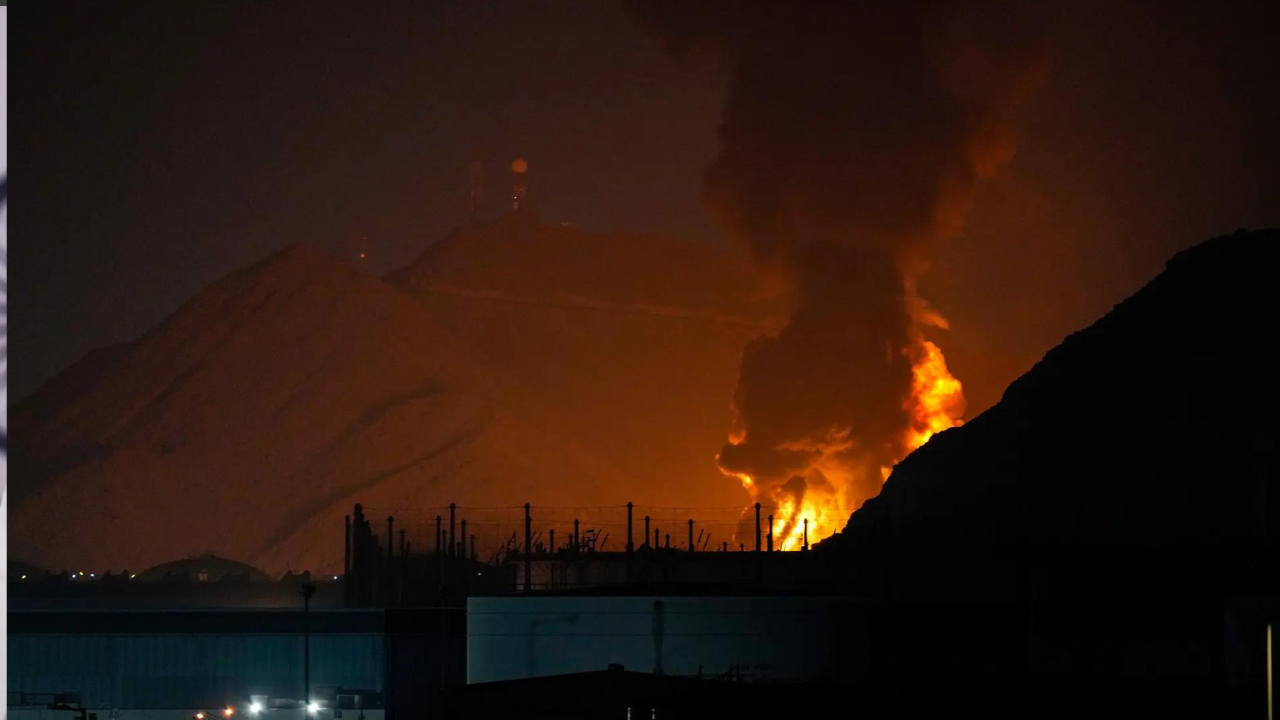
The re-emergence of Cuba as a primary focus of United States foreign policy is not a product of ideological whim but the result of a specific sequence of geopolitical pressure-testing. When the Trump administration signals that Cuba is "next" following intensified campaigns against Iran and Venezuela, it describes a strategic pivot toward a "Maximum Pressure" triad designed to eliminate regional outliers that facilitate non-Western power projection. This shift moves beyond the Cold War containment model and enters a phase of economic isolationism powered by modern financial surveillance and the weaponization of global dollar dependency.
The Logic of Sequential Attrition
To understand why Cuba follows Iran and Venezuela, one must analyze the Triad of Autocratic Interdependence. These three nations do not operate in vacuums; they form a symbiotic network of resource and intelligence exchange that mitigates the impact of unilateral sanctions.
- The Resource-Security Swap: Venezuela provides crude oil; Cuba provides military intelligence and internal security apparatus support; Iran provides technical hardware and naval assistance.
- Financial Pathing: By utilizing shared shadow-banking channels, these entities circumvent the SWIFT system, creating a persistent leak in the effectiveness of U.S. Treasury enforcement.
- Geopolitical Anchoring: Each state serves as a landing point for extra-hemispheric actors, specifically Russia and China, providing them with physical infrastructure and diplomatic cover within the Western Hemisphere.
The administration’s logic dictates that the collapse or forced pivot of one node (Venezuela) is insufficient if the supporting node (Cuba) remains functional to provide "regime preservation services." Therefore, Cuba is not a separate project but the necessary closing of a circuit.
The Mechanics of Economic Asphyxiation
Traditional diplomacy views sanctions as a tool for negotiation. The current analytical framework, however, treats them as a structural dismantling of state capacity. The strategy against Havana relies on three distinct operational levers.
Title III Activation and the Chilling of Capital
The decision to fully implement Title III of the Helms-Burton Act (Libertad Act) altered the risk-reward ratio for international investors. By allowing U.S. nationals to sue companies "trafficking" in property confiscated during the 1959 revolution, the U.S. creates a legal "poison pill."
The goal is not necessarily to win every court case but to increase the Legal Cost of Entry to a point where European and Canadian firms find the Cuban market mathematically unviable. When the cost of potential litigation in U.S. courts exceeds the projected Net Present Value (NPV) of a Cuban joint venture, capital flight occurs. This is a market-based enforcement mechanism that requires zero military intervention.
Remittance Compression
Remittances constitute a significant percentage of Cuba’s hard currency inflows. By restricting the channels through which the Cuban diaspora can send funds—specifically by blacklisting companies linked to the Cuban military (GAESA)—the U.S. targets the state’s ability to capture US dollars. This creates a liquidity crisis that forces the Cuban government to choose between funding internal security or importing basic commodities.
The Energy Blockade
Cuba’s vulnerability is anchored in its energy dependency. Without Venezuelan oil, the Cuban electrical grid faces systemic failure. The U.S. strategy involves sanctioning the shipping companies and insurers that facilitate the transit of oil between Puerto José and Havana. This creates an Insurance Risk Premium so high that even non-U.S. shippers refuse to carry the cargo, effectively imposing a maritime blockade via financial compliance rather than naval destroyers.
The Role of GAESA and State-Captured Industries
A critical oversight in standard reporting is the failure to distinguish between the Cuban "economy" and the Cuban "military economy." The Grupo de Administración Empresarial S.A. (GAESA) is a military-run conglomerate that controls an estimated 60% to 80% of the island’s economic activity, including tourism, retail, and foreign exchange.
- Vertical Integration: GAESA owns the hotels, the tour buses, and the stores where tourists spend money.
- Revenue Diversion: Funds flowing into these entities do not enter a general social fund but are prioritized for the Revolutionary Armed Forces (FAR) and the Ministry of the Interior (MININT).
From a strategic consulting perspective, the U.S. policy is a targeted attack on the Military Balance Sheet. By designating GAESA-linked entities as off-limits, the U.S. attempts to decouple the Cuban citizenry from the military’s revenue streams, hoping to induce a fiscal crisis within the ruling elite’s inner circle.
Regional Contagion and the Monroe Doctrine 2.0
The "Cuba Next" rhetoric signals a revival of the Monroe Doctrine, updated for a multi-polar era. The primary objective is the removal of "malign actors" from the Caribbean basin. This is quantified by the degree of Russian and Chinese influence in the region.
Russia utilizes Cuba for electronic intelligence gathering (Lourdes) and as a symbolic counter-balance to NATO expansion in Eastern Europe. China views Cuba as a strategic node for the "Digital Silk Road," providing telecommunications infrastructure that can be used for data interception.
The U.S. calculates that by removing the Cuban regime or forcing a radical change in its orientation, it simultaneously degrades the strategic depth of its global rivals. The Geopolitical Rent that Cuba collects from Moscow and Beijing in exchange for proximity to Florida is the target. If the U.S. can make the cost of subsidizing Cuba higher than the strategic value Russia and China derive from it, the "rent" becomes unsustainable.
Counter-Hypothesis: The Resilience of Authoritarian Durability
The risk in the "Cuba Next" strategy lies in the underestimation of regime resilience. Historical data indicates that total economic isolation often leads to a "Rally 'Round the Flag" effect or the total militarization of the remaining economy.
- Elite Cohesion: Unlike corporate structures, the Cuban leadership lacks an "exit ramp." Because the top tier of GAESA and the military are inextricably linked to the state's survival, they are less likely to defect and more likely to consolidate power under pressure.
- The Black Market Buffer: Sanctions inevitably trigger the growth of informal economies. As the state loses control of official trade, a network of illicit actors emerges to fill the void, often with the tacit approval of military officials who take a cut of the profits. This creates a "Sanction-Proof Class" that thrives on scarcity.
Information Warfare and the Internet Factor
A new variable in the Cuba analysis is the 2018 arrival of 3G/4G mobile internet. This changed the Information Monopoly held by the Communist Party. The U.S. strategy now includes the promotion of "internet freedom" as a means of accelerating internal friction.
The 2021 protests demonstrated that digital connectivity allows for the rapid scaling of localized grievances into national movements. The strategic play is to combine economic misery (via sanctions) with a decentralized communication platform. This creates a volatile environment where the government cannot suppress information as effectively as it did during the "Special Period" of the 1990s.
The Strategic Path Forward
The "Cuba Next" initiative is a high-stakes bet on the Inflection Point of State Failure. The administration is moving beyond the "managed decline" approach of previous decades and toward an "active disruption" model. To evaluate the success of this strategy over the next 18 months, analysts must monitor three specific KPIs:
- The GAESA Solvency Ratio: The ability of the military conglomerate to service its internal debts and maintain officer loyalty.
- Oil Import Volume vs. Domestic Demand: The gap between Venezuela’s shrinking exports and Cuba’s minimum baseline for grid stability.
- The Rate of External Subsidy: Whether Russia or China increases their direct financial support to offset U.S. pressure.
The move toward Cuba signifies that the U.S. no longer views the island as a frozen conflict, but as an active front in a broader campaign to re-establish a sphere of influence that is closed to extra-hemispheric competitors. The logical conclusion of this policy is a total severance of financial ties, betting that the internal pressure generated by 21st-century connectivity will achieve what 20th-century isolation could not.
Organizations operating in the Caribbean must immediately audit their supply chains for GAESA-linked touchpoints. The activation of Title III is not a temporary posture; it is a structural change in the risk landscape. Future capital allocation in the region should account for a "Containment Premium," assuming that any entity with exposure to Cuban military-run industries will eventually face exclusion from the U.S. financial system.