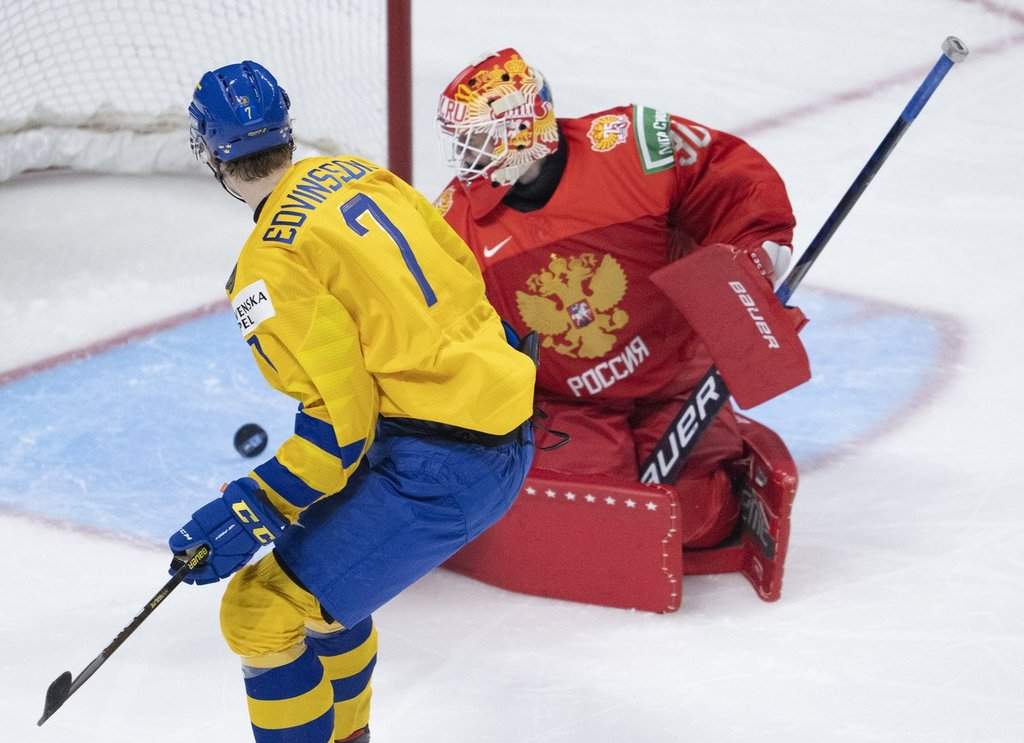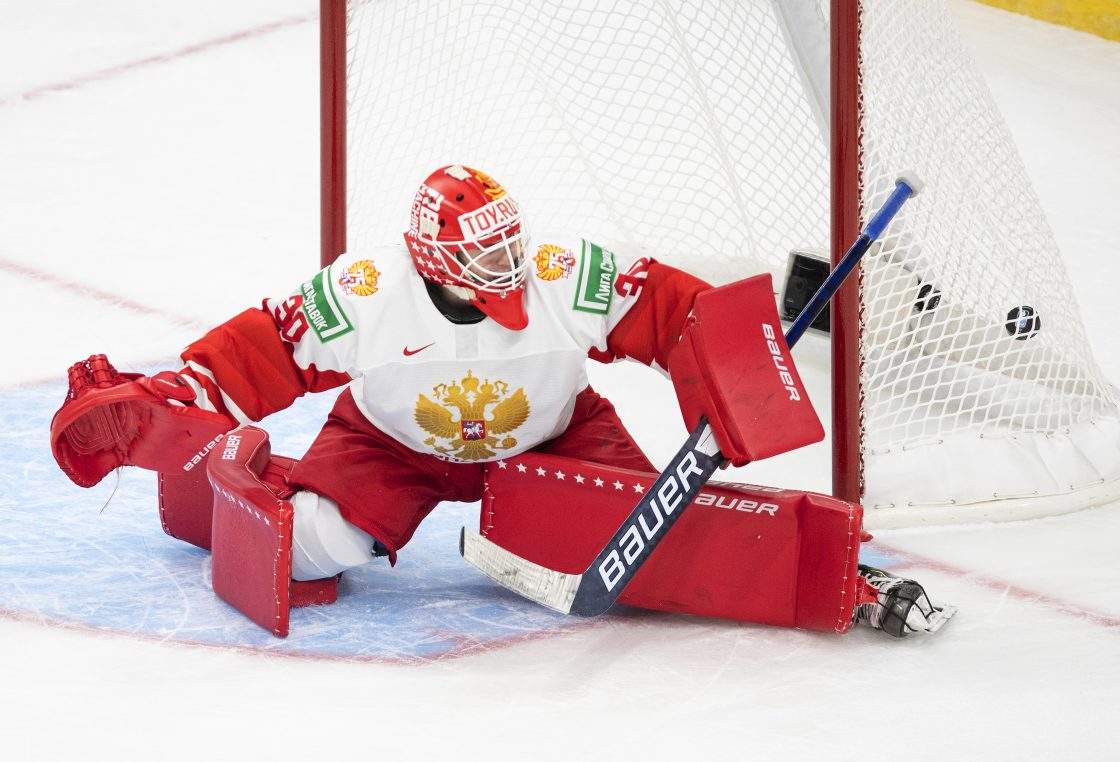
The exclusion of Russia and Belarus from the International Ice Hockey Federation (IIHF) World Junior Championship is not a conventional sports sanction; it is a calculated risk-management decision driven by commercial survival, logistical security, and institutional governance. Since the initial suspension following the February 2022 invasion of Ukraine, the IIHF Council has repeatedly extended the ban—affecting the 2022, 2023, 2024, 2025, and 2026 tournaments—by framing the issue strictly around participant safety rather than purely political alignment. Understanding this ongoing controversy requires dissecting the structural collision between international sports law, host-nation sovereignty, and the economic realities of junior hockey’s premier showcase.
The Governance Architecture of the IIHF Exclusion
Standard commentary surrounding the Russia IIHF World Juniors controversy often reduces the conflict to a binary moral debate. In operational reality, international sports federations operate under strict legal charters that prohibit overt political discrimination while simultaneously mandating a duty of care. The IIHF Council bypassed the ideological gridlock by anchoring its decision in Article 11 of its bylaws, which empowers the governing body to suspend members or alter tournament structures when safety and security cannot be guaranteed.
This regulatory maneuver relies on a three-part risk matrix:
- Physical Security Threats: The inability of local law enforcement in host cities—such as Edmonton, Halifax, Gothenburg, Ottawa, and Minneapolis-St. Paul—to guarantee the physical safety of Russian athletes, team staff, and traveling fans against localized protests or targeted violence.
- Travel and Visa Bottlenecks: The systemic breakdown of diplomatic corridors, resulting in airspace closures, severed banking rails, and the refusal of Schengen Area or North American border agencies to issue visas to Russian state-sponsored delegations.
- Tournament Integrity Disruption: The high probability of unilateral boycotts by core revenue-generating federations, specifically Finland, Sweden, Czechia, and Canada, which would collapse the competitive validity of the event.
By classifying the exclusion as a safety and logistical necessity rather than a punitive political sanction, the IIHF insulated itself from immediate overturn at the Court of Arbitration for Sport (CAS). In previous arbitration hearings, CAS has consistently upheld the right of international federations to prioritize the safe execution of an event over the participation rights of a single member nation, provided the federation demonstrates that alternative security measures are financially or logistically unviable.
The Economic Cost Function of Exclusion vs. Reintegration
The World Junior Championship functions as the primary financial engine for the IIHF and several national federations, particularly Hockey Canada and USA Hockey. Unlike the senior World Championship, which competes directly with the Stanley Cup Playoffs for North American attention, the World Juniors owns the late-December broadcast window. Decisions regarding Russian participation are therefore governed by an asymmetric economic cost function.
Reintegrating Russia before geopolitical stabilization introduces catastrophic downside risk with minimal immediate upside. The commercial ecosystem of the World Juniors depends heavily on North American and Nordic broadcast rights, alongside blue-chip corporate sponsorships. If Sweden, Finland, or Czechia execute a threatened boycott in response to Russia’s return, the tournament loses three of its top five competitive draws and a massive portion of its European television audience. Corporate sponsors, bound by strict Environmental, Social, and Governance (ESG) clauses and Western sanctions regimes, would trigger force majeure exits to avoid brand association with a sanctioned state apparatus.
Conversely, maintaining the ban incurs a predictable, manageable opportunity cost. While the absence of Russia diminishes the on-ice competitive ceiling—removing a traditional powerhouse that has captured 13 gold medals across Soviet, CIS, and Russian banners—the commercial metrics of recent tournaments demonstrate market resilience. Television ratings in Canada and the United States remain anchored by domestic rivalries, and the rapid ascent of programs like Slovakia, Latvia, and Germany has partially absorbed the competitive vacuum. For the IIHF Council, absorbing a marginal loss in broadcast distribution fees from Eastern Europe is vastly preferable to triggering an existential sponsor exodus in the West.
Cascading Impacts on the Global Talent Pipeline
The prolonged isolation of Russian junior hockey creates severe structural distortions in player development and NHL scouting workflows. The World Juniors serves as the ultimate stress test for draft-eligible prospects and drafted players aged 17 to 20, placing them in a compressed, high-pressure, best-on-best environment. Removing Russian cohorts from this ecosystem disrupts the valuation models used by professional front offices.
- Elimination of Comparative Benchmarking: NHL scouts rely on international tournaments to calibrate domestic league strength. Without direct competition against Canadian, American, and Swedish peers, evaluators must project the NHL translation of prospects playing exclusively within the Kontinental Hockey League (KHL), Supreme Hockey League (VHL), and Junior Hockey League (MHL). The absence of cross-border data increases variance in draft projections, leading to conservative draft strategies where Russian talent slides down draft boards due to informational asymmetry rather than pure skill deficits.
- Insular Tactical Evolution: International hockey acts as a rapid-feedback laboratory for coaching systems, pace, and special teams adjustments. Isolated within domestic circuits, the Russian Ice Hockey Federation (FHR) risks tactical stagnation. When Russian national teams eventually re-enter international play, they will face a multi-year adjustment curve to adapt to the modern North American and Nordic emphasis on high-tempo transition play and positional fluidity.
- Institutional Divergence: The severance of ties between the IIHF and the FHR has accelerated the decentralization of hockey governance. Facing international exile, Russian hockey authorities have increasingly operated outside standard IIHF transfer agreements, exemplified by high-profile contract disputes involving NHL-drafted players. This friction erodes the reciprocal legal framework that historically prevented poaching between North American and European leagues.
The Structural Paradox of Neutrality
A recurring point of contention in the controversy is the refusal to apply the International Olympic Committee (IOC) "Individual Neutral Athletes" (AIN) framework to the World Juniors. While the IOC and several individual sports federations have permitted Russian athletes to compete under neutral flags without national anthems, the IIHF has rejected this model for team sports.
The operational logic behind this divergence rests on the fundamental difference between individual and team athletics. In an individual discipline like tennis or swimming, an athlete represents a singular commercial entity, often funded privately or through independent tour winnings. In international ice hockey, a national junior roster is the direct output of a state-funded developmental apparatus. Assembling a 25-man roster, coaching staff, and medical delegation requires state coordination, state-issued passports, and institutional backing from the FHR.
Stripping the jersey of its crest does not alter the organizational reality of the team. In the eyes of host-nation governments, European federations, and commercial partners, a roster selected by the FHR remains a state proxy regardless of uniform branding. Implementing a neutral-team model would fail to satisfy the political objections of boycott-threatening nations while simultaneously alienating the Russian domestic audience, creating a lose-lose scenario that solves none of the IIHF’s core security or commercial bottlenecks.
The Reintegration Threshold
The IIHF evaluates the status of Russia and Belarus on an annual cycle, typically issuing rulings in February or March for the upcoming competitive season. This recurring timeline generates predictable media cycles of speculation, yet the underlying criteria for reinstatement remain fixed. The IIHF cannot unilaterally reintegrate Russia without external geopolitical shifts that alter the risk calculations of third-party actors.
For the ban to be lifted, three sequential conditions must be met:
- Cessation of Active Hostilities: A formal ceasefire or diplomatic resolution in Ukraine that removes the immediate geopolitical trigger for the sanctions.
- Normalization of Airspace and Visa Regimes: The reopening of direct flight corridors and the restoration of standard diplomatic visa processing by European and North American governments, eliminating the logistical impossibility of moving a 40-person delegation across borders.
- De-escalation of Boycott Threats: Formal assurances from the ice hockey federations of Finland, Sweden, Czechia, and Canada that they will participate in tournaments alongside a Russian squad.
Until these external variables shift, the IIHF Council will continue to weaponize its safety mandate to preserve tournament stability. The governing body’s strategy is entirely defensive: insulate the revenue-generating core of international hockey from geopolitical fallout by keeping the source of volatility outside the perimeter. Sports federations do not lead geopolitical reconciliation; they lag behind it, waiting for sovereign states to absorb the political risk before resuming commercial operations.