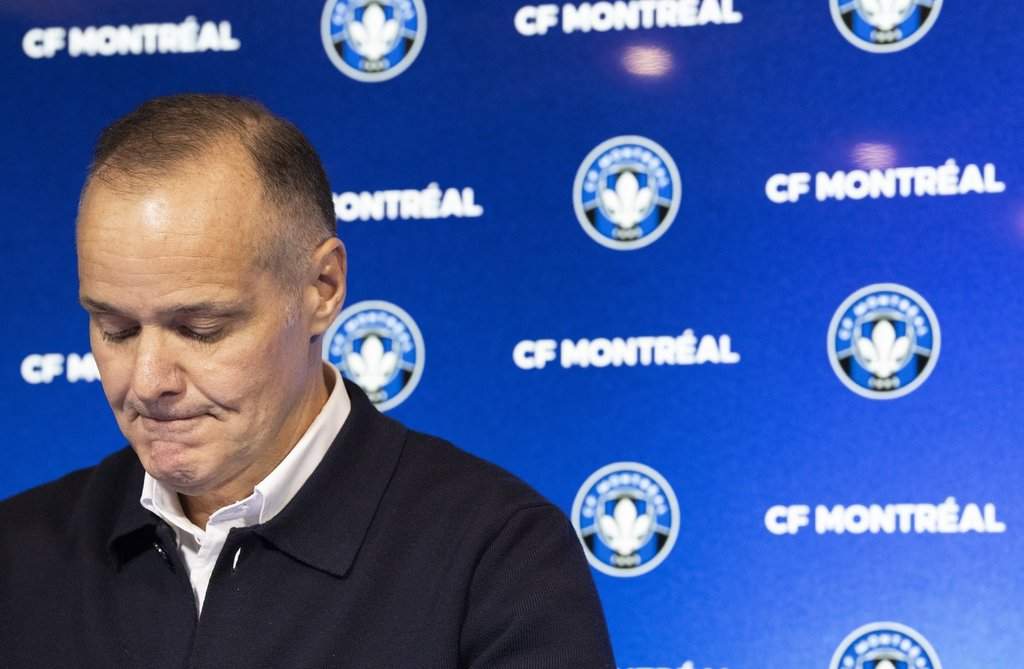
The prevailing sports media narrative around Joey Saputo initiating the sale process for CF Montréal is predictable, sentimental, and completely detached from financial reality.
Every beat writer in Quebec is currently wringing their hands over "legacy," "local stewardship," and the tragic end of a thirty-year family dynasty. They are treating the potential exit of the Saputo family like a funeral for Canadian soccer. You might also find this similar article insightful: What Immanuel Feyi-Waboso Missing the Nations Championship Actually Means for England.
They are wrong. Dead wrong.
Saputo stepping aside isn't a crisis for Montreal. It is a long-overdue market correction. For years, the lazy consensus in North American soccer has been that "local billionaire ownership" is the gold standard of franchise stability. In reality, undercapitalized local patriarchs running modern Major League Soccer clubs like family-owned corner stores are the single biggest anchor dragging down the league’s competitive ceiling. As reported in recent reports by Sky Sports, the effects are widespread.
If you want to understand what is actually happening in Montreal, stop reading the emotional press releases and look at the balance sheet.
The Myth of the Benevolent Local Owner
Fans love the idea of a hometown owner because it feels safe. They assume a local billionaire cares more about the badge than a private equity consortium from New York or a multi-club ownership group out of Europe.
That is a romantic delusion.
In modern sports economics, emotional attachment does not pay transfer fees. Capital liquidity does. When the Montreal Impact entered MLS in 2012, the league was a completely different beast. Expansion fees were a fraction of what they are today. Designated Players were aging European stars looking for a retirement tour, and the gap between the highest-spending clubs and the bargain-bin operators was narrow enough that a clever sporting director could paper over a tight budget.
That era is dead.
Today, MLS is an arms race dictated by sovereign wealth funds, institutional private equity, and ownership groups with multi-billion-dollar real estate portfolios. When you are competing against the financial muscle of Inter Miami, LAFC, or the ownership structures in New York and Atlanta, running a club on a rigid, self-sustaining family budget isn't "fiscal responsibility." It is voluntary irrelevance.
I have sat in boardrooms where legacy sports owners try to rationalize why they can't match the spending of institutional newcomers. They always use the same buzzwords. They talk about "building through the academy." They preach "sustainable growth." They boast about "smart recruitment."
Translation: We don't have the cash flow to absorb nine-figure losses while waiting for the next media rights cycle.
Joey Saputo built professional soccer in Montreal from nothing. Nobody can take that away from him. Without his family's money, the club doesn't exist in its current form. But the very traits that allowed him to keep the lights on in the 1990s and 2000s—tight cost controls, hands-on micromanagement, and an aversion to massive capital risk—became fatal flaws the moment MLS decided to chase global relevance.
Why the "Relocation Panic" is Pure Clickbait
Whenever a Canadian or smaller-market MLS team goes on the block, the first question casual fans type into search engines is: Will CF Montréal relocate?
Let’s dismantle that premise immediately.
No. The team is not moving. Suggesting relocation shows a fundamental misunderstanding of how single-entity sports leagues operate in the 2020s.
In Major League Soccer, owners do not actually own their teams in the traditional sense. They own an equity stake in the league itself—an Investor-Operator agreement—which grants them the right to operate a franchise in a specific geographic territory. Moving a franchise requires approval from the MLS Board of Governors, and the league has zero incentive to abandon Canada's second-largest media market.
More importantly, look at the math of expansion fees.
Why would a buyer pay hundreds of millions of dollars for CF Montréal just to pay an exorbitant relocation fee to move it to Phoenix or Las Vegas, when MLS is already extracting massive expansion fees from new markets directly? The league wants new money coming into the central pool, not existing territories cannibalizing each other.
Furthermore, Montreal is a premier soccer city with an entrenched, passionate culture, an existing stadium footprint at Stade Saputo, and a massive youth talent pool in Quebec that consistently produces exportable assets for Europe. The asset isn't broken. The operating model is.
The Bologna Problem Nobody Talks About
To understand why this sale was inevitable, you have to look across the Atlantic.
Joey Saputo doesn't just own CF Montréal. He is the majority owner and chairman of Bologna FC 1909 in Italy’s Serie A.
For years, the public relations spin was that owning both clubs created a brilliant transatlantic pipeline—a natural bridge for coaching methodologies, scouting networks, and player development.
In practice, it created a massive conflict of attention and capital allocation.
Running a Serie A club is a brutal, capital-intensive war of attrition. Every euro poured into Bologna’s squad, stadium renovations, and front office is a euro that isn't sitting in reserve for Montreal. When Bologna qualified for the UEFA Champions League, the financial and emotional gravity of the Saputo sports empire shifted permanently toward Emilia-Romagna.
You cannot serve two masters in global football, especially when one plays in the top flight of Italian soccer and the other plays in a salary-capped North American league where the return on investment is measured in decades rather than broadcast cycles.
When a billionaire owns both a European top-flight club and an MLS franchise, the MLS club inevitably becomes the junior partner. Fans in Montreal felt that dynamic acutely. Every time a promising young player was sold or loaned, every time a managerial change felt reactive rather than strategic, the suspicion lingered: Are we a real club, or are we just a line item on a larger balance sheet?
Initiating a sale ends that purgatory.
What Actually Happens During an MLS Sale Process
Most sports fans think selling a team works like selling a house. You put a sign on the lawn, take a few tours, and hand the keys to whoever writes the biggest check.
In MLS, the transaction is a corporate interrogation.
When an Investor-Operator initiates a sale process—typically hiring an investment bank like Inner Circle Sports, Raine Group, or Galatioto Sports Partners—the league office essentially acts as a co-seller. MLS has strict vetting protocols. They aren't just looking for someone who can afford the purchase price; they are looking for someone who can survive the capital calls.
Here is what the vetting process actually prioritizes:
- Liquid Net Worth Over Paper Wealth: Having a billion dollars tied up in illiquid family trust shares or commercial real estate doesn't impress the league anymore. They want access to immediate cash.
- Infrastructure Commitments: Stade Saputo is a charming venue on a summer night, but it is aging, lacks modern premium hospitality inventory, and sits in a challenging winter climate. Any incoming buyer will be pressured to commit nine figures toward either a massive stadium overhaul or a new venue strategy.
- Commercial Sophistication: The days of relying on local sponsorships and gate receipts are over. MLS wants ownership groups that bring global brand partnerships, media relationships, and data-driven fan monetization.
Notice what is missing from that list? Sentimental ties to the local community.
Does having a local minority partner help grease the wheels with municipal politicians in Quebec? Absolutely. Language politics and provincial bureaucracy in Montreal are notoriously tricky to navigate. An outside institutional buyer will almost certainly bring on a local figurehead to handle press conferences in French and manage relationships at City Hall.
But the real power—and the real money—will come from institutional capital. And that is exactly what the club needs.
The Uncomfortable Truth About MLS Valuation
Let’s look at the numbers that actually drive this decision.
Over the last decade, MLS franchise valuations have skyrocketed, fueled largely by the league’s 10-year global broadcast deal with Apple and the impending arrival of the 2026 FIFA World Cup in North America. Even for a club near the bottom of the league’s revenue rankings, the floor valuation for an MLS franchise has surged past the half-billion-dollar mark.
For the Saputo family, holding onto the club beyond this window makes diminishing financial sense.
You sell an asset when the narrative around the asset class is at peak hype, not after the hype cycle cools down. With the World Cup serving as the ultimate marketing crescendo for North American soccer, valuations are priced for perfection.
At the same time, the cost of doing business inside the league is climbing faster than local revenues in mid-sized markets can keep up. Player salaries are rising. Academy operating costs are rising. Travel and operational overhead are rising.
If you are an owner who isn't willing to burn $20 million to $30 million a year in operating losses just to stay competitive in the Eastern Conference, your equity is trapped. You own a very expensive trophy that bleeds cash every month and gets you booed by your own supporters when you refuse to buy a $10 million striker.
Selling isn't surrender. It is basic portfolio management.
The Downside Nobody Wants to Admit
Before we pop the champagne for a new era in Montreal, let’s be brutally honest about the risks of this transition. Contrarian thinking requires looking at both sides of the ledger, and institutional ownership comes with its own brand of poison.
If a private equity group or an American sports conglomerate buys CF Montréal, the club will become far more corporate, far more expensive to support, and vastly less personal.
Expect ticket prices to climb immediately. Expect aggressive dynamic pricing, higher concession costs, and a relentless push toward high-margin VIP seating at the expense of working-class supporters. Private equity doesn't buy sports teams out of civic pride; they buy them to manufacture enterprise value and flip them or securitize the cash flows.
You will also lose the unpredictability of a passionate owner. For all his faults—and his well-documented clashes with coaches, media, and supporter groups—Joey Saputo genuinely cared. When the team lost, it hurt him personally. When a private equity managing director looks at a 3-0 loss on a rainy Tuesday in April, they don't feel heartbreak. They check the churn rate on season ticket renewals.
There is also the very real danger of the "zombie franchise" trap. Plenty of North American sports teams have been bought by wealthy, competent corporate groups that proceed to run them with cold, risk-averse efficiency—never spending enough to win a championship, never failing badly enough to cause a revolt, just comfortably harvesting league revenue sharing while finishing eighth every year.
Montreal fans trading an emotional, budget-conscious local owner for a detached, profit-maximizing corporate group is not a guaranteed fairy tale. It is simply a trade of one set of problems for another.
What Needs to Happen Next (And Why Most Buyers Will Blow It)
If a new ownership group steps into Montreal and tries to run the standard MLS expansion playbook, they will fail miserably. Montreal is not Austin, Charlotte, or St. Louis. You cannot slap a trendy crest on a jersey, blast generic stadium EDM, and expect Quebecers to fall in line.
Whoever writes the check to buy out the Saputo family needs to execute three non-negotiable moves on day one:
- Fix the Brand Identity Immediately: The 2021 rebrand to "Club de Foot Montréal" (complete with the snowflake logo that looked like a corporate HVAC company) was an unmitigated disaster that alienated the core fanbase. Even after walking back the crest, the club's cultural identity has felt fractured. A smart buyer restores the historical weight of the club's roots while modernizing the commercial presentation.
- Weaponize the Academy: Quebec produces some of the best raw soccer talent in North America, largely due to deep cultural ties to Francophone football cultures in Europe, North Africa, and the Caribbean. Instead of treating the academy as a cheap way to fill out the bench, new ownership needs to invest heavily in scouting, coaching, and sports science to turn Montreal into the premier player-development and export hub in the league—the Ajax or Benfica of North America.
- Solve the Stadium Reality: You cannot build a modern sports business in a stadium that exposes fans to freezing rain in March and October without adequate shelter, transit access, or modern amenities. Whether it is a massive renovation of Stade Saputo or a bold public-private partnership closer to the downtown core, the venue equation must be solved.
Stop Mourning a Business Transaction
The local media will spend the next several months writing eulogies for the Saputo era. They will interview former players, reminisce about the 2015 CONCACAF Champions League run, and fret over whether the soul of the club is for sale.
Ignore the noise.
Sports franchises are not family heirlooms. They are capital-intensive entertainment businesses operating in a hyper-competitive global marketplace. Joey Saputo took CF Montréal as far as his financial model and split attention could possibly carry it. Holding on any longer wouldn't have been loyalty—it would have been negligence.
If Montreal wants to be more than a nostalgic footnote in Major League Soccer, it doesn't need a local savior. It needs an owner with the stomach—and the checkbook—to play the modern game.