Hui Ka Yan once moved through the world with the quiet, terrifying gravity of a man who owned the horizon. For decades, the Chairman of China Evergrande Group wasn’t just a billionaire; he was the physical manifestation of the Chinese Dream. He grew up in a village where poverty was a thick, suffocating blanket, eating sweet potatoes and dried vegetables to survive. From those dirt floors, he built an empire of glass and steel that housed hundreds of thousands of people.
Now, that horizon has collapsed.
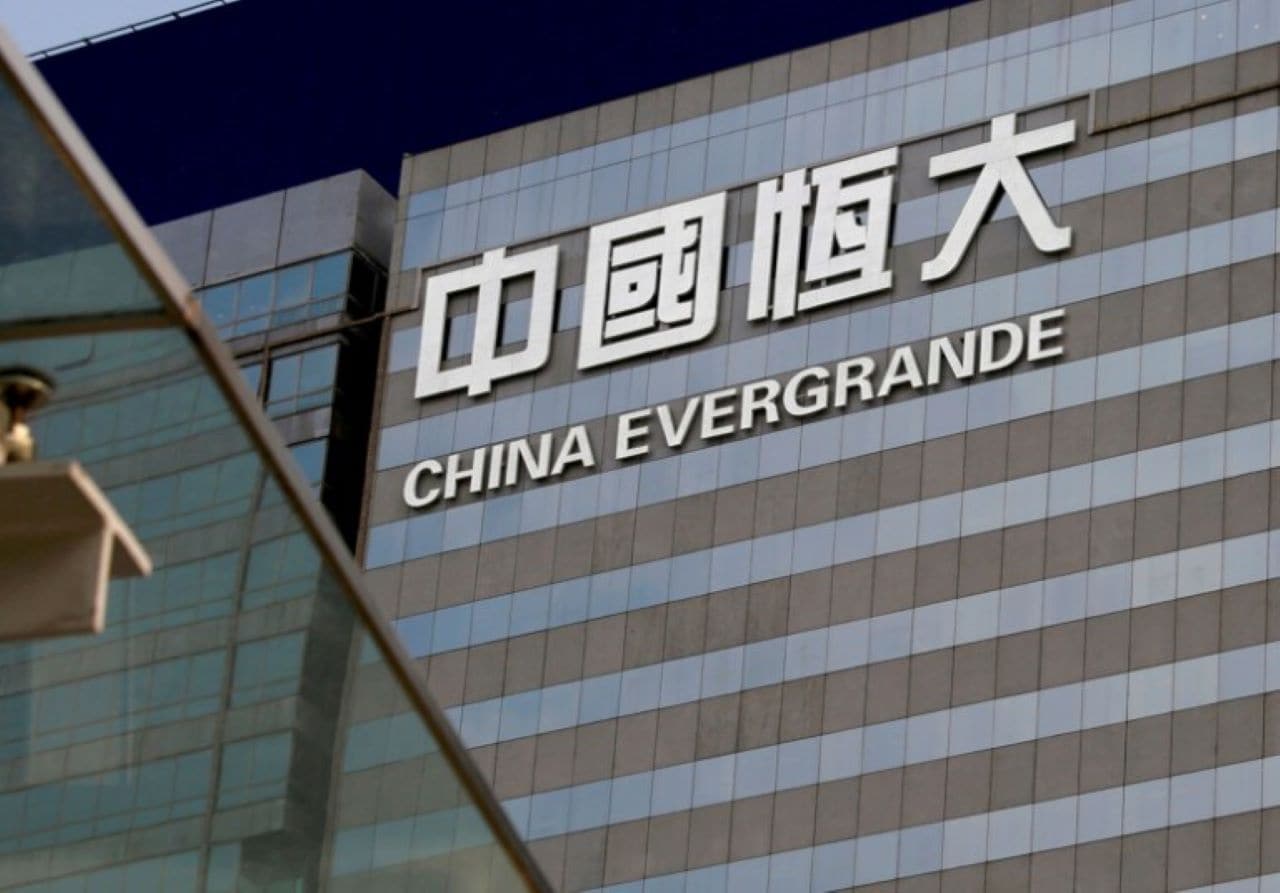
The news broke with a clinical coldness: the billionaire boss of Evergrande, once the richest man in Asia, has pleaded guilty to fraud. To the markets, this is a ledger entry—a final accounting of a $300 billion debt pile that threatens to drag the world’s second-largest economy into a long, dark winter. But to understand how we got here, you have to look past the spreadsheets. You have to look at the scaffolding of lies that kept a crumbling house standing long after the foundations had turned to sand.
The Architect of Dreams
Imagine a young couple in Shenzhen, let’s call them Li and Wei. They saved for ten years, skipping vacations and eating simple meals, to put a down payment on an Evergrande "Emerald Mansion" that only existed as a colorful 3D model in a sales office. They weren't buying bricks; they were buying a future. Hui Ka Yan understood this better than anyone. He sold the promise of stability in a country where property is the only bank account that truly matters.
Evergrande’s business model was a high-speed treadmill. To keep building, Hui needed more debt. To pay the debt, he needed more sales. To get more sales, he needed to start more projects. It was a dizzying cycle of "build, borrow, repeat." For a long time, the music didn't stop. Hui lived a life of unimaginable excess—private jets, yachts, and a soccer club that bought expensive foreign stars to prove China’s arrival on the global stage.
He was the "Big Brother" of the property world. If you were in his inner circle, you were wealthy beyond your wildest dreams. If you were an investor, you were promised returns that defied the laws of economic gravity. But the treadmill was moving too fast.
The Crack in the Foundation
The fraud wasn't a single, momentary lapse in judgment. It was a systemic, calculated inflation of reality. Regulators found that Evergrande’s flagship unit, Hengda Real Estate, inflated its revenues by a staggering $78 billion over two years.
Think about that number. It isn't just a typo. It is a ghost.
By booking revenue on apartments that hadn't even been finished—some of which were barely holes in the ground—Hui created a phantom prosperity. He used these fake numbers to lure in more investors, to convince banks to lend more money, and to keep the illusion of the "World's Most Indebted Developer" being a stable titan.
But for people like Li and Wei, the fraud had a visceral, physical consequence. Construction on their "Emerald Mansion" stopped. The cranes went silent. The weeds began to reclaim the concrete skeletons of half-finished towers. Across China, hundreds of thousands of people found themselves paying mortgages on homes that might never be completed.
Hui wasn’t just cooking the books. He was burning the life savings of the middle class to keep his jet fueled.
The Weight of $300 Billion
It is difficult for the human brain to process $300 billion. If you spent a dollar every second, it would take you nearly 9,500 years to spend it all. That is the size of the hole Evergrande left in the global economy.
When the Chinese government finally stepped in with its "Three Red Lines" policy—designed to curb the reckless borrowing of property giants—the treadmill ground to a violent halt. Hui could no longer borrow his way out of his previous debts. The facade cracked, then shattered.
The guilt plea is the final act of a long-running tragedy. In a courtroom, the technicalities of the fraud are dissected: the falsified audit reports, the deceptive bond offerings, the internal transfers that vanished into a maze of offshore accounts. But the real crime was the betrayal of trust. Hui Ka Yan took the collective ambition of a nation and turned it into a Ponzi scheme of architectural proportions.
The fall of Hui Ka Yan is more than a business failure. It is a cautionary tale about the vanity of "too big to fail." For years, lenders assumed the Chinese state would never let Evergrande collapse because the social cost was too high. They were wrong. The state decided that the cost of letting the rot continue was higher than the cost of the amputation.
The Silence of the Sky-High Towers
Today, the man who once dined with world leaders and dictated the fate of cities sits in the crosshairs of a legal system that rarely shows mercy to those who embarrass the collective. His wealth has evaporated. His reputation is a charred ruin.
In the outskirts of Tier-3 cities across China, the "ghost complexes" remain. They are monuments to an era of unbridled greed and the fiction that growth can be infinite if you just lie well enough. You can see them from the highways—rows of gray towers, windowless and hollow, stretching toward a sky they will never touch.
The creditors will fight over the scraps. The lawyers will bill their millions. The banks will write off the losses.
But for the families who put their faith in the man who promised them a piece of the horizon, there is no easy accounting. They are left with the quiet, echoing reality of a dream that was never built on anything more than air. The billionaire has pleaded guilty, but the debt is being paid by people who never spent a dime on a private jet.
They are the ones left standing in the shadow of the empty towers, waiting for a dawn that was sold to them by a man who knew the sun had already set.