The air does not just feel thin at 17,000 feet. It feels sharp. Every breath is a negotiation with a sky that has decided it no longer wants to support human life. Up here, in the Peruvian Andes, the atmosphere holds only half the oxygen found at sea level. Your heart hammers against your ribs like a trapped bird, desperate to circulate what little fuel it can find. This is the entrance to La Rinconada, the highest human settlement on the planet, a place where the earth’s crust is so rich with gold that men are willing to suffocate for a chance to touch it.
Most people see gold as a shimmering bar in a vault or a delicate band on a finger. They do not see the frozen mud. They do not see the grey, treeless expanse where the wind screams through corrugated iron shacks. To understand the price of a wedding ring, you have to stand in a place where the very concept of "law" has evaporated into the freezing mist.
A City Built on a Gamble
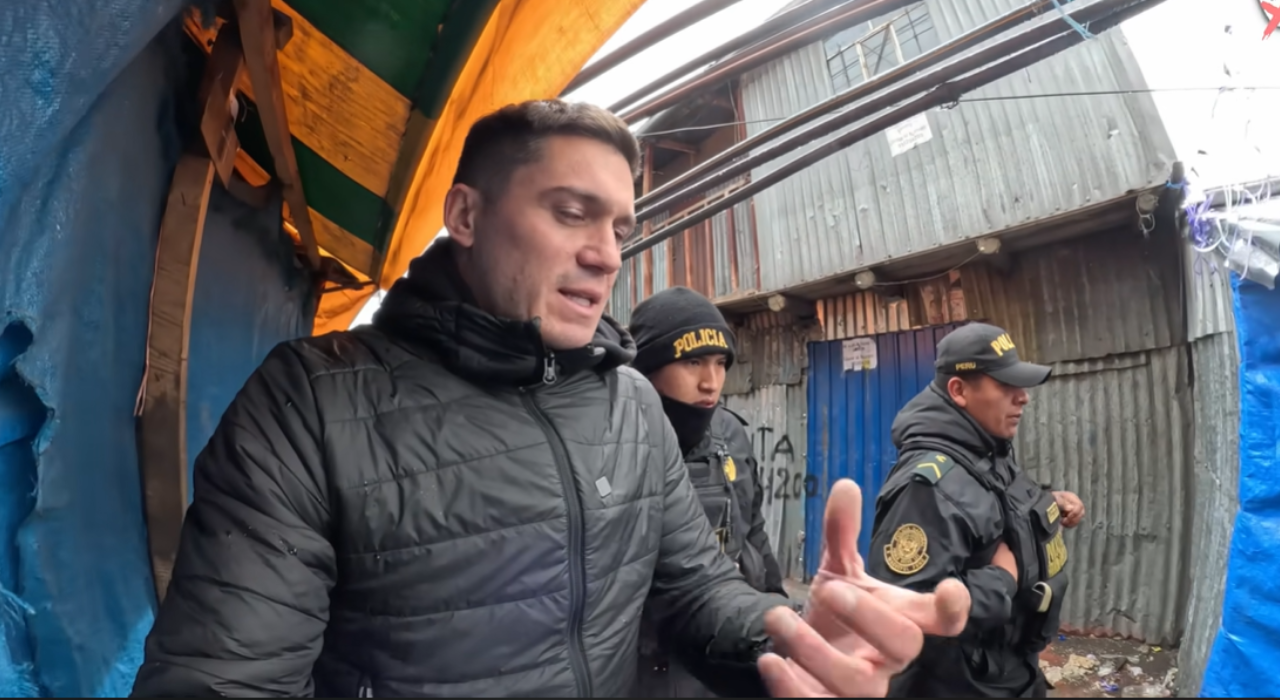
La Rinconada is not a city in the way we usually define the word. There are no paved roads. There is no sewage system. There is no running water. Instead, there are 50,000 souls clinging to a glacier, living in a sprawling labyrinth of tin huts that glint under a sun that burns but never warms. It is a vertical frontier.
The economy here operates on a system called the cachorreo. It is a brutal, archaic lottery. Miners work for thirty days without a single cent of pay. On the thirty-first day, they are allowed to take as much ore as they can carry on their shoulders. If that ore contains a vein of gold, they are rich. If it is just worthless rock, they have worked a month for nothing.
Imagine a father, let’s call him Mateo, standing at the mouth of a jagged tunnel. He hasn't seen his family in weeks. His lungs ache with a chronic cough, a souvenir from the silica dust and the mercury vapors that haunt the mines. He has one hour to pick the right spot. One hour to decide if his children eat meat this month or if they continue to survive on boiled potatoes and hope.
This isn't just "labor." It’s a high-stakes heist against nature itself. Because the mines are unregulated and the geography is so extreme, the Peruvian government has virtually no presence here. The "police" are often private security guards hired by mining collectives—men with rifles slung over their backs who watch the dark holes in the earth with more intensity than they watch the people.
The Chemistry of Despair
In the lower world, we talk about environmental protection as a policy debate. In La Rinconada, it is a sensory experience. To extract gold from the crushed rock, miners use mercury. They mix it with their bare hands, creating an amalgam that they then heat with blowtorches to burn off the liquid metal.
The result is a shimmering bead of gold and a cloud of invisible, neurotoxic gas.
The mercury doesn't disappear. It settles into the snow. It runs into the meltwater. It seeps into the ground where children play. In a city with no trash collection, the waste of fifty thousand people and the chemical runoff of thousands of makeshift refineries create a toxic slush that coats every boot and every doorway. The stench is a cocktail of human waste and heavy metals.
Why stay? The answer is always the same. The "why" is the yellow metal.
Gold is currently trading at record highs. For a man in Lima or Puno earning a few dollars a day, the promise of the cachorreo is the only ladder out of generational poverty. It is a siren song that overrides the instinct for self-preservation. They know the mercury will eventually dim their minds. They know the lack of oxygen will enlarge their hearts until they fail. They go anyway.
The Law of the Altitude
The lack of infrastructure has birthed a society that is as hard as the rock it mines. When there are no courts, justice is handled locally and often violently. The "snipers" mentioned in breathless travel reports aren't just there for show. They protect the high-grade veins from rival "pirate" miners who navigate the tunnels like ghosts, looking to hijack a productive seam.
Life is cheap where the air is thin.
But even in this grey, frozen world, there are flashes of jarring humanity. You will see a woman in a vibrant, multi-layered Andean skirt—a pollera—selling hot soup in the middle of a mud track. You will see miners playing football on a pitch made of gravel, gasping for breath after every sprint, their laughter echoing off the glacier. They find joy because they have to. The alternative is to let the mountain swallow them whole.
The mountain is known as Ananea. To the people who live in her shadow, she is a deity. They leave offerings of coca leaves and beer at the mine entrances. They believe the gold belongs to her, and she only gives it up in exchange for a sacrifice. Sometimes that sacrifice is a thumb lost to a rockfall. Sometimes it is a life lost to a pocket of trapped gas.
The Invisible Stakeholders
We are all part of La Rinconada.
The gold pulled from these lawless heights doesn't stay there. It enters a murky supply chain. It is sold to local traders, who sell it to refineries in Switzerland, the United States, or the Emirates. By the time it is minted into a coin or soldered into a circuit board, its history has been washed clean. The mercury, the snipers, and the frozen mud are stripped away, leaving only the shine.
We like to think of our modern world as clean and digital. We talk about the "cloud" and "seamless" transactions. But the foundation of global wealth is still anchored in places like this. Our electronics and our reserves are built on the backs of men like Mateo, who are currently shivering in a tin shack, waiting for their thirty-first day.
There is a specific kind of silence that happens at that altitude. It isn't peaceful. It’s heavy. It’s the sound of a thousand people holding their breath, waiting for the one lucky strike that will let them descend the mountain and never look back. Most never find it. They stay until their lungs give out or their luck runs dry, becoming part of the mountain they tried to conquer.
As the sun sets over the glacier, the tin roofs of La Rinconada catch the orange light. For a brief moment, the entire city looks like it is made of solid gold. It is a cruel, beautiful illusion. Underneath that glow, the mud is freezing, the mercury is simmering, and the snipers are taking their posts.
The mountain always gets her due.
One man walks out of a tunnel, his face masked in grey dust. He carries a small plastic bag. Inside is a piece of rock no bigger than a fist. He looks at it with the intensity of a lover. If there is gold inside, he can go home. If not, he will go back into the dark tomorrow.
He turns his back to the wind and strikes a match.
The flame flickers, struggling in the thin air, but it holds.