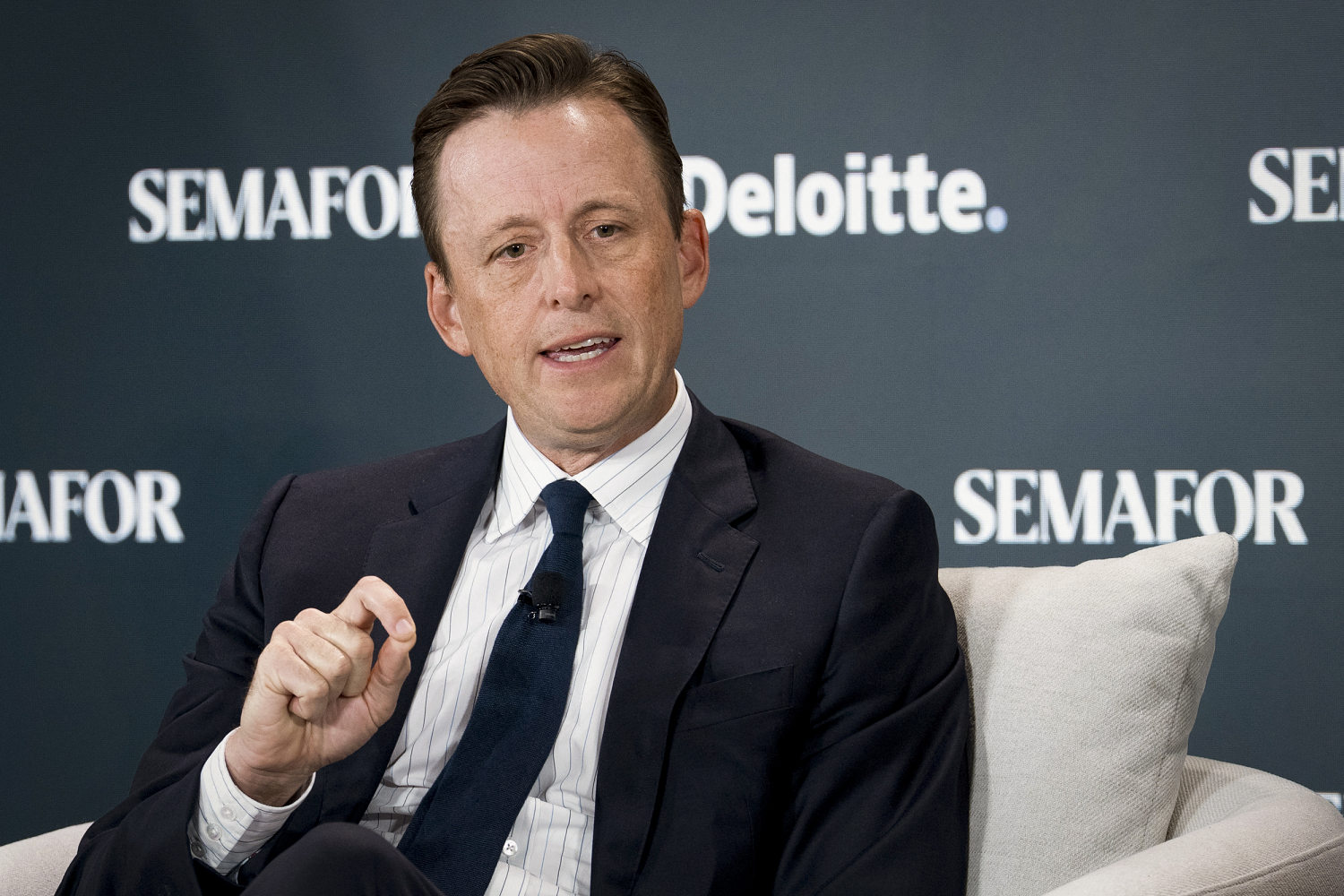
The phrase golden age of space gets tossed around conference halls with the casual abandon of a marketing brochure. It is plastered across PowerPoint decks from Washington to Wall Street, accompanied by glossy stock imagery of reusable rockets arcing gracefully into a twilight sky. Yet, beneath the slick PR veneer, the architecture holding up this modern space boom is showing profound structural fatigue. Major General Stephen G. Purdy Jr. and military space leaders find themselves managing a paradox that few want to talk about in polite company: while commercial launch cadence has shattered historical records, the underlying operational, industrial, and financial foundations are dangerously brittle.
Commercial space flight has not solved the fundamental problem of long-term economic sustainability. It has merely subsidized it through a temporary cocktail of venture capital enthusiasm and high-stakes defense procurement. When people talk about orbital access today, they talk about kilogram-to-orbit costs plunging by an order of magnitude. They point to reusable first stages landing on autonomous droneships as proof that market forces have permanently conquered the cosmos. But launch is only the freight ticket. It is not the destination.
Building a functioning orbital economy requires a continuous, predictable stream of revenue that relies on more than just government payloads and billionaire vanity projects. Right now, commercial constellations face an invisible ceiling. The market for broadband from low Earth orbit is hyper-competitive and intensely capital-intensive, threatening to cannibalize its own margins before most operators ever turn a sustained operating profit. Meanwhile, the space manufacturing sector outside of propulsion and satellite buses remains stubbornly artisanal. We talk about mass production, but when you look closely at cleanrooms and integration bays, much of the hardware is still built by hand, one expensive unit at a time.
The military dimension of this story is even more precarious. Major General Purdy and his counterparts across the Space Force are tasked with defending an increasingly crowded domain using procurement pipelines designed during the Cold War. The mismatch between the speed of commercial innovation and the glacial pace of Department of Defense acquisition is not a minor bureaucratic quirk. It is an existential vulnerability. When a commercial startup can iterate its software or hardware stack every six months while a military program of record takes a decade just to clear environmental testing, the concept of resilience becomes an illusion.
Consider the ground segment. While everyone watches the sky, the terrestrial backbone connecting constellations to end users is lagging behind. Ground stations are becoming bottlenecks. Cyber threats targeting telemetry, tracking, and command networks are multiplying faster than patches can be deployed. Security in orbit was once protected by the sheer expense and technical difficulty of reaching space. Today, low Earth orbit is congested, contested, and completely transparent to anyone with an optical telescope or a radio frequency sensor.
The industrial base supporting all of this is alarmingly concentrated. A handful of prime contractors control the vast majority of critical national security space infrastructure. If a single specialty chemical supplier or guidance-chip manufacturer experiences a factory fire or a supply chain blockage, entire launch manifests grind to a halt. Resilience on paper looks great during congressional testimony, but redundancy in the real world costs money that nobody wants to spend until a crisis forces their hand.
We are also ignoring the orbital debris crisis with a collective shrug that borders on negligence. Every new mega-constellation adds thousands of targets to an already crowded highway system in the sky. Kessler Syndrome is no longer a theoretical thought experiment debated by academic astrophysicists. It is a slow-motion collision course happening in real-time above our heads. Operators maneuver their spacecraft daily to avoid dead satellites and shrapnel from past ASAT tests, burning precious propellant that was supposed to keep those birds operational for a decade. When a critical satellite loses maneuverability because it runs out of station-keeping fuel early, it becomes a permanent hazard.
Fixing this trajectory requires more than optimism and more budget authorizations. It requires a hard look at how capital is deployed and how risk is shared between public and private partners. If the commercial sector continues to rely on government contracts as a permanent life support system rather than a stepping stone to true independent markets, the bubble will eventually correct itself in a very painful way.
The next few years will test whether our ambitions in orbit are built on bedrock or shifting sand. The rockets will keep flying because national security demands it and investors are too deep to walk away easily. But the true test of this era will not be how many tons we put into orbit next Tuesday. It will be whether the systems we build can survive the inevitable market correction, the first major geopolitical disruption in space, or a catastrophic orbital debris cascade that shuts down entire orbital planes for months at a time.
The golden age moniker implies a permanent state of grace. History suggests that golden ages are usually brief interludes between periods of severe friction. Space is about to get very difficult, and the current narrative of uninterrupted triumph is preparing nobody for the turbulence ahead.