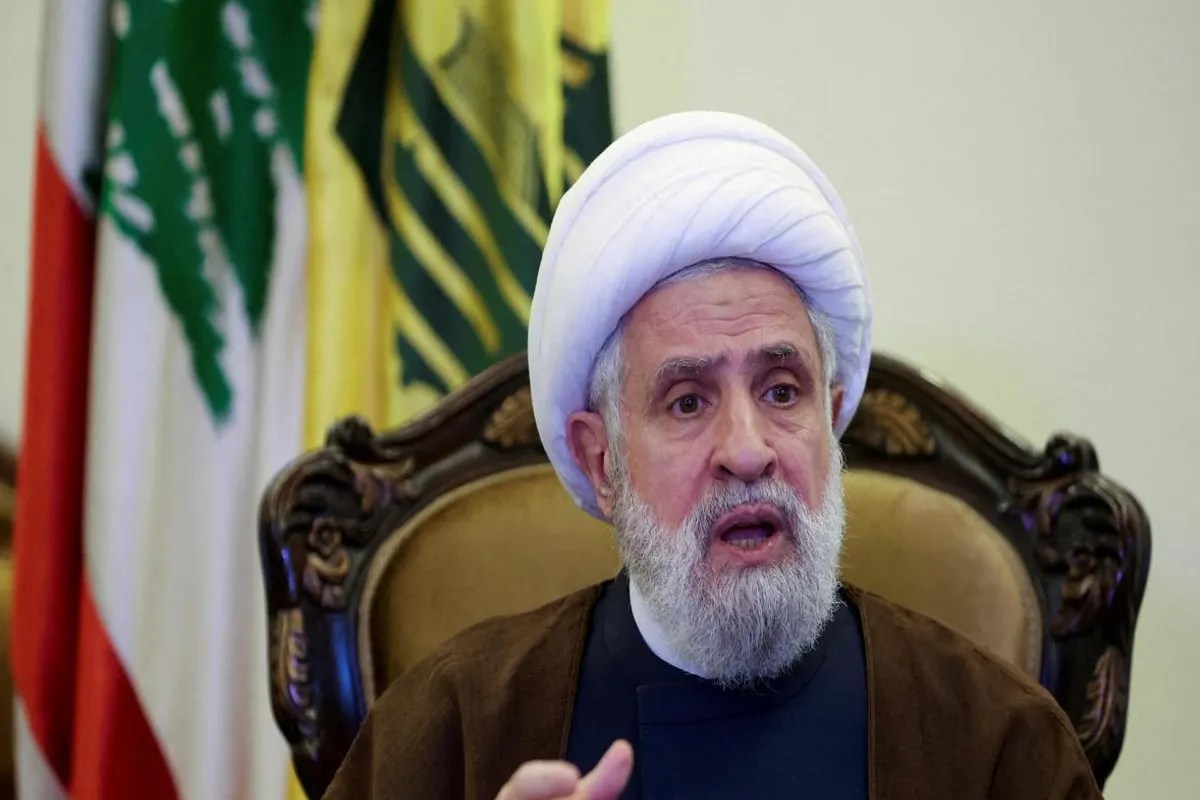
The standoff between Hezbollah and Israel has entered a phase of hardened rhetoric and tactical intransigence. Reports circulating throughout the region indicate that Hezbollah leadership has rejected proposals for a ceasefire, framing the current diplomatic overtures not as legitimate avenues for peace, but as demands for unilateral surrender. This rejection shifts the focus from potential de-escalation to the realities of a protracted military struggle, leaving little room for international mediators to maneuver.
For the observers on the ground, this is not merely a tactical disagreement. It is a fundamental clash of existential narratives. By characterizing the terms laid before them as an ultimatum for capitulation, the militant group has signaled its intent to maintain its current operational posture despite the immense pressure exerted by Israel’s military campaigns. The refusal hinges on a set of conditions that the leadership deems non-negotiable, effectively locking both sides into a cycle of friction that appears resistant to traditional diplomatic intervention.
The mechanics of the deadlock
The friction originates from deep-seated disagreements regarding sovereignty and the buffer zones proposed by external parties. Hezbollah maintains that any agreement mandating the withdrawal of its forces from the border region serves only to weaken its defensive capabilities. To their leadership, the terms presented are perceived as a mechanism to dismantle the infrastructure they have spent years developing.
Israel, conversely, views these same zones as a prerequisite for the safe return of displaced residents to northern communities. The gap between these two positions is immense. There is no middle ground when both parties view the other’s baseline requirement as an act of bad faith. When a conflict reaches this stage, the diplomatic process often stops serving as a tool for resolution and begins to function as a public relations theater for the involved factions.
Strategic inertia in the border region
The operational reality on the ground reflects this diplomatic stalemate. Neither side appears willing to offer the concessions necessary to restart a meaningful dialogue. Hezbollah relies on its entrenched position, betting that the political and economic toll on Israel will eventually limit the duration and intensity of the current operations. Meanwhile, Israeli leadership remains committed to the principle that safety cannot be guaranteed while an armed force operates with impunity across their northern frontier.
This is a war of attrition by another name. The absence of a breakthrough is not due to a lack of effort by global powers, but rather a lack of interest in compromise by the primary actors. When Hezbollah describes the proposals as surrender, they are sending a message to their support base that the struggle is binary. It is either total resistance or total defeat. This framing effectively burns the bridges that mediators might otherwise use to build a path toward a ceasefire.
Regional instability and the shadow of proxies
The implications extend far beyond the immediate border clashes. The decision by Hezbollah to maintain this stance is influenced by their position within a larger regional framework. They remain a core component of a network that prioritizes strategic depth over domestic stability. Consequently, any agreement that forces them to retreat or disarm is viewed as a threat to their entire regional alignment.
Observers often underestimate how tightly these local conflicts are bound to broader systemic interests. Hezbollah does not operate in a vacuum. Their current defiance is supported by a logic that prioritizes the cohesion of their political-military alliance. As long as this alliance remains intact and committed to its stated objectives, the prospect of a localized agreement remains elusive. The current situation suggests that the conflict will continue until one side faces a definitive change in their ability to prosecute the war, whether through exhaustion or a fundamental shift in their strategic calculus.
The limits of international influence
Diplomatic initiatives from outside nations have largely failed to break this impasse. The disconnect lies in the assumption that both sides share a similar definition of stability. They do not. International actors often push for a return to the status quo ante, or a version of past resolutions that failed to prevent the current escalation. Hezbollah, however, has moved past the point where they find the previous arrangements acceptable.
Their refusal to negotiate under the current parameters indicates they are preparing for a long-term fight. They have calculated that the risks of concession are higher than the risks of continued combat. As a result, the diplomatic landscape is frozen. Any talk of a solution that ignores this fundamental reality is disconnected from the tactical, ground-level situation. The conflict is currently fueled by a lack of trust so profound that even the most well-intentioned proposals are interpreted as strategic traps.
The reality of the northern front is that it remains a high-stakes environment where military maneuvers serve as the only language that currently carries weight. Until the cost of maintaining this position becomes greater than the cost of compromise, the cycle of violence will likely persist without interruption. The path forward is obscured by the wreckage of past failed agreements, leaving both sides to confront the harsh reality of a struggle that shows no signs of resolution.