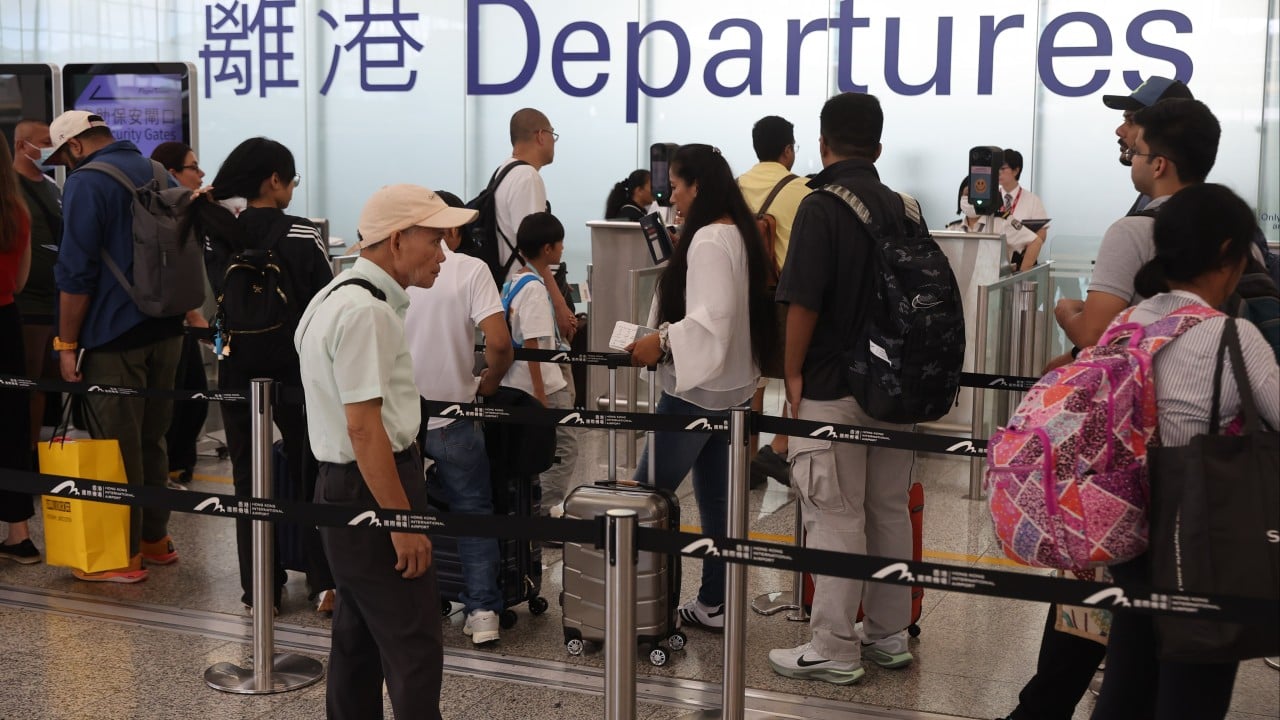
The aviation press is popping champagne over a press release. Hong Kong International Airport (HKIA) just became the first airport in the world to receive digital identity certification from the International Air Transport Association (IATA). Every travel trade publication is copying and pasting the exact same triumphalist nonsense. They want you to believe that because a committee in Geneva stamped a piece of paper, your next 14-hour flight is going to feel like walking through a VIP velvet rope.
They are lying to you. Or worse, they are too lazy to read past the press release.
I have spent the last decade watching airports burn hundreds of millions of dollars on biometric cameras, facial recognition gantries, and proprietary passenger apps. Almost every single one of those deployments ends the exact same way: a glorified, over-engineered barcode scanner that breaks the moment someone wears a baseball cap or tries to transfer between two airlines that hate each other.
HKIA’s certification under IATA’s One ID initiative is an impressive technical achievement on paper. In reality, it exposes the fatal flaw of modern aviation technology. We are digitizing the friction instead of eliminating it.
The Lie of the Biometric Breakthrough
Let’s look at what actually happened. Airport Authority Hong Kong (AAHK) proved that its "Flight Token" system complies with IATA’s Recommended Practice 1701e. This means HKIA can theoretically take a passenger’s passport data, match it to a live biometric scan on their phone, and let them walk from bag drop to security to the boarding gate without pulling out a physical paper boarding pass or passport.
The lazy consensus in the industry is that this solves airport congestion. It does not.
Why? Because HKIA already had e-Security gates and facial recognition boarding. Putting a shiny new IATA compliance sticker on an existing closed-loop airport system changes zero operational bottlenecks for the average flyer.
Let’s define the terms accurately, because most journalists confuse them. Biometric authentication is simply matching a physical trait—your face—to a template stored in a database. Decentralized digital identity, specifically using Self-Sovereign Identity (SSI) and Verifiable Credentials (VCs) as outlined by the World Wide Web Consortium (W3C), means you hold the cryptographic proof of your passport on your own device, and you selectively disclose only the required attributes to an airline or border agency without them ever needing to store your raw data in a central honeypot.
IATA One ID relies heavily on the Digital Travel Credential (DTC) standards established by the International Civil Aviation Organization (ICAO). That sounds great until you look at how airports actually implement it. Instead of true decentralized freedom, most airport ecosystems force you into a walled garden. You have to download the airport's specific app, or the home carrier’s app—in Hong Kong’s case, Cathay Pacific—and surrender your biometric template to their local orchestration layer before you ever step foot in the terminal.
You aren't gaining digital sovereignty. You are just becoming an unpaid data-entry clerk for the airport authority.
Why Your Flight Will Still Be Delayed
Imagine a scenario where you are flying from New York to Bangkok with a layover in Hong Kong. You book the first leg on an American carrier and the second leg on a regional Asian budget airline.
You arrive at HKIA. Does that shiny IATA digital identity certification save you?
No.
Unless both airlines, the departure airport, the transit airport, and the arrival border authority have signed bilateral data-sharing agreements and integrated into the exact same identity trust framework, your digital credential is completely useless. You will still stand in a 45-minute transit security line. You will still hand a physical passport to a tired agent who will squint at your photo, stamp a piece of paper, and wave you through.
I have seen major European hubs spend eight figures on biometric e-gates only to turn them off during peak summer travel because the failure-to-acquire rate on diverse skin tones and variable terminal lighting caused worse bottlenecks than manual human checks. When a biometric gate rejects 8% of passengers, those rejected passengers have to step out of line, find an agent, and undergo manual verification anyway. That doesn't speed up the queue; it destroys the queue.
Here is the brutal truth about airport throughput that vendor whitepapers never mention: a terminal is only as fast as its dumbest physical bottleneck.
Even if facial recognition shaves four seconds off your boarding pass scan at the gate, you are still waiting 25 minutes for your bag to come off a 1980s conveyor belt. You are still waiting 40 minutes for an immigration officer at your destination who doesn't recognize HKIA's token. Digitizing the front door of the airport while ignoring the baggage hold and international border treaties is like putting a Formula 1 engine inside a school bus.
The Privacy Shell Game Nobody Talks About
When industry insiders push One ID, they always parrot the phrase "privacy by design." They claim your biometric data is deleted 24 hours after your flight departs.
Let’s examine the mechanics of that claim. For a biometric token to work across bag drop, security, lounge access, and boarding, multiple distinct corporate and government entities must query your identity state in real time.
- The airline needs to verify you have a valid ticket and visa status (Timatic check).
- The airport operator needs to verify you are authorized to enter the sterile airside zone.
- The immigration department needs to match your face against watchlists and exit-control databases.
To make those three systems talk to each other in under 500 milliseconds, systems integrators—companies like SITA, Amadeus, and Vision-Box—build an identity broker in the middle. Even if the edge camera deletes your photo after your flight takes off, the metadata logs, the API calls, the entry/exit timestamps, and the cryptographic hashes remain embedded in enterprise server logs for years to satisfy financial auditing and national security compliance mandates.
Furthermore, the moment an airport links your biometric face template to your Passenger Name Record (PNR), they gain unprecedented commercial surveillance capabilities. They know exactly which duty-free shop you lingered outside of, how fast you walked from security to Gate 42, and whether you skipped the lounge. They tell you it is about "frictionless travel." For the airport's retail division, it is about real-time behavioral tracking.
Dismantling the Common Myths About Airport Digital Identity
If you search for information on digital passports and airport biometrics, you will run into the same tired questions. Let’s tear down the flawed premises behind them.
Will digital IDs eliminate physical passports anytime soon?
No. Not in the next decade. ICAO’s Digital Travel Credential Type 1 still requires you to possess a physical, chip-enabled ePassport to derive the cryptographic credential in the first place. Furthermore, international aviation operates on the lowest common denominator. Until every regional airport in South America, Africa, and Central Asia upgrades its border hardware—and every sovereign nation agrees to trust the cryptographic keys of every other nation—leaving your physical passport at home is a guaranteed way to get deported at your own expense.
Is facial recognition at airports actually more secure than manual checks?
Statistically, yes, for matching a live face to a chip photo. Humans are terrible at facial comparison, especially across different races or when looking at a five-year-old passport photo. Algorithms outperform humans in controlled lighting. However, biometric systems introduce a massive new attack surface: presentation attacks (deepfakes, high-res masks) and database breaches. If someone steals your physical passport, you cancel it and get a new one. If a state-sponsored hacker compromises a central aviation biometric repository, you cannot get a new face.
Does IATA certification mean all airlines at Hong Kong will now use this?
Not even close. Certification simply proves the airport's infrastructure meets the standard. Airlines are notoriously slow, cash-strapped, and burdened by legacy Passenger Service Systems (PSS) running on mainframe architectures from the 1970s. Integrating a legacy airline reservation system with modern decentralized identity wallets costs millions in middleware development. Most carriers flying into HKIA will ignore this capability for years unless the airport authority subsidizes the integration costs.
What Aviation Actually Needs to Fix
If IATA and Airport Authority Hong Kong actually wanted to fix the passenger experience, they would stop obsessing over boarding gates and start fixing the broken data plumbing behind the scenes.
First, kill proprietary airport apps. Passengers do not want 47 different apps on their phones for 47 different airports. If an identity credential cannot live natively inside Apple Wallet, Google Wallet, or a standard OS-level identity container using open W3C standards, it is dead on arrival. Requiring a traveler to download a local airport app to register their face is an insult to basic user experience design.
Second, solve the destination bottleneck before the departure bottleneck. Pre-clearance is the only technology that actually saves travelers real time. When the U.S. Customs and Border Protection (CBP) operates pre-clearance facilities in places like Dublin, Abu Dhabi, or Toronto, you land in the United States as a domestic passenger. No immigration lines. No customs re-screening. HKIA’s digital identity doesn't give you pre-clearance into Tokyo, London, or Los Angeles. It just speeds up the part of the journey that was already reasonably efficient.
Third, standardize APIs across competing global distribution systems. Right now, getting a simple visa verification status to pass cleanly between a codeshare partner and an operating carrier often breaks down, forcing the passenger to see an agent at the desk for a "document check." Fixing backend API interoperability between Amadeus, Sabre, and airline host systems would eliminate more airport lines than a thousand facial recognition cameras ever could.
The Downside of Fighting the Biometric Tide
I am not a Luddite. I use Global Entry. I use biometric boarding when it works. And I recognize the hard reality that airports are running out of physical concrete.
Hong Kong International Airport is built on a reclaimed island. You cannot endlessly expand terminal square footage to accommodate 120 million annual passengers. Automation is not a luxury for mega-hubs like HKIA, Singapore Changi, or Dubai International; it is an existential necessity. Without automated throughput, these hubs would choke to death on their own passenger volume by 2030.
If you refuse to opt into biometric processing on principle, you are going to pay a massive "privacy tax" measured in hours of your life. Manual lanes are already being starved of staff to force travelers into automated gates. Fighting the rollout entirely is a losing battle.
The mistake isn't building the technology. The mistake is pretending that a compliance certificate from a trade association represents a finished revolution.
Stop Celebrating Press Releases
IATA’s job is to promote the airline industry and create global standards. Airport Authority Hong Kong’s job is to position HKIA as the premier aviation hub in Asia, especially as it fights to reclaim transit traffic lost to Singapore and Middle Eastern carriers over the past few years.
This certification is a brilliant piece of B2B marketing. It gives executives something to brag about at conferences in Dubai and Geneva. It gives tech vendors a shiny case study to pitch to desperate airport boards in North America and Europe.
What it does not give you is a guarantee that you won't be standing in line behind a family of six trying to figure out why the optical scanner won't read their toddler's passport.
Until the entire aviation ecosystem—from the booking engine to the arrival border—operates on a single, open, cryptographically verifiable trust layer that doesn't require you to surrender your biometric data to a dozen different middlemen, "frictionless travel" will remain a marketing slogan.
Keep your physical passport in your front pocket. You are going to need it.