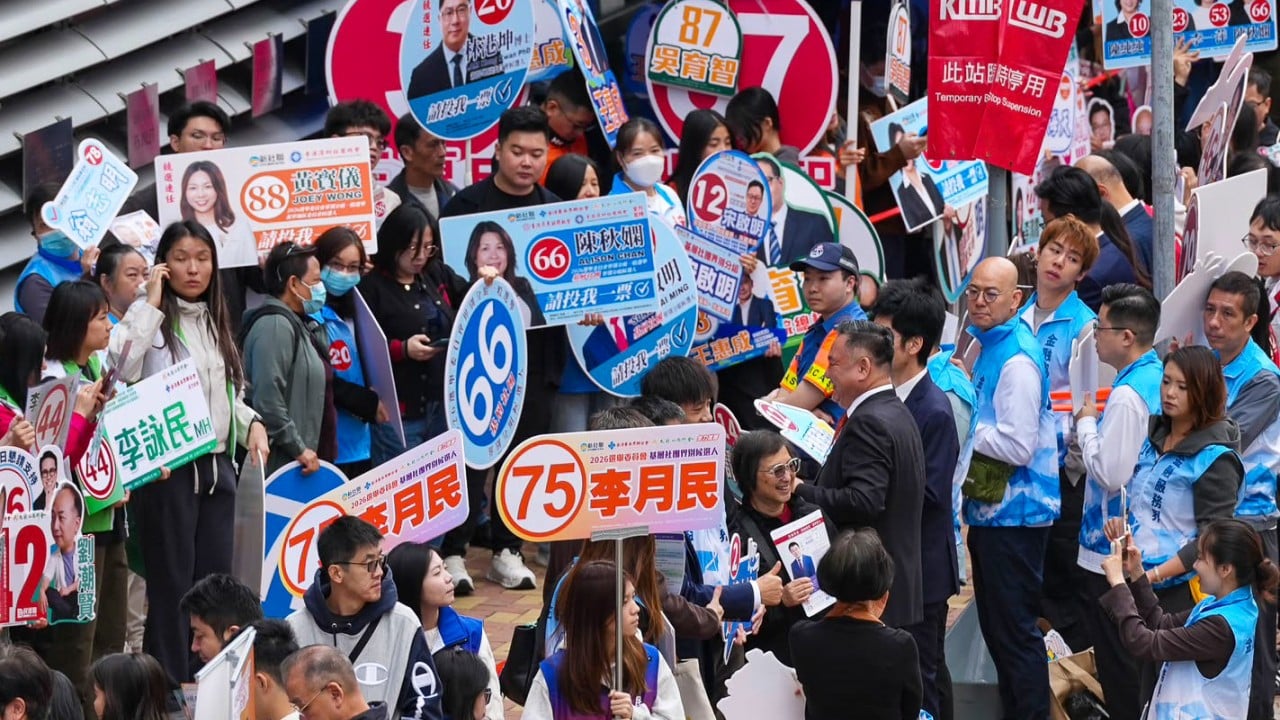
A 98.79% turnout sounds like a landslide of civic enthusiasm until you look at who actually held a ballot.
In the Hong Kong Election Committee subsector ordinary elections on November 22, 2026, 5,640 registered voters out of 5,709 in contested subsectors cast a vote. That clears the 89.77% turnout recorded in September 2021 by more than nine percentage points, setting a new benchmark for the revamped body. Headlines love a near-universal percentage. Anyone tracking Hong Kong politics knows that headline only tells half the story.
Why That Near-99% Number Needs Context
When you read that turnout jumped past 2021 levels, you have to ask a basic question: turnout among whom?
Unlike a citywide general election open to millions of residents, the Election Committee is a 1,500-member body divided across five sectors and 40 subsectors. In the 2026 cycle, the registered electorate for the contested subsectors numbered just 5,709 voters. Small, tightly organized electorates behave differently from mass populations. When voters belong to trade associations, chambers of commerce, professional guilds, or district committees that track attendance closely, voting rates routinely climb high.
In 2021, 4,389 of 4,889 voters in contested subsectors turned out. Five years later, 5,640 of 5,709 cast ballots—a 9.02 percentage point rise. Proponents and officials pointed to the figure as proof that the post-overhaul electoral system has matured and gained traction among vetted participants. Critics and outside observers take a sharper view, arguing that high turnout inside a narrow, vetted pool reflects institutional alignment rather than broad public participation. Both readings start from the same ballot count, yet they lead to completely opposite conclusions about what the number proves.
How the 1,500-Member Body Actually Works
If you follow regional governance, it's worth knowing why this vote carries outsized weight even with a tiny electorate. The Election Committee isn't a ceremonial board. Under the revamped electoral framework introduced after Beijing's 2021 overhaul, the 1,500-member committee serves a five-year term—running from February 1, 2027, to January 31, 2032, for this incoming cohort.
Members get returned in three ways: through subsector elections, by nomination, or as
Why do people fight for a seat? Because the Election Committee sits at the center of Hong Kong's political pipeline:
- It nominates candidates for the Chief Executive post and elects the Chief Executive-designate.
- It nominates Legislative Council candidates and elects 40 of the 90 seats in the Legislative Council.
- It shapes policy priorities and consensus across business, professional, grassroots, and national-organization circles.
That makes the Hong Kong Election Committee a kingmaker institution on paper and in practice. Getting inside puts you a step closer to Chief Executive selection and legislative influence in 2027 and beyond.
Subsector Dynamics and Quiet Shifts Behind the Scenes
Honesty, the biggest surprise in a 98.79% turnout race isn't the headline number—it's the friction inside specific subsectors.
In several commercial, industrial, professional, and district subsectors, voter participation hit or neared 100%. District-level representatives from Area Committees, District Fight Crime Committees, and District Fire Safety Committees accounted for large voter blocks in Hong Kong Island, Kowloon, and the New Territories, turning out at rates above 99%. Business and professional groups—from finance and real estate to accountancy, engineering, and legal—also posted heavy participation.
At the same time, local reporting noted a few unexpected upsets among candidates and a noticeable shift in how campaigning played out. Authorities reportedly weighed encouraging prominent business figures to campaign publicly before pulling back, keeping outreach quieter so low-voter-base elections wouldn't draw awkward public questions about why ordinary residents don't vote directly in those subsectors. That detail tells you plenty about the optics game in Hong Kong right now. Officials want high turnout numbers to signal stability and legitimacy, yet overt street campaigning by tycoons for a few thousand votes risks reminding the wider public how narrow the franchise is.
What Analysts and Officials Are Saying
Look at how different voices frame the November 22 result, and you see the fault lines clearly.
Chief Executive John Lee described the poll as healthy competition among patriots who are committed, competent, and constructive, tying the outcome to the principle of "patriots administering Hong Kong" and preparations for Hong Kong's upcoming milestones, including the HKSAR's 30th anniversary in July 2027. Electoral Affairs Commission leadership praised the smooth running of polling stations and vote counting. Commentary in pro-establishment outlets, including China Daily Hong Kong, framed the record turnout as evidence of a maturing electoral system that moves past past legislative gridlock.
International and critical commentary pushes back on that framing. Analysts tracking Hong Kong's post-2021 political system emphasize that pre-election vetting and structural redesign narrowed who can run and who can vote, turning subsector races into contests within an approved establishment rather than open political competition. When a system filters candidates in advance and restricts voting to thousands of institutional electors, a 98.79% turnout rate measures mobilization inside that circle—not broad public mandate.
Common Misconceptions About This Race
People outside Hong Kong—and plenty of casual readers inside it—regularly trip over a few misconceptions when turnout spikes:
- It's a general election. It isn't. Ordinary citizens don't vote in these subsector polls unless they happen to be registered electors within a qualifying subsector.
- Higher turnout equals a bigger crowd. Not necessarily. A 98.79% turnout out of 5,709 registered voters in contested subsectors is a tiny raw vote count compared to a citywide poll.
- Every seat on the Election Committee goes to a contested ballot. False. The committee has 1,500 seats, filled through elections, nominations, and ex-officio roles, with several subsectors seeing walkovers or uncontested returns.
- The vote ends the story. It's a setup act. The newly constituted committee begins its five-year term on February 1, 2027, ahead of the 2027 Chief Executive selection and Legislative Council dynamics.
How to Read Future Hong Kong Electoral Numbers
If you're tracking Hong Kong politics or business risk, don't stop at the top-line percentage. Look at the denominator first. Always check how many registered voters were actually eligible in the contested subsectors, and compare that number against the 1,500 total seats on the committee.
Next, check which subsectors saw real competition versus automatic walkovers. A subsector with dozens of candidates chasing a handful of spots tells you more about internal power brokers than a routine uncontested slate. Finally, watch how the incoming committee behaves once its term starts on February 1, 2027—especially how nominations shape the 2027 Chief Executive race and how business and district blocs align on housing, economic growth, and integration policies. Checking the primary data on the Electoral Affairs Commission portal takes two minutes and saves you from falling for spin on either side.