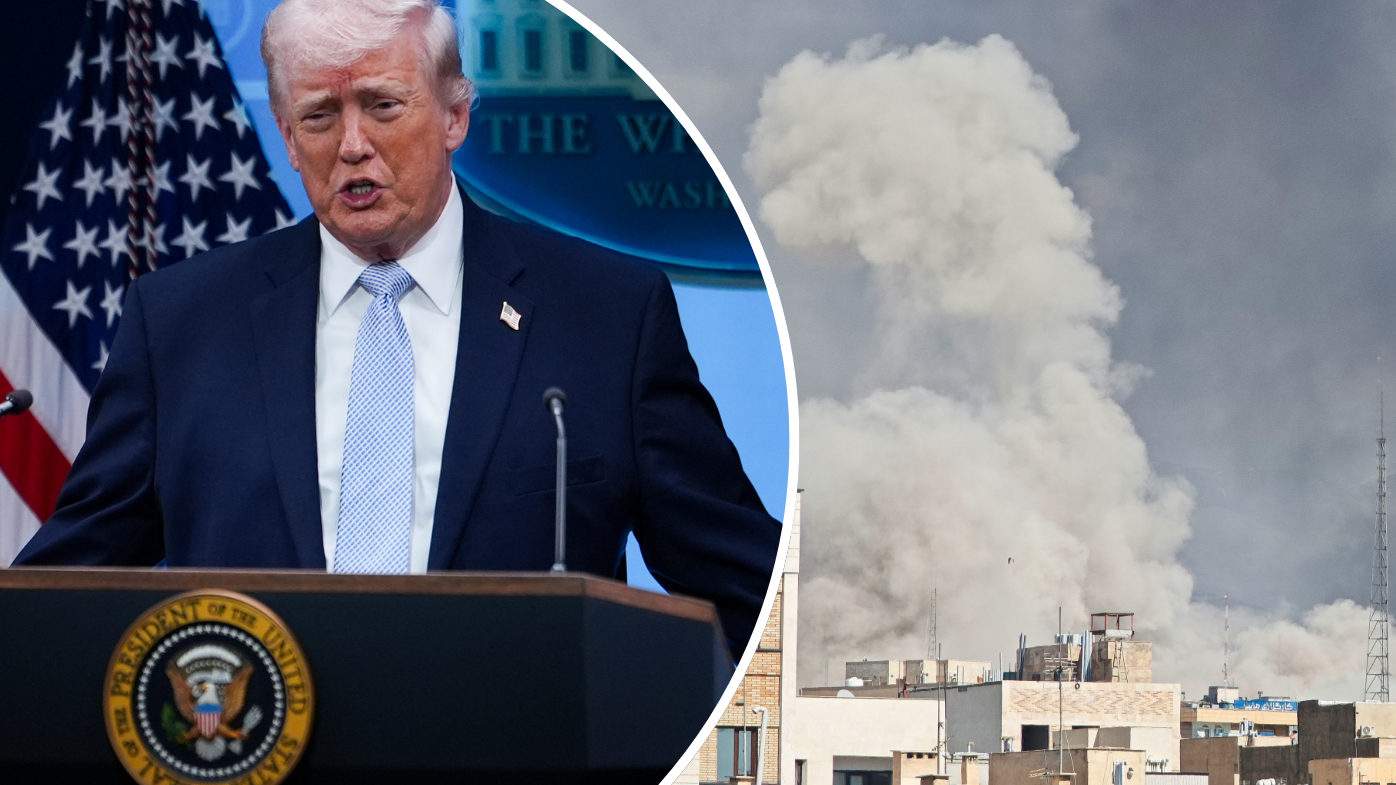
The utilization of "civilizational collapse" as a rhetorical device in modern diplomacy functions less as a literal forecast and more as a high-stakes mechanism for forced-choice binary negotiation. When Donald Trump posits that a "whole civilization will die" in the absence of a specific diplomatic outcome with Iran, he is employing a psychological framework known as hyperbolic deterrence. This strategy aims to compress the decision-making window of adversaries and allies alike by artificially inflating the cost of inaction to an infinite variable. In formal game theory, this represents an attempt to shift a non-zero-sum game into a catastrophic zero-sum framework, where the perceived utility of a "deal"—regardless of its granular specifics—outweighs the total destruction of the system.
The Triad of Existential Volatility
Analyzing the potential for civilizational risk in the context of Iranian-Western relations requires moving past emotive language and toward a structural audit of three specific pillars. These pillars define the actual ceiling of the conflict:
- Kinetic Escalation Loops: The shift from localized proxy conflicts to direct state-on-state engagement.
- Nuclear Proliferation Thresholds: The compression of "breakout time" (the duration required to produce enough weapons-grade uranium for a single device).
- Economic Contagion and Energy Chokepoints: The physical vulnerability of the Strait of Hormuz, which facilitates approximately 21% of the world's total petroleum liquids consumption.
Each pillar operates within a feedback loop. A failure in the diplomatic channel increases the probability of a kinetic strike; a kinetic strike accelerates the political will for nuclear weaponization; weaponization triggers a blockade response that collapses global energy markets. This is the "cost function" of a failed deal.
The Breakout Time Calculus
The technical reality of Iran’s nuclear program is governed by the $U_{235}$ enrichment percentage and the total inventory of advanced centrifuges. To understand why "tonight" or any specific deadline is used as a rhetorical anchor, one must examine the Logarithmic Scale of Enrichment.
The energy required to enrich uranium from its natural state (0.7%) to 4.4% (power reactor grade) represents about 75% of the total work needed to reach 90% (weapons grade). Once a state possesses large stockpiles of 20% or 60% enriched uranium, the physical time required to "dash" to a weapon is reduced to days or weeks. This technical bottleneck creates a strategic imperative: negotiators view any delay not just as a loss of time, but as a permanent loss of the ability to prevent a nuclear outcome.
The "civilizational" threat cited by Trump rests on the assumption that a nuclear-armed Iran would trigger a Regional Proliferation Cascade. In this model, Saudi Arabia, Turkey, and Egypt would likely seek equivalent capabilities to maintain a balance of power. This moves the region from a "Unipolar Nuclear Deterrence" (Israel) to a "Multipolar Volatile Deterrence" model. Unlike the Cold War’s stable bipolarity, a multipolar nuclear Middle East lacks the established communication protocols and "hotlines" required to prevent accidental launches during periods of high tension.
The Strait of Hormuz as a Global Kill-Switch
The existential claim is often dismissed as hyperbole, yet it finds a factual basis in the fragility of global supply chains. The Strait of Hormuz is the world's most important oil transit chokepoint.
- Width: The shipping lanes are only two miles wide in each direction.
- Volume: Over 20 million barrels of oil per day.
- Alternative Capacity: Total pipeline bypass capacity in Saudi Arabia and the UAE is less than 40% of the current flow through the Strait.
A total closure of this artery would not merely raise gas prices; it would trigger a systemic liquidity crisis. The "Cost of Civilizational Death" in this context is the collapse of the Petrodollar-dependent financial system. This creates a Negative Sum Outcome where the victor of the conflict inherits a global economy in a state of depression.
The Architecture of a High-Friction Deal
Effective strategy consultant frameworks suggest that any "deal" capable of averting these outcomes must solve the Verification-Sovereignty Paradox. Iran requires the removal of primary and secondary sanctions to stabilize its internal economy, while the West requires "intrusive inspections" that Iran views as a violation of sovereignty and a precursor to military targeting.
The logic of a successful agreement must be built on three tiers of containment:
Tier 1: Technical Reversibility
The agreement must focus on physical assets that cannot be quickly rebuilt. This includes the pouring of concrete into the calandria of heavy water reactors or the shipping of enriched stockpiles out of the country. This creates a "Strategic Buffer" where the breakout time is kept at a minimum of 12 months.
Tier 2: The Sunset Clause Extension
A primary flaw in previous iterations (like the JCPOA) was the expiration of restrictions. A "Masterclass" deal replaces fixed dates with Performance-Based Milestones. Sanctions are not lifted based on the calendar, but based on IAEA-certified compliance over decades.
Tier 3: Regional Integration
Security cannot be achieved in a vacuum. A deal that ignores the ballistic missile program or regional proxy influence (the "Gray Zone" conflicts) leaves the door open for a conventional war that could escalate into the very civilizational collapse being warned against.
The Cognitive Bias of "The Deal"
There is a significant risk in the "Great Man" theory of diplomacy—the belief that a single transaction or a single leader's "toughness" can override decades of ideological and theological friction. This is the Optimism Bias inherent in Trump’s rhetoric. He views international relations as a commercial real estate negotiation where every party has a price.
However, the Iranian state operates under a Dual-Legitimacy Framework:
- Republican Legitimacy: The need to satisfy the economic demands of the populace.
- Revolutionary Legitimacy: The need to maintain an anti-hegemonic stance against the West.
A deal that solves for Republican Legitimacy (by lifting sanctions) but destroys Revolutionary Legitimacy is a deal the Iranian leadership cannot sign without risking internal collapse. Conversely, a deal that offers no economic relief provides the Iranian leadership with no incentive to stop the nuclear clock.
The Strategic Path of Maximum Pressure vs. Managed Friction
The "Maximum Pressure" campaign initiated in previous years aimed to force a total capitulation. The data suggests this resulted in a Paradoxical Acceleration. Deprived of oil revenue, Iran increased its "Shadow Economy" activities and accelerated enrichment as its only remaining leverage.
The path forward requires a transition from "Maximum Pressure" to "Calibrated Constraint".
- Establish a Redline Floor: Clearly define the specific enrichment levels or physical actions that trigger an immediate kinetic response. This removes ambiguity and prevents "Salami Slicing" tactics (where Iran makes small, incremental advances that are too small to justify war individually).
- Modular Sanctions Relief: Instead of an "All or Nothing" approach, relief should be tied to specific, observable behavioral changes. For every 100kg of 60% uranium shipped out of the country, a specific percentage of frozen assets is released.
- The Third-Party Guarantor: Utilizing neutral energy hubs (such as Oman or Qatar) to act as the clearinghouse for funds ensures that the West retains a "Kill Switch" on the money flow if compliance falters.
The current situation is a high-entropy system. The rhetoric of "civilizational death" serves as a blunt instrument to force the system toward a lower-entropy state (a deal). However, the danger of using such extreme language is that it leaves no room for "Face-Saving De-escalation." If both sides believe they are fighting for the survival of their respective civilizations, the probability of a miscalculation increases.
The strategic imperative is to de-mythologize the conflict. It is not a battle of civilizations; it is a complex, multi-variable optimization problem involving energy security, regional hegemony, and nuclear physics. The winner is not the one who shouts the loudest about the end of the world, but the one who most accurately maps the adversary's cost-of-exit.
The next 24 to 48 months will be defined by the Enrichment-Sanction Equilibrium. If Iran crosses the 90% threshold, the "deal" framework becomes obsolete, and the system shifts into a "Pre-emptive Strike" model. To avoid this, the immediate tactical play is the establishment of a "Freeze-for-Freeze" interim agreement: Iran halts enrichment at 60% in exchange for a limited, monitored waiver on oil exports to specific Asian markets. This buys the analytical time necessary to construct a permanent architectural solution.