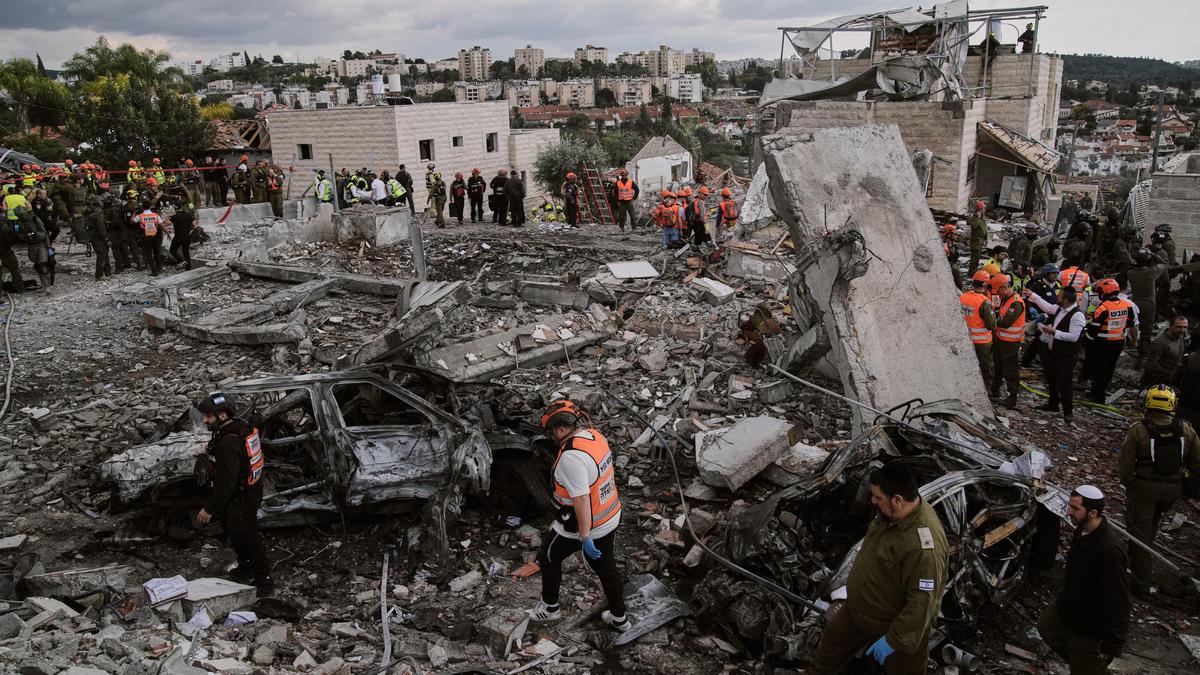
The rules of engagement just went out the window in the Indian Ocean. While the world was watching the Red Sea, a U.S. submarine torpedoed and sank the Iranian frigate IRIS Dena off the coast of Sri Lanka. This wasn't a skirmish in a crowded strait. It was a cold, calculated strike on a vessel that was, by all accounts, heading home after playing nice at an international naval party.
Speaking at the Raisina Dialogue in New Delhi, Iran’s Deputy Foreign Minister Saeed Khatibzadeh didn't hold back. He called the attack an "atrocity" and a "sad, unfortunate incident" that targeted an "unarmed" ship. But beyond the rhetoric, this event signals a terrifying shift. We're no longer talking about "gray zone" conflict or shadow wars. We're looking at a full-blown maritime hunting season where even ceremonial participation in naval exercises doesn't grant you safe passage.
A Guest of India Caught in a Deadly Crossfire
The IRIS Dena wasn't just lurking in the deep. It was returning from MILAN 2026, a massive multilateral naval exercise hosted by India in Visakhapatnam. Think about the optics for a second. Iran sends a ship to a friendly nation's premier maritime event—one that included 74 other countries—and on the way back, it gets turned into a steel coffin by a U.S. torpedo.
Khatibzadeh's main gripe at the dialogue was that the vessel was in a "non-combat configuration." It was ceremonial. It was basically a floating diplomat at that point. He compared the U.S. tactics to those of the Nazi era, attacking vessels away from actual combat zones. Whether you buy the Nazi comparison or not, the fact remains: sinking a ship that just paraded for the Indian President is a massive middle finger to regional diplomatic norms.
The numbers are grim. At least 87 Iranian sailors are dead. Another 32 were pulled from the water by the Sri Lankan Navy and rushed to hospitals in Galle. When you lose that many men on a ship that "believed it was safely navigating in international waters," the fallout isn't just political—it’s visceral.
Why India is Walking a Tightrope
India finds itself in a nightmare scenario. On one hand, the U.S. is a strategic partner they've been cozying up to for years. On the other, the Iranians were their invited guests. You don't invite someone to your house and then let the neighbor jump them in your driveway.
External Affairs Minister S. Jaishankar tried to play the "humanity" card. He confirmed that India allowed another Iranian ship, the IRIS Lavan, to dock in Kochi on humanitarian grounds after the Dena went down. He basically said the ship and its "young crew" were just caught on the wrong side of events. It’s a classic diplomatic hedge.
But the domestic heat is rising. Opposition leaders like Rahul Gandhi are calling out the government's "silence" on the strike. The reality is that the Indian Ocean—India’s "backyard"—is becoming a live fire zone. If the U.S. can sink an Iranian ship right off the coast of Sri Lanka without warning, the "maritime security" India often brags about starts to look a bit shaky.
The End of Diplomatic Normalization
Khatibzadeh made a point that shouldn't be ignored. He argued that if "assassinating the head of another state" and sinking "unarmed" vessels becomes the new norm, then nobody can have normal diplomatic relations anymore. He's referring to the killing of Iran’s Supreme Leader Ali Khamenei just days prior in a joint U.S.-Israeli strike.
Tehran’s stance is now "ultimate resistance." They aren't looking for an off-ramp because they don't think one exists. They're hitting U.S. bases in Jordan, Kuwait, and the UAE because, as they put it, they have no option but to hit wherever the attacks originate from.
The U.S. hasn't apologized. Defense Secretary Pete Hegseth called the IRIS Dena a "prize ship" and said the U.S. is winning "devastatingly and without mercy." That kind of language doesn't leave room for de-escalation. It tells you the Pentagon isn't interested in the "sensitivities" of regional players like India or Sri Lanka.
What Happens When the Ocean Becomes a No-Go Zone
The sinking of the Dena has already pushed shipping companies to the edge. War risk premiums are doubling. If you're a commercial captain, you aren't just worried about Houthi drones anymore. You're worried about being near the wrong flag at the wrong time.
The Indian Ocean used to be the safe alternative to the chaos of the Red Sea. Now, it's just another chapter of the same war. If you're following this, here’s what to keep an eye on:
- Sri Lanka’s Response: They’re the ones pulling bodies out of the water. Will they continue to allow U.S. subs to roam their waters, or will they push back to protect their "neutrality"?
- India’s Maritime Doctrine: Expect a massive ramp-up in Indian Navy patrols. They can't afford to look like they've lost control of the waters around the subcontinent.
- The "Last Bullet" Doctrine: Iran has signaled they're ready to fight to the last soldier. This means more asymmetric attacks on tankers and bases in the Gulf.
The "freedom of navigation" everyone loves to talk about is currently at the bottom of the ocean along with the IRIS Dena. Don't expect it to surface anytime soon. If you're tracking regional stability, the time for "watching and waiting" is over. Start looking at how your supply chains handle a permanent war footing in the Indian Ocean.