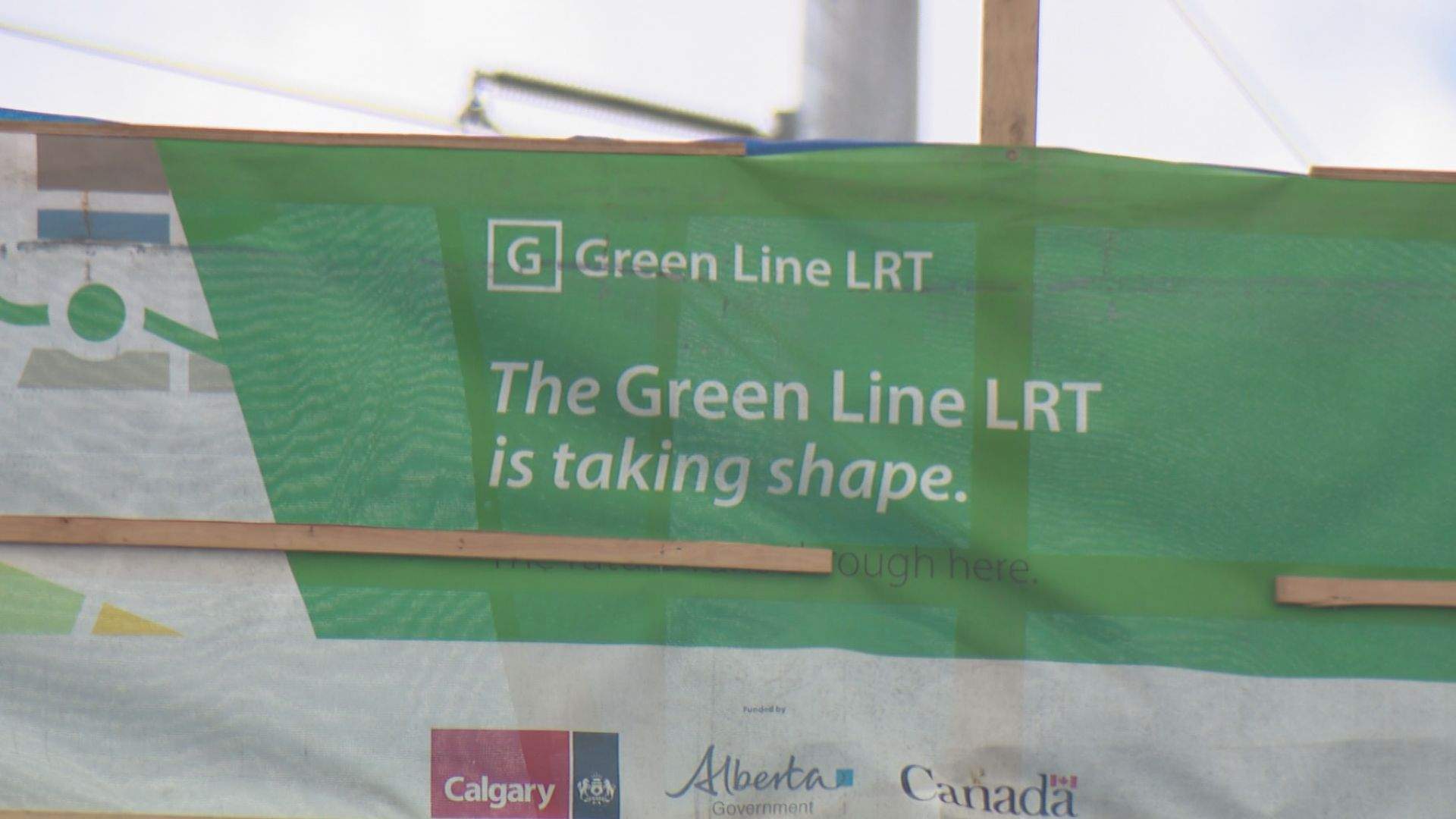
Calgary city council has finally locked down its downtown alignment for the beleaguered Green Line light rail transit project, opting for an at-grade surface route running down 10 Avenue S.W. rather than the multi-billion-dollar subterranean tunnels originally pitched. After years of escalating budgets, provincial funding ultimatums, and bitter political wrestling, the municipality chose a path of least financial resistance. Trains will operate at street level through the southern edge of the core, terminating at a station near 2 Street S.W.
This decision brings a semblance of finality to an urban megaproject that had devolved into an administrative soap opera. Yet underneath the political relief lies a hard truth about municipal infrastructure planning in Western Canada. When multi-jurisdictional funding collapses under the weight of its own inflation, the compromises left on the table rarely satisfy anyone. They merely defer the hardest engineering and financial questions to a future decade.
The Anatomy of a Downscaled Vision
To understand how Calgary arrived at a 10 Avenue surface alignment, one must look backward at the fiscal wreckage of the original blueprint. The initial dream promised a comprehensive spine slicing directly through the heart of the city and tunneling deep beneath downtown before heading north toward major employment and residential nodes. It was an ambitious, grand design meant to future-proof a rapidly growing metropolis.
Reality, however, proved unforgiving. Surging construction costs and complex underground geotechnical hurdles pushed initial price tags into astronomical territory. When the provincial government made it clear that open-ended tunnel subsidies were off the table, the city faced a stark binary choice. Proceed with an option that triggered billions in unfunded liabilities, or scale back the ambition to match available dollars.
Council chose the latter by a decisive 12-to-two margin, landing on a surface option that stays south of the Canadian Pacific Kansas City tracks before terminating abruptly near the Beltline. Critics argue this reduces a regional rapid transit backbone into a glorified suburban shuttle that dumps commuters at the edge of downtown rather than moving them seamlessly through it. Proponents counter that building something tangible now beats waiting another generation for federal and provincial coffers to align on a subterranean pipe dream.
The Street-Level Trade-Off
Operating a modern light rail transit system at grade through a dense urban environment introduces friction that planners try desperately to avoid. Running trains down 10 Avenue S.W. means sharing the corridor with vehicular traffic, delivery trucks, cyclists, and pedestrians.
In a hypothetical scenario where a downtown delivery truck stalls across the tracks during peak morning rush hour, the cascading delays ripple backward through the entire southeast leg. Unlike grade-separated tracks or dedicated subterranean tubes, surface alignments are inherently vulnerable to the chaotic rhythms of street life. Operating speeds must be throttled to accommodate intersections, pedestrian crosswalks, and tight turning radiuses.
Furthermore, the connection to the existing Red and Blue lines is far from direct. Commuters wanting to transfer from the Green Line to the 7 Avenue transit corridor will face a multi-block walk through street-level environments or via the Plus 15 network. For a city trying to coax drivers out of personal vehicles and into public transit, friction in the transfer process is a silent killer of ridership. Every extra minute added to a cross-downtown commute makes the automobile look more appealing.
The Business Community and the Beltline Squeeze
Not everyone along the newly minted route is celebrating the end of indecision. Small businesses and property owners flanking the 10 Avenue corridor have voiced sharp anxieties regarding construction disruption and long-term parking reconfiguration.
Urban transit projects act as double-edged swords for commercial strips. While long-term foot traffic generated by transit-oriented development can revitalize a neighborhood, the multi-year construction phase can starve local businesses of revenue. Access routes narrow, curb parking vanishes, and the heavy civil engineering work creates an inhospitable pedestrian climate. For independent retailers operating on tight margins, surviving a multi-year construction window is a high-stakes gamble.
Council members who voted against the alignment pointed out these exact vulnerabilities, arguing that rushing a surface concept without definitive cost estimates for future northern extensions leaves too many loose ends. When a project's northern half remains functionally unfunded and disconnected from the core, the label of a city-shaping rapid transit network begins to fray at the edges.
The Unfinished Horizon
The fundamental tension of modern urban transit planning is the eternal war between what is economically feasible today and what is functionally necessary for tomorrow. Calgary has chosen fiscal pragmatism over engineering perfection.
The concrete reality is that construction on the southeast leg is moving forward, and a surface route into the southern edge of downtown provides an operational footprint. Yet the shadow of what was omitted looms large. Crossing the Bow River to service the densely populated north remains an expensive ghost haunting future municipal budgets. Until a credible funding mechanism materializes for those northern phases, Calgary’s Green Line will remain a half-finished promise, operating at street level and carrying the weight of compromises made in the committee rooms of City Hall.