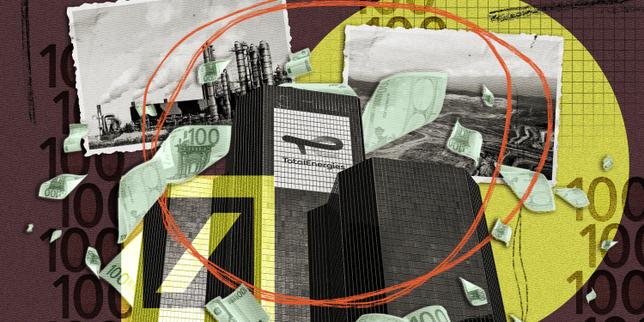
Deutsche Bank promised investors a sustainable future while quietly inflating its green credentials by hundreds of billions of dollars. Behind a sophisticated public relations campaign, the German lender and its asset management arm, DWS, systematically overstated how much money they actually managed under strict environmental, social, and governance criteria. What started as a whistleblower complaint from a former sustainability executive spiraled into armed police raids in Frankfurt, a landmark regulatory fine in Washington, and an existential reckoning for sustainable finance across Europe.
The numbers never added up. For years, Wall Street and Frankfurt treated ESG investing as an unstoppable cash machine, a way to charge higher management fees while projecting moral authority. Deutsche Bank leaned hard into that pitch. When prosecutors and securities regulators finally looked under the hood, they found a massive gap between what the bank sold to institutional clients and what its portfolio managers were actually doing on the trading floor.
How the Green Mirage Was Built
To understand how a premier European financial institution ended up with federal investigators seizing boxes from its twin towers in Frankfurt, you have to look at the incentives inside modern asset management. Traditional mutual funds face brutal fee compression. Index funds cost pennies. Sustainable finance offered a rare escape hatch, allowing banks to market specialized, actively managed products at a premium.
In 2020, DWS Group—majority-owned by Deutsche Bank—declared in its annual report that more than half of its €900 billion in assets under management were "ESG integrated." That single figure became the centerpiece of the firm's investor presentations and marketing brochures. It signaled to pension funds, sovereign wealth managers, and retail savers that sustainability sat at the core of the bank's investment philosophy.
The reality inside the building looked very different. According to subsequent regulatory findings, "ESG integration" at DWS often meant little more than giving portfolio managers access to an internal software tool that displayed third-party sustainability scores. Managers were under no obligation to use those scores when buying or selling stocks and bonds. A fund manager could buy shares in a heavy coal polluter or a company flagged for severe labor abuses, ignore the warning flags on their screen, and DWS would still count those assets toward its green total.
Desiree Fixler saw the disconnect firsthand. Hired as DWS's Group Sustainability Officer in 2020 to bring order to the firm's environmental strategy, she quickly realized the public numbers were indefensible. When she raised alarms internally and pushed to downgrade the reported ESG figures in the upcoming annual report, she met fierce resistance from senior leadership. In March 2021, just days before the report was published, DWS fired her.
The Raid That Changed European Banking
Firing a compliance-minded executive rarely buries a problem. Usually, it guarantees the story goes public.
Fixler took her documentation to regulators on both sides of the Atlantic, including the U.S. Securities and Exchange Commission and Germany's financial watchdog, BaFin. By August 2021, the Wall Street Journal broke the story, triggering an immediate sell-off in DWS shares and wiping out more than a billion euros in market value in a single afternoon.
Still, Deutsche Bank and DWS denied the allegations. Executives insisted they stood by their disclosures. That defensive posture collapsed on May 31, 2022. Roughly fifty officials from the Frankfurt public prosecutor's office, BaFin, and Germany's federal criminal police raided the headquarters of both DWS and Deutsche Bank.
The optics were devastating. Pictures of investigators walking into Germany's flagship bank over greenwashing allegations sent a chill through every compliance department in London, Paris, Zurich, and New York. For the first time, environmental marketing claims were being treated not as harmless corporate puffery, but as potential criminal prospectus fraud. Within 24 hours of the raid, DWS Chief Executive Asoka Woehrmann announced his resignation.
The Mechanics of Misleading Disclosures
Regulators eventually peeled back the exact methods used to manufacture the green facade. In September 2023, the SEC fined DWS $19 million for material misstatements regarding its ESG controls—the largest greenwashing penalty ever levied against an asset manager by the agency at the time. (DWS also paid an additional $6 million in the same settlement for anti-money laundering failures).
The SEC order laid out a damning timeline of operational neglect:
- Missing Policies: Between August 2018 and late 2021, DWS marketed itself as a leader in ESG investing while failing to adopt or implement written policies to ensure its public claims matched actual investment practices.
- Broken Monitoring: The firm had no reliable mechanism to verify whether portfolio managers actually factored sustainability risks into their financial models, despite telling clients this was standard procedure.
- Selective Reporting: Internal audits and staff warnings repeatedly flagged that the firm's data infrastructure could not support its marketing assertions, yet top executives kept repeating the headline numbers to investors.
German prosecutors followed suit in early 2025, hitting DWS with an additional €25 million fine for negligent violation of supervisory duties after concluding that the company's public statements about its ESG leadership did not match reality between 2020 and 2023.
The Shadow Portfolio of Fossil Fuels
While DWS struggled to defend its asset management labels, Deutsche Bank's core investment banking division faced its own credibility crisis. Corporate sustainability pledges rarely survive contact with a lucrative underwriting fee.
Even as Deutsche Bank touted its commitment to the Net-Zero Banking Alliance and rolled out glossy sustainability reports promising to align its lending with the Paris Climate Agreement, its dealmakers continued financing major fossil fuel expansions. Independent tracking by environmental research coalitions, including Urgewald and the Rainforest Action Network, repeatedly documented billions of dollars in loans and bond underwriting funneled to oil, gas, and coal operators after the bank's supposed green pivot.
Banks love to point to their "sustainable finance volume" targets—pledges to facilitate hundreds of billions of euros in green loans and bonds by a future date. Here is how that accounting trick works in practice. If a major energy company issues a bond to build wind turbines, Deutsche Bank counts that deal toward its green financing target. If the exact same energy company comes back six months later to raise money for deepwater oil drilling, Deutsche Bank underwrites that deal too, booking the fees while keeping the transaction off its sustainability highlight reel.
| What the Bank Promised | What Happened Behind Closed Doors |
|---|---|
| Over half of DWS assets "ESG integrated" | Portfolio managers could freely ignore ESG data tools without penalty or oversight. |
| Rigorous internal sustainability governance | Whistleblower Desiree Fixler was terminated days before the 2020 annual report dropped. |
| Alignment with Paris climate goals | Investment banking continued underwriting billions in fossil fuel expansion projects. |
| Transparent client reporting | SEC found the firm lacked basic policies to verify its own environmental marketing claims. |
This dual-track strategy is not unique to Frankfurt, though Deutsche Bank became its most visible casualty. By separating green financing metrics from total fossil fuel exposure, global lenders can claim rapid climate progress without ever shrinking their carbon-heavy loan books.
Why Self-Regulation Failed So Spectacularly
The Deutsche Bank scandal exposed a structural flaw at the heart of global finance. For nearly a decade, governments allowed the financial sector to grade its own homework on sustainability.
There was no universal legal definition of what constituted an "ESG fund" or "ESG integration." Rating agencies like MSCI, Sustainalytics, and S&P each used proprietary, opaque methodologies that frequently contradicted one another. A company could score in the top quartile for sustainability on one terminal and the bottom quartile on another. Asset managers exploited that ambiguity, shopping around for favorable metrics or inventing their own internal labels to slap onto existing funds.
To be fair to the bankers on the ground, early regulatory frameworks in Europe created immense confusion. When the European Union introduced the Sustainable Finance Disclosure Regulation in 2021, it classified funds into "Article 6" (non-sustainable), "Article 8" (promoting environmental or social characteristics), and "Article 9" (having a strict sustainable investment objective). Asset managers rushed to reclassify trillions of euros into Article 8 and Article 9 buckets to capture investor inflows, only for European regulators to tighten the technical definitions a year later. That regulatory whiplash forced dozens of major firms—including DWS, BlackRock, and Amundi—to abruptly strip the highest sustainability labels off hundreds of funds in late 2022.
Yet regulatory ambiguity does not excuse outright misrepresentation. Telling clients you have controls in place when no such controls exist crosses the line from regulatory confusion into securities fraud.
The Lasting Fallout for Global Investors
Deutsche Bank survived the scandal, largely because its core commercial and investment banking profits rebounded on the back of higher interest rates. DWS paid its fines, overhauled its compliance leadership, and scrubbed the inflated ESG numbers from its annual reports. On paper, the crisis was contained.
In reality, the damage reshaped how institutional money moves.
Before the Frankfurt raids, asset managers routinely slapped "ESG" or "Sustainable" onto fund names as a default marketing strategy. Today, the exact opposite is happening. Across Europe and North America, funds are quietly dropping sustainability terms from their titles to avoid regulatory scrutiny and litigation risk. Greenhushing—where companies deliberately under-report or hide their climate initiatives to avoid accusations of hypocrisy—has replaced greenwashing as the dominant corporate reflex.
For everyday investors and pension trustees, the lesson from Deutsche Bank is brutal and straightforward. A sustainability label on a financial product guarantees nothing about where your money actually goes. Unless a fund explicitly publishes its underlying holdings, documents binding exclusion criteria, and subjects its claims to independent third-party audits, "ESG integration" remains nothing more than an expensive marketing slogan.