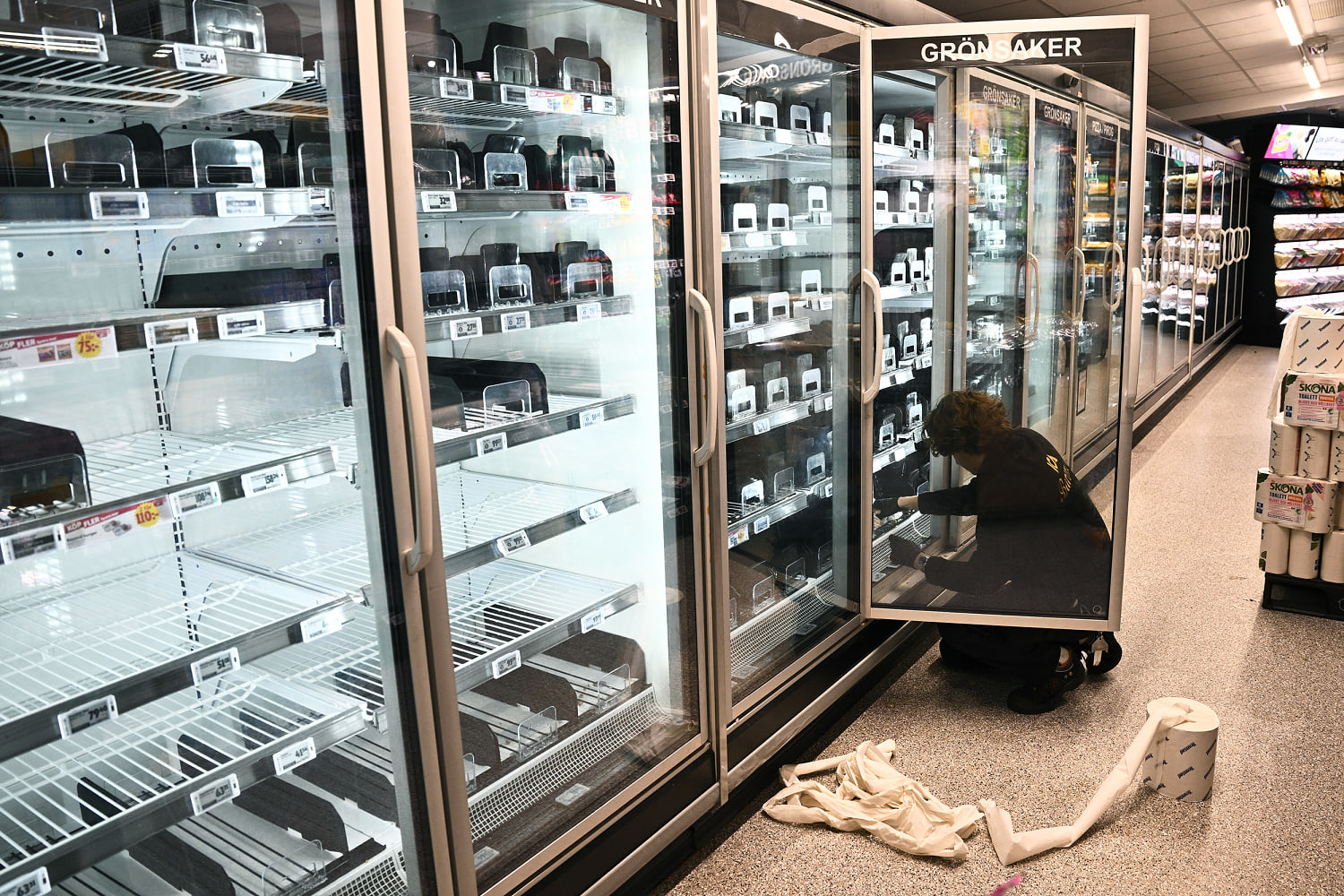
Cybercriminals are no longer just stealing credit card numbers or encrypting corporate email servers. Across Europe, attackers have found a far more visceral way to extort major grocery chains by remotely hijacking their commercial freezers and refrigerators. By infiltrating internet-connected building management systems, hackers can manipulate temperature controls, threaten millions of euros in spoiled inventory, and force retail executives to pay ransoms before the milk sours and the meat rots.
The mechanics of these intrusions reveal a massive blind spot in how modern retail operates. Over the past decade, supermarkets aggressively retrofitted their stores with Internet of Things (IoT) sensors and automated HVACR (Heating, Ventilation, Air Conditioning, and Refrigeration) controllers. The goal was straightforward. Store managers wanted to slash energy bills, comply with strict European Union environmental regulations regarding refrigerant leaks, and predict mechanical failures before a compressor died on a Saturday afternoon. Yet in the rush to connect every cooling unit to a central dashboard, security was treated as an expensive afterthought.
The Anatomy of a Cold-Chain Extortion
To understand how an attacker melts down a supermarket aisle from half a continent away, you have to look at the vendors who maintain these machines. Large European grocers rarely service their own refrigeration racks. Instead, they outsource maintenance to third-party engineering firms. Those contractors, eager to avoid dispatching technicians in vans for minor software tweaks, demanded remote access to the store's Operational Technology (OT) networks.
That remote access is almost always the weakest link.
Consider a hypothetical scenario based on common industrial control system vulnerabilities. A mid-sized refrigeration contractor uses a shared, unencrypted remote desktop credential to monitor temperature telemetry across three hundred supermarket locations in Germany and the Netherlands. An attacker compromises the contractor's corporate network via a standard phishing email. Once inside, the intruders do not bother deploying ransomware on the contractor's office laptops. They look for the VPN credentials leading directly into the grocery chains' store-level networks.
From there, lateral movement is trivial. Because most retail networks suffer from flat architecture, the firewall separating the store's point-of-sale terminals from the back-room Programmable Logic Controllers (PLCs) is either misconfigured or nonexistent. The hackers land directly on the human-machine interface governing the store's cooling loops. They do not need zero-day exploits or nation-state malware. They simply use the legitimate administrative software provided by the refrigeration manufacturer to toggle the compressors off, alter defrost cycles, or lock out local manual overrides.
Why Spoiled Food Beats Stolen Data
Traditional ransomware relies on data theft and operational paralysis. If a hospital or a logistics firm gets locked out of its servers, it hurts, yet backups can often restore the system within days without permanent physical loss. Cold-chain sabotage operates on a brutal, unforgiving biological clock.
Food safety regulations across the European Union leave zero room for guesswork. Under strict hygiene standards, if a refrigerated display case holding fresh poultry, dairy, or seafood rises above a specific temperature threshold—typically around 4 to 8 degrees Celsius—for even a brief, undocumented window, the entire batch must be destroyed. Store managers cannot simply turn the freezers back on and hope for the best. Liability laws and health inspectors mandate immediate disposal.
For a major European supermarket chain operating hundreds of locations, a coordinated attack across the network turns into a catastrophic financial hemorrhage within hours.
- Direct Inventory Loss: A single hypermarket can hold hundreds of thousands of euros worth of perishable goods. Multiply that across fifty or a hundred compromised stores, and the immediate write-off dwarfs a typical ransom demand.
- Logistics Nightmares: You cannot simply throw fifty tons of spoiled meat into the municipal dumpster behind the store. Disposing of hazardous organic waste requires specialized transport, strict environmental documentation, and immense cleanup costs.
- Shelf Emptiness: Even after the digital lock is removed and the compressors are humming again, restocking the cold chain takes days. Empty refrigerated aisles destroy consumer trust faster than almost any other retail failure.
- Regulatory Scrutiny: Under frameworks like the NIS2 Directive, essential and important entities in the European Union—which explicitly includes major food production, processing, and distribution networks—face severe reporting obligations and potential fines if their cybersecurity posture proves negligent.
Hackers know this math. They understand that a Chief Financial Officer staring at ten million euros in rotting inventory will authorize a two-million-euro cryptocurrency transfer far faster than an executive dealing with leaked customer loyalty data.
The Legacy Hardware Trap
If securing these systems were as simple as pushing a software patch, the problem would have vanished years ago. The reality on the ground in European retail is far messier. Commercial refrigeration infrastructure is built to last twenty to thirty years. While the corporate IT department upgrades its laptops every thirty-six months, the industrial controllers sitting on the roof of a supermarket in Lyon or Milan might be running embedded operating systems from the early 2000s.
Many of these devices lack the processing power to run modern encryption protocols or endpoint detection agents. You cannot install antivirus software on a twenty-year-old temperature relay. Furthermore, vendors frequently hardcode default administrative passwords directly into the firmware, making it impossible for the grocery chain's internal security team to change them without bricking the unit.
When grocery chains connected these aging workhorses to the internet to gain centralized energy monitoring, they effectively exposed fragile, unpatchable industrial relics to the open web. Security researchers routinely find thousands of building automation interfaces exposed directly on public internet scanning engines like Shodan, often protected by nothing more than factory-default logins.
Energy Grids and the Green Transition Complications
There is another layer to this vulnerability that rarely makes the headlines. European supermarkets are massive consumers of electricity, and over the last five years, many have integrated their refrigeration systems into smart grid demand-response programs.
To help stabilize national power grids stressed by intermittent renewable energy sources, grocery chains allow utility providers or energy aggregators to briefly cycle down store freezers during peak electricity demand. The thermal mass of the frozen food acts as a giant battery, keeping the cabinets cold while the compressors take a fifteen-minute break. In exchange, the grocer receives lucrative grid-balancing payments and lower energy tariffs.
This integration creates a sprawling, complex web of external APIs and cloud connections tethered directly to physical cooling hardware. Every new connection to an energy aggregator, a carbon-accounting platform, or a predictive-maintenance cloud introduces another potential entry point. The attack surface has expanded exponentially while the security budgets allocated to store-level facilities management have remained stagnant.
The Friction Between IT and Facilities Management
Inside almost every major retail corporation, a silent turf war slows down meaningful defense. The Chief Information Security Officer (CISO) and the corporate IT team own the data centers, the cloud infrastructure, and the corporate laptops. They speak the language of zero-trust architecture, multi-factor authentication, and network segmentation.
The refrigeration units, however, belong to the Facilities Management or Store Operations division. Those teams are measured on uptime, energy efficiency, and maintenance budgets. When the IT security team demands that remote vendor access be shut down or routed through complex, multi-step authentication gateways, facilities managers push back. They argue—often correctly—that extra security friction delays emergency repairs, leading to spoiled food anyway.
Until a major incident forces the board of directors to intervene, facilities teams frequently bypass IT protocols entirely. They authorize vendors to plug cellular modems directly into control panels in the back room, creating "shadow OT" networks that corporate security does not even know exist until the ransom note appears on the store manager's terminal.
Hardening the Cold Chain Without Freezing Operations
Securing a sprawling retail footprint does not require ripping out millions of euros of perfectly functional cooling hardware. It demands a ruthless separation between the corporate network, the open internet, and the physical machinery keeping the food cold.
First, grocery chains must implement strict network segmentation. A store's refrigeration controllers should never sit on the same flat network as the office Wi-Fi, the security cameras, or the self-checkout kiosks. Using industrial firewalls to isolate OT traffic ensures that a compromised phishing email in the regional accounting office cannot cascade down into the meat locker.
Second, unconditional remote vendor access must end. Third-party HVACR contractors should never have persistent, always-on VPN tunnels into store networks. Instead, retailers need to deploy Privileged Access Management (PAM) solutions tailored for industrial environments. When a technician needs to adjust a compressor setting remotely, they should request temporary, time-bound access that is explicitly approved by store operations, recorded via session monitoring, and automatically terminated the moment the repair is complete.
Third, physical failsafes cannot be entirely surrendered to software. In the race toward total automation, many modern refrigeration installations removed physical thermostats and manual override switches from the store floor. Reintroducing analog thermal cutoffs and local manual bypass switches ensures that even if a remote attacker hijacks the central controller, a store manager with a physical key can walk into the mechanical room, sever the network connection, and force the compressors into a safe, continuous cooling mode.
The attackers targeting European supermarkets have exposed a fundamental truth about modern infrastructure. When every physical process is reduced to software and connected to the cloud for marginal efficiency gains, a line of malicious code carries the exact same destructive weight as a crowbar to a cooling pipe. Retail executives who continue to view cybersecurity purely as an IT problem will eventually find themselves standing in an aisle full of ruined inventory, learning the hard way that hackers now control the thermostat.