Humanitarian convoys are finally preparing to cross into the Russian-occupied Ukrainian town of Oleshky after a localized ceasefire between Russian and Ukrainian forces reached its third consecutive day. Located directly across the Dnipro River from the Ukrainian-held city of Kherson, Oleshky has existed in a state of near-total isolation, caught between the river's eastern bank and heavily mined front lines. The pause in hostilities represents a rare, tightly negotiated window to deliver critical medical supplies, clean water, and food to civilians trapped in one of the most volatile sectors of the war.
The truce did not materialize out of sudden goodwill. It is the product of grueling, back-channel negotiations involving international intermediaries, military liaison officers, and humanitarian coordinators who have spent months trying to establish a predictable mechanism for civilian relief along the lower Dnipro. For over a year, artillery duels, first-person-view drone strikes, and electronic warfare have turned the river corridor into an impassable kill zone. Even basic assessments of civilian needs inside Oleshky proved nearly impossible, leaving aid agencies reliant on fragmented reports from residents with intermittent cellular reception and local volunteers operating under extreme risk.
The Geography of Isolation
To understand why a three-day ceasefire around Oleshky carries such weight, you have to look at a map of the Kherson region. The Dnipro River is not merely a geographic feature here; it is a massive, watery trench separating two entrenched armies. When Ukrainian forces liberated the regional capital of Kherson on the western bank in late 2022, Russian troops retreated to the eastern bank, turning towns like Oleshky into fortified forward positions.
The destruction of the Kakhovka hydroelectric dam in June 2023 compounded this isolation exponentially. Floodwaters submerged vast swaths of Oleshky, destroying homes, contaminating wells, and washing away local infrastructure. While the waters eventually receded, the town was left hollowed out, lacking reliable electricity, centralized heating, or functioning medical facilities. Roads leading south toward Crimea and east toward Melitopol became military supply arteries, heavily restricted by checkpoints and littered with unexploded ordnance.
Civilians who remained—largely the elderly, the disabled, and those caring for sick relatives—found themselves effectively marooned. Crossing the river to Ukrainian-controlled territory was out of the question due to destroyed bridges and constant drone surveillance. Moving deeper into occupied territory required navigating complex administrative hurdles, security screenings, and financial costs many could not afford.
How Localized Ceasefires Actually Work
In modern warfare, especially in a conflict saturated with cheap surveillance drones and long-range precision artillery, a localized ceasefire is an operational nightmare to execute. Unlike broad diplomatic armistices signed at summit tables, a tactical pause in a single sector relies on granular, hour-by-hour deconfliction between opposing commanders who were trying to kill each other days earlier.
The mechanics of such a truce require strict parameters:
- Defined Geographic Corridors: Both sides must agree on exact GPS coordinates for the aid route, down to specific intersections and bridge approaches. Any vehicle straying even a few hundred meters outside the designated box risks immediate engagement.
- Airspace Stand-Downs: The most fragile element of any pause along the Dnipro is aerial reconnaissance. Both Russian and Ukrainian units rely on commercial and military drones for situational awareness. A localized truce typically demands a ban on armed drone flights within the corridor, though unarmed monitoring drones operated by neutral observers or agreed-upon units sometimes remain aloft to verify compliance.
- Mine-Clearing Protocols: Roads in the Oleshky sector have been mined repeatedly by both sides to prevent amphibious assaults or armored breakthroughs. Before a single aid truck can roll, engineering teams must clear a path, marking safe lanes with physical flags while opposing snipers and artillery spotters watch from kilometers away.
- Communication Hotlines: Direct, real-time communication channels between sector commanders and humanitarian convoy leaders are mandatory. If an accidental discharge occurs—a nervous soldier firing a burst, or an uncoordinated mortar round landing nearby—the hotline must immediately determine whether the truce has collapsed or if an isolated breach can be contained.
Three days of silence in a sector accustomed to hourly shelling is an eternity. It indicates that both Moscow and Kyiv saw a compelling tactical or political reason to hold their fire, even temporarily.
The Strategic Calculus Behind the Pause
Humanitarian access in war zones is rarely granted purely on moral grounds. Experienced observers of conflict diplomacy know that localized truces happen when the strategic interests of the belligerents briefly align.
For Ukrainian authorities, getting aid into Oleshky fulfills a vital obligation to citizens living under occupation. Kyiv has consistently maintained that residents in occupied territories are Ukrainian citizens entitled to state support and international protection. Facilitating a convoy—even one operating under strict Russian oversight—demonstrates to trapped populations that they have not been abandoned, countering narratives pushed by occupation authorities that Kyiv has written them off.
For Russian commanders and occupation administrators, the calculus is equally pragmatic. Governing a devastated, depopulated town right on the front line is a logistical drain. When civilians lack basic medicine and clean water, the risk of infectious disease outbreaks rises—a threat that does not respect military checkpoints and can quickly incapacitate garrisoned troops. Allowing international or vetted humanitarian actors to shoulder the burden of civilian relief eases pressure on Russian military logistics without surrendering an inch of tactical ground.
Furthermore, localized truces serve as low-stakes stress tests for broader diplomatic channels. Neither side is signaling readiness for a comprehensive peace settlement, yet both retain an interest in keeping communication lines functional for prisoner exchanges, body repatriations, and critical infrastructure repairs. A successful three-day hold around Oleshky proves that command-and-control structures on both sides remain tight enough to enforce a ceasefire when ordered.
The Risks Waiting Along the Route
Even with a three-day hold intact, entering Oleshky remains extraordinarily hazardous. The primary threat is not necessarily a deliberate ambush, though distrust remains absolute, but the sheer unpredictability of a saturated battlefield.
Unexploded ordnance poses a silent, pervasive danger. Submunitions from cluster shells, magnetic anti-tank mines, and tripwires left behind by rotating units blanket the approaches to the town. Rain or shifting soil can move mines onto previously cleared asphalt. Aid drivers must operate heavy trucks along narrow tracks where a single tire slipping off the shoulder could trigger a catastrophic detonation.
Then there is the problem of rogue or disconnected units. Along a sprawling front line, communication breakdowns happen. A newly rotated artillery battery or an isolated drone operator might not receive updated stand-down orders in time, or might misinterpret the thermal signature of a humanitarian truck at dusk as a military logistics vehicle. In conflicts characterized by high attrition and decentralized drone warfare, a single junior operator with a joystick holds the power to shatter weeks of diplomatic groundwork.
Aid organizations also face intense scrutiny regarding diversion and control. Once supplies enter an occupied town, ensuring they reach vulnerable civilians rather than being stockpiled by local authorities or distributed selectively based on political loyalty requires rigorous monitoring. International agencies typically insist on direct distribution protocols, yet operational realities on the ground often force compromises between ideal humanitarian standards and the immediate imperative of getting calories and antibiotics to starving people.
What History Tells Us About Tactical Truces
History offers sobering lessons about localized ceasefires in protracted wars. During the siege of Sarajevo in the 1990s, temporary truces negotiated to repair water mains or allow aid convoys through "Sniper Alley" frequently collapsed within hours, sometimes used by combatants to reposition heavy weapons or resupply forward trenches under the cover of humanitarian pauses.
Similarly, during the fighting in eastern Ukraine between 2014 and 2021, dozens of localized "harvest truces" and "school ceasefires" were announced along the contact line in Donbas. While these pauses occasionally succeeded in allowing repair crews to fix damaged water filtration plants or power lines, they almost always eroded as local commanders sought tactical advantages, leading to a gradual resumption of shelling.
The pattern is consistent. Tactical truces survive only as long as the immediate objective—whether clearing rubble, evacuating wounded, or delivering a specific payload of aid—remains mutually beneficial. Once the convoy unloads and departs, the underlying military logic of the front line reasserts itself.
The Reality on the Ground for Oleshky Residents
For the people waiting inside Oleshky, geopolitical analysis and military mechanics mean very little. Their reality is measured in liters of potable water, the availability of insulin and blood pressure medication, and the structural integrity of roofs patched together with plastic sheeting.
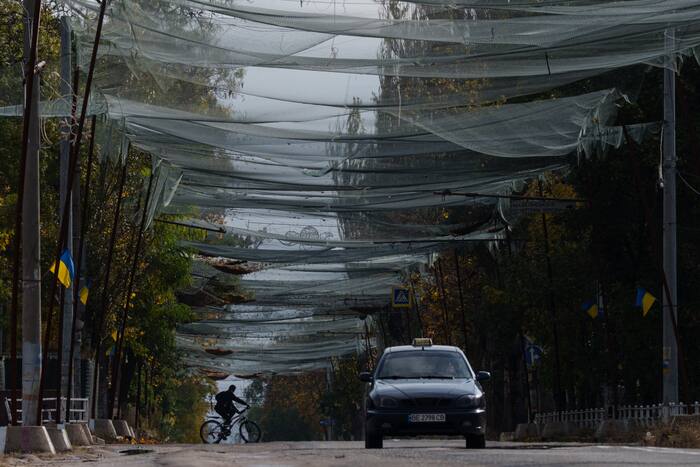
Over the past seventy-two hours, the absence of outgoing artillery blasts and incoming shells has brought an unfamiliar quiet to streets scarred by shrapnel. Residents accustomed to spending hours in damp basements have been able to step outside during daylight without constantly scanning the sky for the buzz of quadcopters.
Yet that relief is tempered by hard-earned skepticism. People who have survived years of occupation and front-line bombardment know better than to mistake a temporary pause for permanent safety. Many are already preparing for the inevitable moment when the trucks leave, the checkpoints close, and the artillery along the Dnipro resumes its familiar, lethal rhythm.
The convoy rolling toward Oleshky carries vital supplies that will save lives in the coming weeks, but it cannot repair a shattered town or bridge the river dividing it from the rest of Ukraine. The trucks will unload, the monitors will document the handoff, and within days, the silence along the eastern bank will almost certainly break.