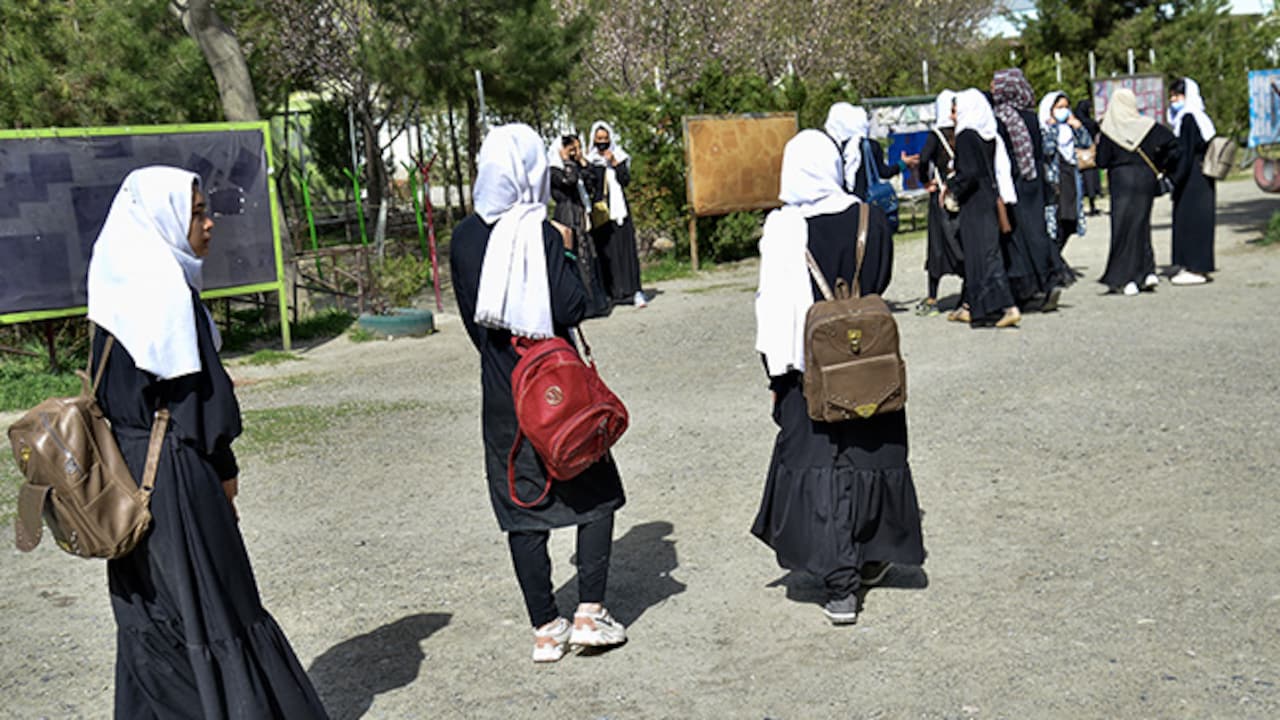
Fifty children were wounded when a hand grenade detonated near a school in the Dasht-e-Barchi neighborhood of Kabul, Afghanistan, once again thrusting the marginalized Hazara community into the center of a brutal cycle of violence. The explosion, which occurred on a Monday afternoon near the Shama-e Hidayat school, left dozens of young students injured and rushed to nearby medical facilities. Kabul police confirmed that an investigation is underway, while international bodies like the United Nations have condemned the act as a heinous assault on civilian education. Yet, an official inquiry scratches only the surface of a much deeper, systemic crisis that has plagued Afghan minorities for decades.
Dasht-e-Barchi is not a random geography on a map. Located in the western districts of the Afghan capital, this densely populated neighborhood is the primary cultural and residential heartland for the Hazara ethnic minority. Hazaras make up roughly nine percent of the total population in Afghanistan. They are predominantly adherents of Shia Islam, setting them apart in a predominantly Sunni nation. This religious and ethnic distinction has historically marked them out for severe persecution, systemic discrimination, and targeted mass violence.
Radical Sunni militant factions, most notably the regional affiliate of the Islamic State known as ISIS-K, view the Hazara population as apostates. Over successive political regimes, this ideological hostility has manifested in devastating attacks against soft targets. Mosques, community centers, maternity hospitals, and educational institutions have repeatedly transformed into killing fields.
The structural vulnerability of schools in this district creates an ongoing nightmare for parents. In May 2021, a catastrophic series of bombings outside the Sayed al-Shuhada school in the exact same neighborhood killed dozens of people, primarily young female students leaving their classrooms. That atrocity preceded the chaotic withdrawal of international forces and the subsequent return of the Taliban to power.
When the Taliban assumed control of the country, promises were made regarding nationwide security and the protection of all ethnic groups. Security analysts point out that while overall large-scale conventional warfare has shifted, the threat profile for localized sectarian terrorism remains stubbornly high. The de facto administration faces severe intelligence and operational gaps when trying to secure open urban neighborhoods against asymmetric threats like concealed hand grenades or improvised devices.
Security checkpoints and police patrols can do little to deter an individual operative blending into afternoon foot traffic near a crowded school gate. Hand grenades are small, cheap, and easily concealable weapons of terror. Their deployment requires minimal logistical footprint compared to complex vehicle-borne improvised explosive devices. This tactical shift toward low-signature attacks means that civilian spaces remain perilously exposed.
International monitors, including Richard Bennett, the United Nations special rapporteur on Afghanistan, have stressed that independent and rigorous investigations are essential to ensure accountability. Condemnations arrive swiftly from foreign capitals and international organizations whenever blood is spilled in Dasht-e-Barchi, but local residents often express a deep cynicism regarding the long-term utility of verbal solidarity.
For the families living in western Kabul, safety is an elusive concept. Parents send their children to school knowing that the pursuit of a basic education carries an intolerable level of risk. The psychological scars left on a generation of surviving students run deep, compounding the challenges of an already fractured educational infrastructure.
As local authorities continue their preliminary inquiries into who threw the grenade and what specific network guided the hand, the larger regional picture remains grim. Unless systemic security measures evolve beyond reactive statements and temporary cordons, the schools of Dasht-e-Barchi will continue to stand as fragile monuments in a landscape defined by persistent danger.
Outrage as bombing kills dozens of students outside of Kabul school
This video provides archival context on the recurring security threats and community impact surrounding targeted school attacks in the Dasht-e-Barchi district of Kabul.