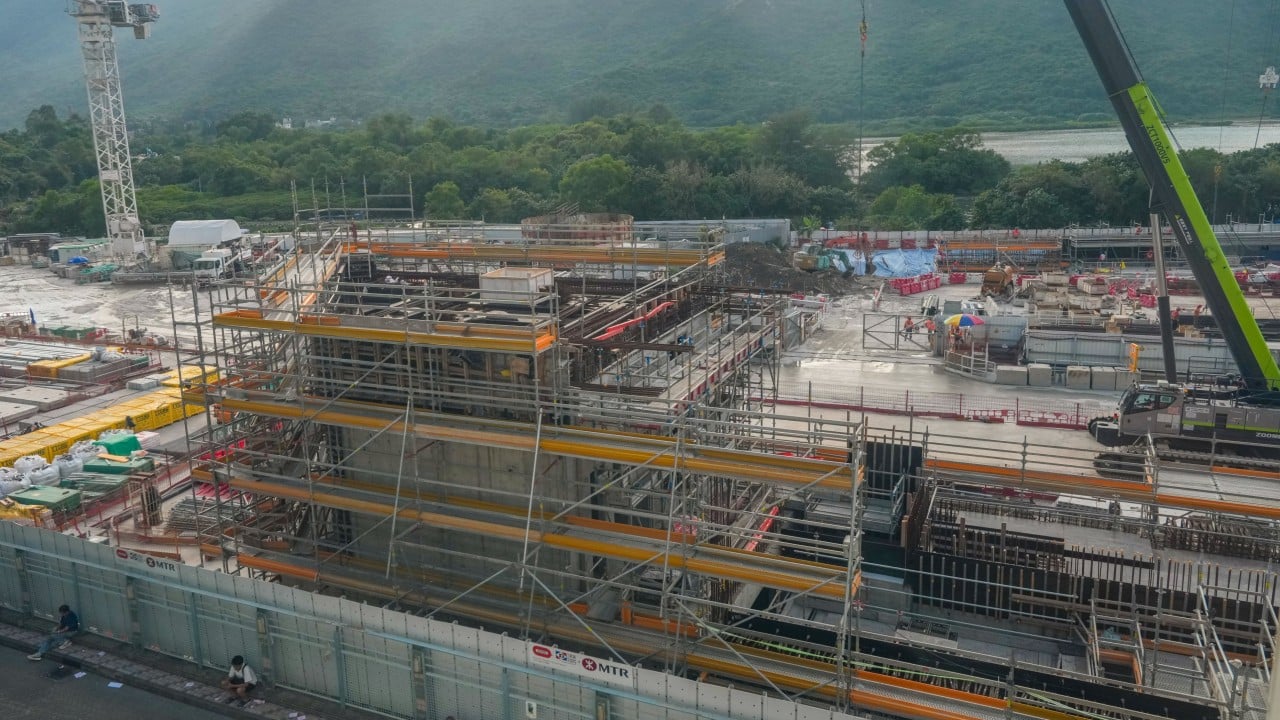
When structural defects surface in a major public transit system, the public wants a simple culprit and an immediate fix. In the case of the defective MTR station columns, the prevailing narrative focuses on a basic construction mistake during pouring and a straightforward remedy involving higher-grade, stronger concrete. That explanation is comforting. It is also dangerously incomplete, ignoring the systemic pressures of megaproject scheduling, the unforgiving physics of reinforced concrete remediation, and the supply chain vulnerabilities that allow substandard pours to pass initial site inspections in the first place.
For anyone who has spent decades walking active infrastructure sites, a compromised load-bearing column is never just an isolated batch failure. It is the visible symptom of a breakdown in quality assurance, site supervision, and contractor accountability. Replacing or strengthening defective concrete in an active or near-complete underground rail station involves complex structural engineering trade-offs that go far beyond ordering a higher megapascal mix from the batching plant. For a closer look into this area, we recommend: this related article.
The Anatomy of a Pour Gone Wrong
Concrete is deceptively simple on paper. You combine cement, water, fine and coarse aggregates, and chemical admixtures, then pour the slurry into formwork packed with steel rebar. Yet in deep underground station construction, executing that pour without defects requires precision timing and relentless oversight.
When structural engineers point to a basic mistake in station columns, they are almost always describing one of three failure modes. The first is honeycombing, which happens when the concrete fails to fill the spaces between the steel reinforcement bars, leaving air pockets and exposed aggregate. This usually stems from inadequate mechanical vibration during the pour or a mix with poor workability that stiffens too quickly before reaching the bottom of deep formwork. To get more background on this issue, extensive coverage is available on NBC News.
The second failure mode is cold joints. In massive station columns, concrete must be poured continuously. If a delivery truck gets stuck in traffic, or if pump equipment fails, the bottom layer begins to set before the next batch arrives. The resulting seam between the two layers lacks proper chemical bonding, creating a shear plane that compromises the column's ability to handle lateral loads during high winds or seismic events.
The third issue is segregation and excessive water addition. On hot, humid days, site crews under pressure to finish a pour before shift changes sometimes add extra water to the mixer drum to make the concrete flow faster through the pump lines. Water makes pouring easier, but it destroys the water-to-cement ratio. Once the excess water evaporates, it leaves behind microscopic capillaries that slash compressive strength and invite moisture intrusion, which eventually corrodes the internal steel rebar.
Why Stronger Concrete Is Only Half the Battle
When core samples extracted from station columns fail to meet design specifications, the reflexive answer is to demolish the compromised sections and recast them using a significantly stronger concrete mix. If the original specification called for Grade 45 concrete, engineers might mandate Grade 60 or Grade 80 for the replacement work.
On a spreadsheet, bumping up the compressive strength looks like an easy insurance policy. In the physical reality of an underground rail station, introducing ultra-high-strength concrete into an existing structural frame creates new engineering headaches.
The Stiffness Mismatch Problem
Structural engineering relies on predictable load paths. Buildings and underground stations are designed so that every column, beam, and slab shares stress according to its relative stiffness. Higher-strength concrete is not just stronger under compression; it also has a higher modulus of elasticity, meaning it is stiffer than the surrounding concrete.
If you replace a single column with a dramatically stiffer material while leaving adjacent columns at the original specification, that repaired column will naturally attract a disproportionate share of the structural load. Instead of distributing weight evenly across the station box, the "fixed" column becomes a magnet for stress. Over decades of dynamic vibration from passing trains, this stiffness mismatch can induce cracking in the connecting beams and transfer slabs that were never designed to handle those concentrated forces.
Thermal Cracking and Shrinkage
Stronger concrete mixes require higher cement content. More cement means a more intense exothermic reaction as the concrete cures. In thick station columns, the core of the fresh concrete heats up rapidly while the outer surface cools against the air or formwork. This temperature differential creates internal tensile stresses that can crack the new column from the inside out before it even bears a single ton of station load.
Furthermore, high-strength mixes are prone to autogenous shrinkage. As the cement hydrates, it consumes internal water, causing the concrete to shrink slightly in volume. When pouring replacement concrete beneath an existing ceiling slab, even a millimeter of shrinkage can break the tight contact required to transfer vertical loads from the roof into the column. Contractors must use specialized non-shrink grouts, expansive additives, and pressurized injection techniques just to ensure the new column actually touches the structure above it.
The Hidden Mechanics of Structural Remediation
You cannot simply knock down a load-bearing column in a multi-level underground station without holding up the roof. The remediation process itself carries substantial structural risk and logistical complexity.
Before a single jackhammer touches the defective concrete, engineers must install extensive temporary propping and shoring systems. Heavy steel jacks and transfer beams are wedged between the floor and ceiling slabs surrounding the compromised column to carry the dead weight of the station structure above, which often includes multi-story commercial developments, roadways, and utility corridors.
Once the load is transferred to the temporary steel, crews use hydro-demolition—high-pressure water jets—to strip away the defective concrete without damaging the existing steel reinforcement cage. Traditional pneumatic breakers are frequently banned for this work because their vibrations can micro-fracture the surrounding sound concrete and loosen the bond on adjacent rebar.
To illustrate the real-world difficulty, consider a hypothetical example of a central concourse column supporting a three-level underground interchange. If core testing reveals substandard concrete across the lower third of the shaft, crews cannot simply patch the exterior. They must shore up the entire bay, hydro-demolish the compromised section down to the bare rebar, splice in additional steel ties if corrosion or damage occurred, build sealed high-pressure formwork, and pump a self-compacting, low-heat, non-shrink mix from the bottom up through dedicated injection ports. Every step takes weeks, costs millions, and delays mechanical and electrical fit-outs across the entire station.
The Supply Chain and Supervision Blind Spots
The most troubling aspect of recurring concrete scandals in major transit projects is not the technical challenge of fixing them, but the systemic failure that allowed them to occur. Large-scale infrastructure projects operate under immense schedule pressure. Main contractors subcontract concrete works to lower-tier firms, who in turn rely on third-party batching plants and independent testing laboratories.
This fragmented chain creates dangerous gaps in accountability.
- The Testing Lag: Standard concrete quality control relies on casting small test cubes from the delivery truck at the site gate, curing them in a laboratory, and crushing them at 7 and 28 days to verify compressive strength. By the time a 28-day cube test fails, the contractor has already built two more levels of station structure on top of that defective column.
- Site Supervision Fatigue: Resident site staff are responsible for checking rebar spacing, verifying formwork cleanliness, and monitoring concrete slump before every pour. When night pours happen back-to-back to recover lost schedule time, supervision stretches thin. A single overworked inspector overseeing multiple pour locations cannot watch every truck discharge its load.
- The Cube-Versus-Core Discrepancy: A test cube cured in a temperature-controlled water bath at a laboratory only proves that the concrete arriving at the gate had the potential to reach design strength. It tells you nothing about whether the site crew over-vibrated it, added water to it, or failed to cure it properly inside the formwork. True verification requires non-destructive testing like ultrasonic pulse velocity scans and physical core drilling, which contractors rarely volunteer unless an anomaly is already suspected.
Counter-Arguments and Industry Realities
Some industry veterans argue that modern building codes already incorporate generous safety factors, meaning a localized drop in concrete strength does not immediately threaten catastrophic collapse. From a purely mathematical standpoint, that is often true. Structural design codes apply partial safety factors to both loads and material strengths to account for inevitable construction variances.
However, relying on design safety factors to excuse poor workmanship is a slippery slope. Those margins exist to protect the public against unforeseen extreme events—an unusual ground movement, an unexpected overload, or decades of environmental degradation—not to subsidize sloppy site management. In a subterranean marine environment where groundwater carries chlorides and sulfates, porous or under-strength concrete accelerates rebar corrosion. A defect that looks benign at opening day can turn into severe structural spalling twenty years into a rail line's century-long design life.
At the same time, demanding perfection on every cubic meter of poured concrete is unrealistic. Construction is an outdoor, heavy industrial process subject to weather swings, equipment breakdowns, and human error. The measure of a healthy infrastructure sector is not the total absence of defects, but the speed and transparency with which those defects are caught and remediated before the concrete cures and gets buried behind architectural cladding.
Rebuilding Accountability Alongside the Columns
Pouring stronger replacement concrete will satisfy the immediate structural calculations for the defective MTR columns, provided engineers carefully manage the stiffness transitions and shrinkage risks. Yet treating this episode purely as a materials engineering problem misses the larger institutional lesson.
Lasting quality in public transit construction requires shifting oversight from reactive paperwork to real-time verification. Digital batching records that automatically lock out unauthorized water additions at the truck, mandatory continuous temperature and maturity sensors embedded directly inside major structural pours, and unannounced third-party core auditing are no longer optional upgrades. Without fixing the incentive structures that reward speed over verification on the construction floor, higher-grade concrete will simply become a more expensive way to repeat the same mistakes.