When rumors and headlines swirl around the resignation of Indonesia's vice president amid questions over constitutional eligibility and academic credentials, the public sees a sudden political scandal. Look closer at Jakarta's corridors of power, and a far deeper structural fault line emerges. The controversy surrounding the office of the vice president—specifically the fierce battles over age thresholds, judicial interventions, and the verification of foreign degrees—exposes how Indonesia's young democracy handles institutional legitimacy when political ambition collides with legal gatekeeping.
Understanding this political crisis requires separating verified institutional mechanics from viral speculation. In Indonesia, the vice presidency is never a mere ceremonial understudy. Under the 1945 Constitution, the vice president sits one heartbeat away from leading Southeast Asia's largest economy and a nation of more than 280 million people. Yet the controversies that have plagued recent vice-presidential tenures and candidacies reveal a recurring vulnerability in how candidates are vetted, challenged, and defended.
The Anatomy of an Eligibility Crisis
Political legitimacy in Jakarta rests on two pillars that rarely align cleanly: raw electoral math and strict administrative compliance. When questions arise about whether a sitting or incoming vice president actually meets the legal requirements to hold office, the resulting shockwaves threaten both market confidence and constitutional stability.
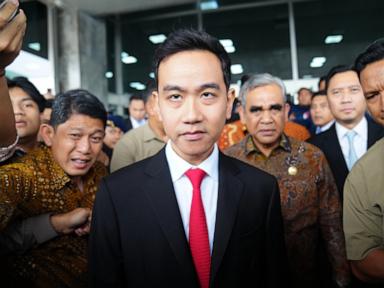
Consider how the eligibility debate took shape in recent Indonesian political history. During the 2024 presidential election cycle, Gibran Rakabuming Raka—the eldest son of then-President Joko Widodo—became the focal point of an unprecedented legal and political firestorm. At 36 years old, Gibran fell short of the statutory minimum age of 40 required by Indonesia's General Election Law.
That barrier vanished days before candidate registration closed. In October 2023, the Constitutional Court issued a controversial ruling creating an exception for candidates under 40 who had previously been elected to regional office, such as mayor or governor. Because Gibran was serving as the mayor of Surakarta, the ruling immediately cleared his path onto the ballot alongside Prabowo Subianto.
The fallout was immediate and severe. The Constitutional Court's chief justice at the time, Anwar Usman—who also happened to be Gibran's uncle by marriage—was subsequently removed from his leadership post by an ethics council for failing to recuse himself over a clear conflict of interest. Despite the ethical sanctions against the judge, the ruling itself stood. Gibran ran, won alongside Prabowo, and was inaugurated in October 2024.
Why Credentials Become Political Weapons
Once a candidate survives a constitutional challenge, opponents inevitably shift tactics to administrative scrutiny. In Indonesian politics, few attacks carry as much populist sting as questioning a leader's academic credentials.
In a country where civil service promotions, military ranks, and legislative seats all require documented proof of formal education, a suspected discrepancy on a diploma is political dynamite. Under Indonesian election law, presidential and vice-presidential candidates must hold at least a high school diploma or its equivalent. While higher education is not strictly mandatory under the statute, claiming a university degree that cannot be verified—or presenting foreign qualifications that do not align neatly with domestic accreditation standards—invites immediate accusations of fraud.
Gibran faced precisely this line of attack during and after the campaign. Critics and social media commentators questioned the validity of his overseas studies in Singapore and Australia, demanding to see original transcripts and equivalency certificates issued by Indonesia's Ministry of Education, Culture, Research, and Technology.
Supporters displayed documents showing he had completed coursework at the Management Development Institute of Singapore and held a degree awarded through the University of Bradford in the United Kingdom, alongside official Indonesian ministry equivalency papers. Critics remained unconvinced, arguing that the administrative conversions masked an unconventional academic track.
This dynamic is not unique to one politician. Former President Joko Widodo himself spent years fending off recurring, unsubstantiated lawsuits alleging his forestry degree from Gadjah Mada University was forged. In Jakarta, credential disputes serve a dual purpose. Even when a legal challenge fails to unseat an official, the prolonged controversy erodes moral authority and keeps the administration on the defensive.
How Indonesia's Vetting System Actually Works
To understand why these scandals keep erupting after ballots are cast rather than before candidates reach the stage, you have to examine the General Elections Commission, known locally as the KPU.
The KPU operates under intense time pressure and immense political scrutiny. When a presidential ticket submits its registration dossier, commission officials are tasked with verifying dozens of administrative documents within a matter of days. These include:
- Proof of Indonesian citizenship from birth, ensuring the candidate has never voluntarily acquired foreign nationality.
- Tax compliance records spanning the previous five years, paired with a formal wealth report submitted to the Corruption Eradication Commission.
- Criminal background clearances from district courts confirming the candidate has never been sentenced to five years or more in prison.
- Educational certificates authenticated by the issuing institutions or, in the case of overseas degrees, validated through official equivalency decrees from the education ministry.
The flaw in this process is structural. The KPU functions primarily as an administrative verifier, not an investigative agency. If a candidate presents a document bearing an official stamp from another government ministry, the election commission generally accepts it at face value.
| Verification Stage | Responsible Body | Primary Function | Core Vulnerability |
|---|---|---|---|
| Constitutional Eligibility | Constitutional Court | Interprets age and office-holding rules | Susceptible to political pressure and conflict-of-interest disputes |
| Document Authentication | Ministry of Education | Validates domestic diplomas and foreign equivalency | Administrative conversions often spark public skepticism |
| Candidate Registration | General Elections Commission (KPU) | Checks completeness of submitted dossiers | Relies on paper stamps rather than deep forensic audits |
| Post-Election Disputes | Constitutional Court / State Administrative Court | Hears challenges to election results and certification | High bar of proof makes overturning certified results rare |
When critics challenge those documents later, they encounter a bureaucratic maze. Ministries point to privacy rules regarding personal academic records. Universities cite institutional autonomy. Courts frequently dismiss lawsuits on technical standing grounds, ruling that administrative disputes over candidate registration should have been resolved before the election took place.
That legal bottleneck leaves voters with unresolved doubts. And in an era of hyper-connected social media, unanswered questions quickly metastasize into rumors of imminent resignations, secret impeachment plots, and backroom deals.
The Mechanics of a Vice-Presidential Exit
Suppose a sitting Indonesian vice president actually did decide to step down—or faced removal over proven constitutional or credential violations. The 1945 Constitution outlines strict, deliberate mechanisms for how such an exit unfolds, designed specifically to prevent sudden power vacuums in a sprawling archipelago.
Indonesia experienced a presidential resignation in May 1998, when Suharto stepped down after 32 years in power amid massive street protests and economic collapse, handing the presidency to Vice President B.J. Habibie. The country also witnessed an impeachment and removal in July 2001, when the People's Consultative Assembly (MPR) ousted President Abdurrahman Wahid over corruption allegations and political deadlock, elevating Vice President Megawati Sukarnoputri.
Following those turbulent years, Indonesian lawmakers amended the constitution between 1999 and 2002 to make removing a president or vice president far more difficult. Today, a vice president cannot simply be voted out by a restless parliament over policy disagreements or falling approval ratings.
Voluntary Resignation vs. Constitutional Impeachment
Under Article 8 of the amended 1945 Constitution, if the vice president dies, resigns, is removed from office, or is permanently unable to perform their duties during their term, the vacancy is not left empty. Within 60 days, the MPR—a joint sitting of the House of Representatives and the Regional Representative Council—must convene to elect a replacement from two candidates nominated by the sitting president.
Forced removal, by contrast, requires clearing three high institutional hurdles:
- Parliamentary Indictment: The House of Representatives (DPR) must pass a formal motion alleging the vice president committed treason, corruption, bribery, other serious crimes, or disgraceful acts, or no longer meets the constitutional qualifications to hold office. This requires a two-thirds quorum and a two-thirds majority vote of members present.
- Constitutional Court Verdict: The DPR's accusation does not automatically remove anyone. The matter goes directly to the Constitutional Court, which has 90 days to examine, try, and rule on whether the parliament's legal allegations are factually and constitutionally valid.
- Final Assembly Vote: Only if the Constitutional Court affirms the charges does the indictment return to the MPR. The full assembly must then convene within 30 days and vote to remove the vice president, again requiring steep supermajorities.
Notice that phrase in the constitution: no longer meets the constitutional qualifications to hold office. In theory, if an investigation proved beyond doubt that a vice president falsified mandatory educational credentials or obtained eligibility through an invalidated legal channel, parliament could invoke that exact clause.
In practice, arithmetic blocks the path. Indonesian presidents routinely build sprawling governing coalitions that command overwhelming majorities in the DPR. Without a catastrophic fracture inside the ruling coalition—or massive street protests that make defending the official politically fatal—assembling a two-thirds parliamentary supermajority to indict a sitting vice president is nearly impossible.
Why Rumors of Resignation Gain Traction Anyway
If the constitutional bar for removal is so high, why do narratives about a vice president resigning over eligibility and credentials gain so much traction online and in regional media?
The answer lies in the intersection of elite rivalry and information warfare. Indonesian coalition politics is transactional. Parties join the government to secure cabinet seats, state-owned enterprise directorships, and budget allocations for their regional strongholds. Even inside a seemingly unified coalition, rival factions constantly jockey for position ahead of the next five-year electoral cycle.
Leaking doubts about a vice president's academic background or constitutional standing serves as a low-cost, high-impact pressure tactic. It reminds the officeholder that their legitimacy rests on contested ground. It forces presidential aides to spend valuable political capital defending past court rulings rather than advancing current legislative priorities.
At the same time, international observers and automated content farms frequently misread Indonesian political noise. A heated debate on X or TikTok over a decade-old university transcript, combined with speculative commentary from opposition pundits calling on an official to "do the honorable thing and step down," can easily be repackaged by careless aggregators as breaking news of an actual resignation.
The distinction matters enormously for investors, diplomats, and citizens trying to read Jakarta's trajectory. In Indonesia, loud public controversy rarely translates into sudden constitutional rupture. The political system absorbs shock through compromise, cabinet reshuffles, and quiet backroom negotiations rather than abrupt resignations.
The Deeper Cost to Democratic Institutions
Even when a vice president remains firmly in office and resignation headlines turn out to be premature or fabricated, the underlying crisis leaves lasting damage.
First, it hollows out public trust in the judiciary. When courts appear to bend statutory rules on age or administrative eligibility to accommodate political dynasties, citizens stop viewing the law as a neutral referee. Every subsequent court decision—whether on election disputes, labor laws, or anti-corruption cases—gets viewed through a lens of partisan cynicism.
Second, it degrades the standard of public accountability. When legitimate questions about candidate vetting get tangled up with exaggerated conspiracy theories and fake resignation reports, officials can dismiss all scrutiny as mere political sabotage. Genuine administrative reforms—such as requiring transparent, publicly accessible verification of all candidate credentials prior to ballot printing—get shelved because neither side wants to admit the current system has flaws.
Third, it creates unnecessary friction at the top of the executive branch. A vice president constantly fending off questions about how they got onto the ticket has less room to maneuver on complex policy portfolios, from bureaucratic reform to regional development in eastern Indonesia.
Indonesia's democratic consolidation over the past quarter-century remains one of Asia's most remarkable political achievements. Power has transferred peacefully across multiple elections, military rule has ended, and civil society remains vocal. Yet the recurring turmoil over vice-presidential eligibility and academic credentials exposes an unfinished piece of institutional engineering. Until Jakarta builds a transparent, independent vetting mechanism that resolves qualification disputes cleanly before a single vote is cast, every election cycle will remain vulnerable to the same corrosive cycle of legal shortcuts, diploma wars, and fabricated political exits.