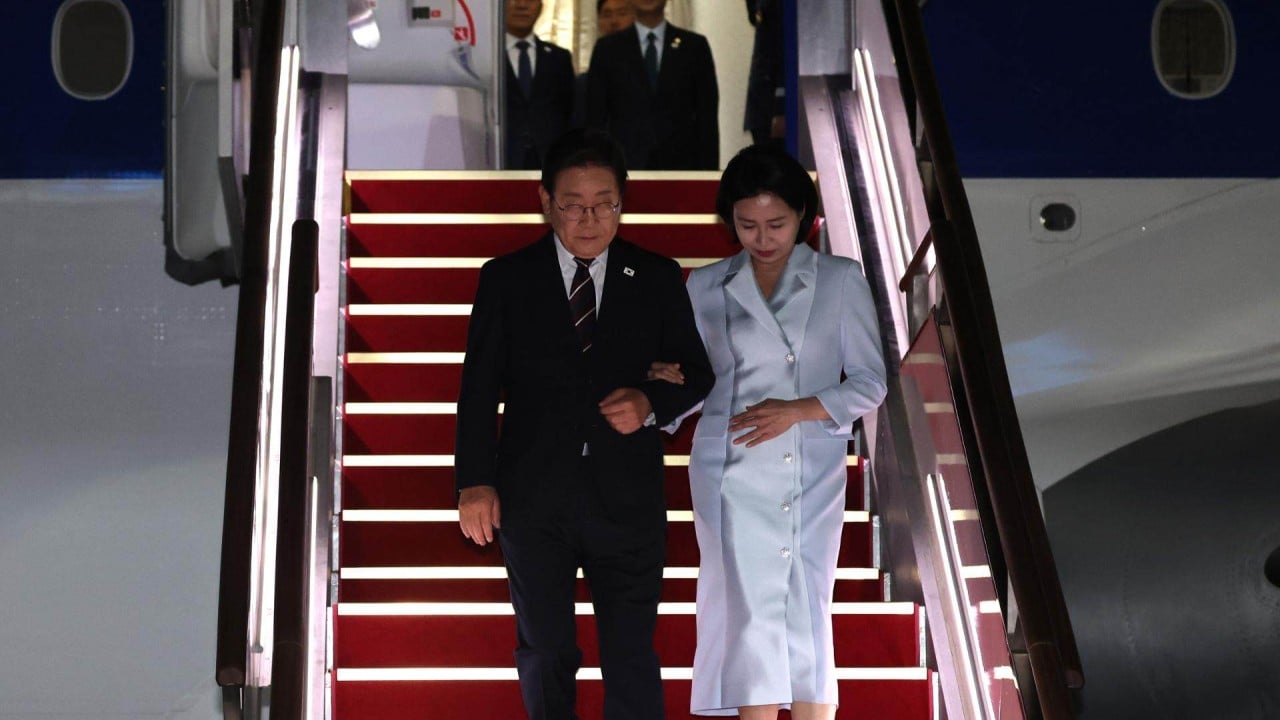
South Korean officials moved rapidly to invalidate and reissue the diplomatic passports of President Lee and the First Lady after a severe data leak exposed sensitive personal identifiers tied to the nation's highest office. When the core cryptographic and biographical details of a sitting head of state are compromised, standard bureaucratic delays cease to exist. The emergency replacement protocol was triggered immediately to neutralize identity spoofing, prevent unauthorized border-crossing telemetry, and seal a glaring vulnerability in state-level digital infrastructure before foreign intelligence services could exploit the exposed credentials.
Most observers view a passport as a simple travel booklet stamped at customs checkpoints. That assumption is dangerously outdated. Modern diplomatic passports are high-security hardware tokens embedded with encrypted radio-frequency identification chips, biometric templates, and unique document numbers linked directly to international aviation and intelligence databases. When those numbers leak, the physical booklet in a coat pocket becomes a liability. For a different look, consider: this related article.
Why a Compromised Passport Number Is a National Security Crisis
To understand the urgency inside Seoul's Ministry of Foreign Affairs, you have to look at how modern border control networks actually operate. Every time a diplomatic passport is scanned or entered into an Advance Passenger Information System, it queries global databases managed by Interpol, allied border agencies, and international carriers.
If an adversary obtains the exact passport number, date of issue, expiration date, and resident registration number of President Lee and his spouse, they do not need to forge a physical booklet to cause chaos. They can use those identifiers to query flight manifests, track diplomatic movements through third-party booking systems, or test the perimeter of foreign consular networks. Even worse, leaked personal identifiers provide the raw material for targeted spear-phishing campaigns aimed at the presidential security detail and diplomatic attachés. Related reporting on this trend has been provided by TIME.
The Anatomy of Diplomatic Credential Exposure
In South Korea, every citizen's legal identity is anchored to the Resident Registration Number, a thirteen-digit code that dictates everything from banking access to medical records and travel documentation. While diplomatic passports carry distinct serial prefixes and special immunity classifications, they remain inextricably tied to the holder's underlying civil registry data.
When a breach occurs—whether through an unpatched vendor portal, a compromised consular database, or an insider mishandling unencrypted spreadsheets—the fallout cascades across multiple systems simultaneously. Reissuing the physical passport severs the link between the leaked document number and active travel authorization. The old serial numbers are pushed immediately to international revocation lists, ensuring that any attempt to use the compromised data triggers an instant red flag at border terminals worldwide.
How State-Level Data Leaks Actually Happen
High-profile government breaches rarely look like the cinematic hacking scenes portrayed in thriller films. They are almost always the result of mundane operational failures, fragmented vendor oversight, and legacy databases that were never designed to withstand modern persistent threats.
Consider a hypothetical scenario common across advanced economies. A government ministry contracts an external IT firm to maintain a scheduling portal or an auxiliary database used for logistical coordination ahead of overseas summits. While the core diplomatic registry sits behind air-gapped servers and hardware security modules, the contractor's staging server stores cached passport details to streamline flight bookings and hotel clearances. An attacker compromises the contractor's network through a stolen VPN credential, exfiltrates the cached files, and suddenly the travel credentials of top officials are sitting on an external server.
This gap between hardened core infrastructure and soft operational edges is where modern state security routinely fails. Governments spend billions securing central mainframes while leaving administrative workflows exposed through third-party logistics providers, travel agencies, and unencrypted administrative attachments.
The Illusion of Digital Invulnerability
South Korea boasts one of the most digitized public infrastructures on earth. Citizens file taxes, access court records, and verify identities seamlessly through mobile applications and centralized authentication certificates. That hyper-connectivity creates immense efficiency, yet it also concentrates risk.
When data is centralized for convenience, a single point of failure compromises everything linked to that node. Security researchers have warned for years that the administrative practice of bundling passport numbers with dates of birth and national identification numbers creates a master key for identity theft. For ordinary citizens, that means fraudulent loans and drained bank accounts. For a sitting president and First Lady, it means compromised operational security during international state visits.
What Happens During an Emergency Presidential Reissue
A standard passport renewal takes days or weeks of routine processing, background checks, and batch printing. An emergency presidential reissue bypasses every queue in the system, operating under strict compartmented protocols.
- Immediate Revocation Broadcast: Before a new booklet is even printed, the Ministry of Foreign Affairs flags the compromised serial numbers as invalid and transmits the revocation notice to international border control networks and Interpol's Stolen and Lost Travel Documents database.
- Cryptographic Key Generation: Technicians at the Korea Minting and Security Printing Corporation generate a fresh pair of asymmetric encryption keys specifically for the new electronic chips. The private key remains locked inside the passport's secure element, while the public key is distributed to foreign border authorities via the International Civil Aviation Organization Public Key Directory.
- Biometric Re-Binding: Even if the president's facial geometry and fingerprints have not changed, the biometric templates are re-signed with the new document's cryptographic signature. This prevents an attacker from taking old biometric packets and pairing them with altered metadata.
- Physical Escort and Verification: The newly minted diplomatic passports are never mailed or handled through standard courier channels. Security officers transport the booklets directly to the presidential office, where communications specialists verify that the RFID chips respond properly and that all international database registries reflect the updated serial numbers.
The Limits of Document Replacement
Reissuing a passport solves the immediate problem of travel credential spoofing, yet it is an incomplete fix. You can change a passport number in a matter of hours. You cannot change a person's date of birth, their birthplace, or their foundational civil registration number without rewriting decades of legal records.
This is the uncomfortable reality that government spokespeople rarely emphasize during damage control briefings. Once static biographical data is leaked, it remains exposed permanently. Security teams must shift from prevention to continuous monitoring, watching dark web forums, foreign intelligence chatter, and anomalous authentication attempts across every ministry database that touches executive branch logistics.
Why Diplomatic Passports Carry Unique Vulnerabilities
Ordinary tourists carry standard biometric passports that grant entry based on visa agreements and border inspections. Diplomatic passports operate under the Vienna Convention on Diplomatic Relations, affording holders immunity from local arrest, detention, and baggage searches.
Because border officers treat diplomatic credentials with heightened deference, an exploited or spoofed diplomatic credential carries far greater risk than a stolen civilian passport. Intelligence services worldwide actively target diplomatic travel registries precisely because tracking the movements of a president's inner circle reveals geopolitical priorities before official announcements are ever made.
If a foreign actor monitors when and where diplomatic passport numbers are queried by airline reservation systems, they can map out secret back-channel negotiations, unannounced envoy visits, and sudden shifts in foreign policy. Invalidating the leaked credentials blinds those passive tracking methods overnight.
Lessons From Past Government Credential Breaches
South Korea is hardly alone in facing embarrassing credential exposures at the highest levels of government. Over the past decade, major democracies have repeatedly stumbled over basic operational security involving executive travel data.
In 2015, an Australian immigration official accidentally emailed the passport numbers, visa details, and personal identifiers of every world leader attending the G20 summit—including the leaders of the United States, Russia, and Germany—to the organizers of the Asian Cup football tournament. The breach occurred because of a simple autocomplete error in an email client.
Years later, security researchers discovered that exposed airline booking reference codes allowed anyone with basic technical knowledge to look up the passport numbers and frequent flyer details of senior politicians and intelligence officials simply by querying public-facing carrier portals. In every single case, the vulnerability did not stem from advanced cyber warfare. It came from treating sensitive travel credentials as routine administrative paperwork.
The Structural Fix Seoul Cannot Afford to Delay
Replacing two diplomatic passports puts out the immediate fire, but it does nothing to repair the wiring that sparked the blaze. If Seoul wants to prevent another humiliating executive data leak, the government has to dismantle the culture of over-collecting and over-sharing raw identification numbers across administrative departments.
Modern cryptographic architecture allows systems to verify identity and travel authorization without exposing underlying biographical data. Using tokenized identifiers for travel logistics, enforcing strict zero-trust access controls on consular databases, and eliminating unencrypted file transfers among third-party contractors are baseline requirements, not optional upgrades. Until government agencies treat every database holding executive metadata as a high-value intelligence target, emergency reissues will remain a recurring cost of doing business.