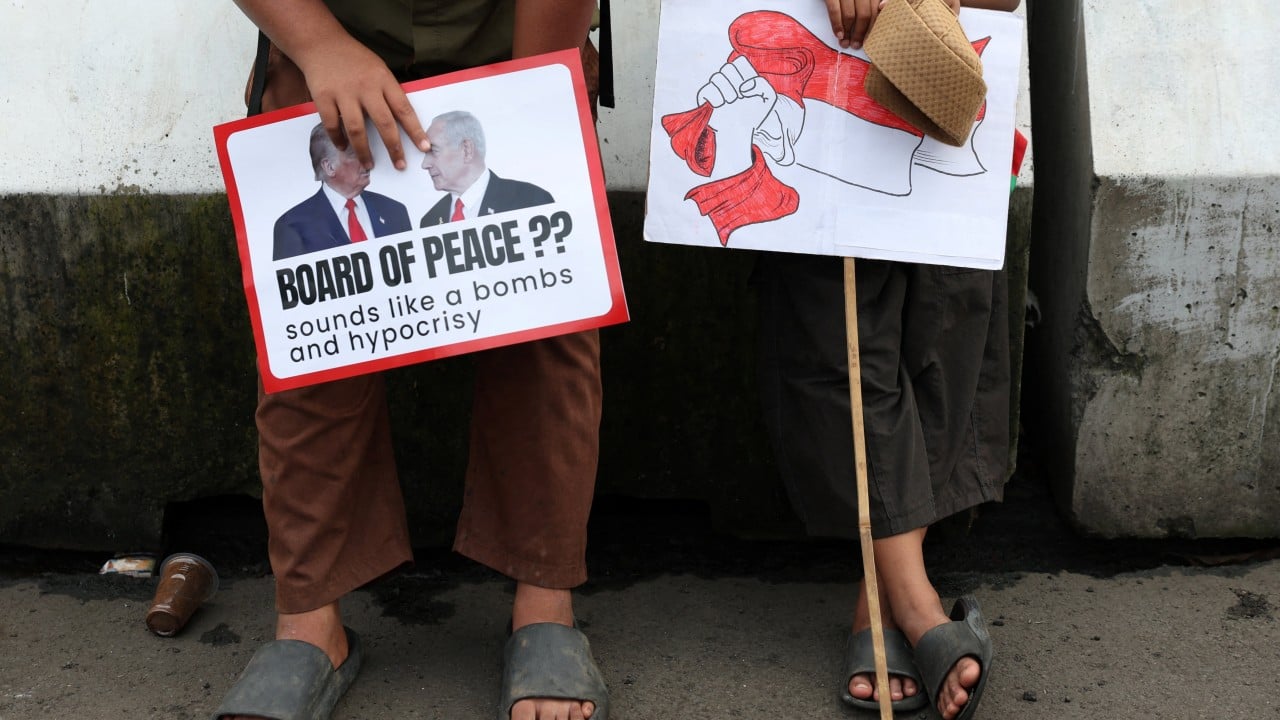
The "Board of Peace" is a misnomer that smells of a State Department focus group. Beneath the soaring rhetoric of maritime stability and regional cooperation lies a rigid geopolitical mechanism designed to force middle-tier powers into a binary choice. Indonesia, the de facto leader of ASEAN and a historical champion of non-alignment, now finds itself wedged between a long-standing "free and active" foreign policy and the tightening requirements of a U.S.-led maritime coalition. This isn't just about patrolling trade routes. It is about how Jakarta manages its soul while Washington tries to use the Iran crisis as a litmus test for loyalty.
The friction is immediate. The Board of Peace, ostensibly created to protect commercial shipping from regional volatility, has shifted its focus toward isolating Iranian influence and monitoring shadow-fleet oil tankers. For Indonesia, a nation that has spent decades perfecting the art of "not choosing," this shift represents a direct threat to its economic security and its identity as a neutral mediator.
The High Cost of Maritime Alignment
Washington’s strategy is clear. By framing the Board of Peace as a humanitarian and economic necessity, it forces partners like Indonesia to provide more than just symbolic support. They want intelligence sharing. They want logistical access. Most importantly, they want Jakarta to enforce sanctions that could disrupt the delicate flow of energy and investment in Southeast Asia.
Indonesia’s refusal to fully commit isn't a sign of weakness; it’s a calculation. The Indonesian economy relies on a massive influx of foreign direct investment, much of which originates from powers that view the Board of Peace as an extension of Western hegemony. If Jakarta leans too far toward the U.S. initiative, it risks a cooling of relations with its largest trading partners. It is a zero-sum game that the Indonesian foreign ministry is desperate to avoid.
The Iran crisis adds a layer of religious and political complexity that the U.S. often overlooks. Indonesia is the world's most populous Muslim-majority nation. Domestic sentiment toward Middle Eastern conflicts is rarely aligned with the Pentagon’s objectives. Supporting a U.S.-led initiative that appears to target a fellow Muslim nation—regardless of the geopolitical nuances of the Iranian regime—is a domestic third rail. No Indonesian politician can afford to be seen as a puppet for Western interests when the streets of Jakarta are watching the humanitarian fallout of Middle Eastern sanctions.
The Shadow Fleet and the Malacca Strait
The tactical reality on the water is even messier. The Board of Peace aims to regulate the "dark fleet"—unlabeled or aging tankers carrying sanctioned oil. These vessels frequently traverse the Malacca Strait, one of the world's most congested and vital maritime chokepoints.
If Indonesia joins the Board's enforcement arm, it becomes responsible for policing these waters under a Western mandate. This presents a logistical nightmare.
- Sovereignty Risks: Allowing U.S. directed surveillance or boarding operations within Indonesian territorial waters is a non-starter for the TNI-AL (Indonesian Navy).
- Operational Strain: The Indonesian coast guard and navy are already stretched thin fighting illegal fishing and piracy. Diverting resources to hunt "sanction-busters" serves Washington’s goals, not Jakarta’s.
- Legal Ambiguity: International maritime law provides thin cover for the kind of aggressive interdiction the U.S. is currently seeking.
The U.S. argues that a "unified front" ensures peace. Jakarta knows that a unified front often just means a bigger target. By staying on the periphery of the Board of Peace, Indonesia maintains its "prabowo-esque" pragmatism—keeping doors open to all while giving the keys to none.
The Economic Weaponization of Peace
We have seen this play out before. The language of "peace" and "stability" is frequently used to mask the infrastructure of economic warfare. The Board of Peace is less about preventing conflict and more about establishing a digital and physical net that can be tightened around adversaries at a moment’s notice.
For Indonesia, the risk is being integrated into a system it cannot control. The Board’s data-sharing protocols are designed to be interoperable with U.S. systems. On the surface, this looks like a technology upgrade for the Indonesian maritime forces. In reality, it is a "digital leash." Once a nation’s maritime domain awareness is dependent on U.S. satellite feeds and encrypted channels, their ability to act independently in a crisis evaporates.
The Iranian situation is the immediate catalyst, but the long-term architecture is what matters. Washington is building a plug-and-play alliance system. They want a world where they can toggle the "peace" switch and have a dozen local navies execute their blockade strategies.
The Illusion of Consensus
The Board of Peace is often marketed as a democratic collective, yet the decision-making power remains concentrated. Jakarta has noted the lack of a "veto" or even a meaningful consultative process for smaller members. If the U.S. decides that an Iranian-linked vessel in the Natuna Sea must be seized, Indonesia is expected to comply or face the "reputational risk" of being a non-compliant partner.
This is the "Coalition of the Willing" 2.0, but with better branding. Instead of an invasion force, it is a regulatory force. The pressure on Indonesia is not just coming from diplomats; it is coming from the financial sector. Insurance companies and global shipping conglomerates are being nudged to favor nations that are "Board-compliant."
Strategic Autonomy Under Fire
Indonesia’s leadership understands that the moment they sign a formal treaty with the Board of Peace, their leverage in the region diminishes. Currently, Jakarta can play the "honest broker." They can talk to Tehran, they can talk to Beijing, and they can talk to Washington. That bridge burns the moment they start enforcing U.S. maritime mandates.
The "Iran crisis" is a convenient excuse for Washington to test the fences. They are looking for holes in the regional security architecture. By pressuring Indonesia to take a hard line on Iranian tankers, they are actually testing how far Jakarta will go to protect the "free and active" principle.
It is a brutal environment for a developing power. On one hand, the U.S. offers security cooperation and the promise of "stability." On the other, the reality of the 21st century is that stability is a commodity controlled by whoever owns the sensors and the sanctions list. Indonesia is currently refusing to buy.
The Credibility Gap
There is a fundamental disconnect in how "peace" is defined. For the Board, peace is the absence of sanctioned trade. For Indonesia, peace is the absence of regional escalation. These two definitions are currently at odds.
The U.S. approach ignores the historical context of the region. Southeast Asian nations have spent decades resisting the gravitational pull of superpowers. They remember the Cold War as a period of proxy conflicts and internal destabilization. To them, the Board of Peace looks less like a shield and more like a magnet for trouble.
If the U.S. wants Indonesia’s genuine cooperation, it must stop treating the Board as a loyalty test. It must allow for a maritime framework that respects local sovereignty and, more importantly, local economic interests. As it stands, the Board of Peace is an American project with a global nameplate.
Indonesia should continue its policy of "selective engagement." It can participate in search and rescue drills. It can share data on piracy. But it must draw a hard line at becoming the maritime police for a conflict it did not start and does not wish to join. Anything less is a surrender of the very autonomy that has made Indonesia the most influential voice in Southeast Asia.
The Board of Peace is a trap. Jakarta needs to keep its distance, or it will find itself patrolling a front line it never intended to defend.
Demand a seat at the table where the rules are written, not just a spot on the deck where the orders are given.