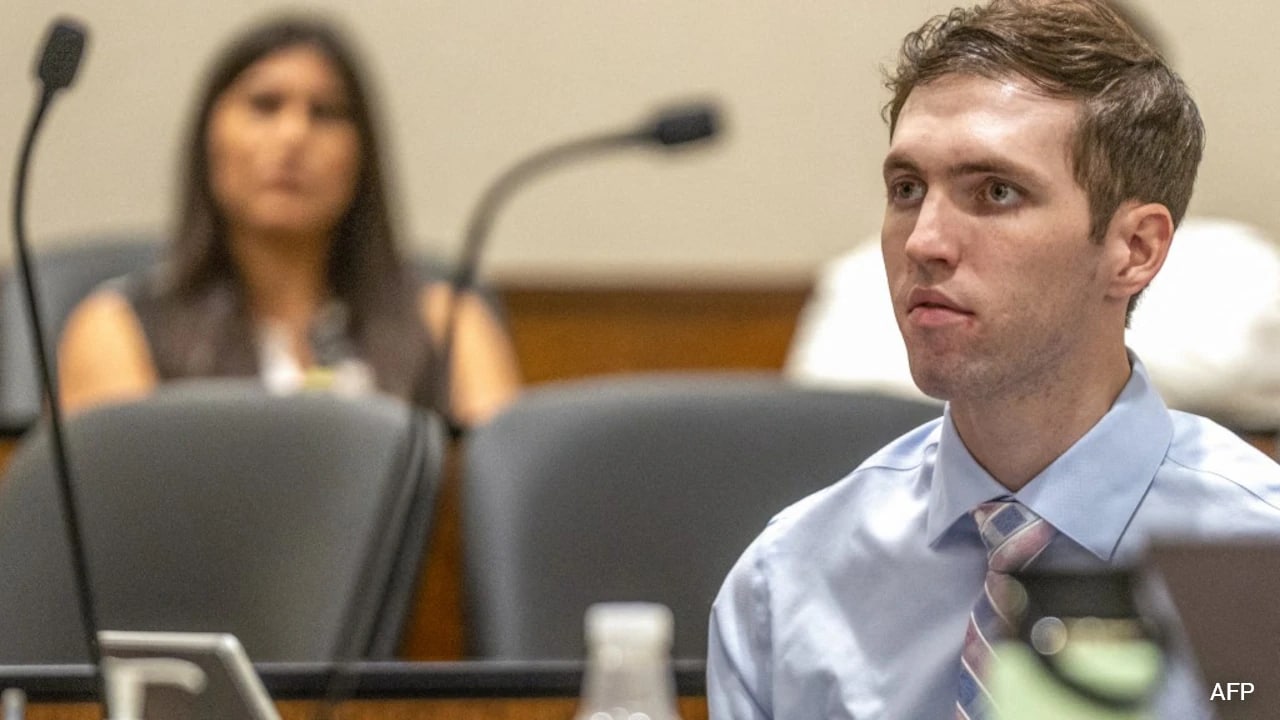
The courtroom doors closed, but the echoes of Hong Kong's changing political reality stayed outside. Joshua Wong stood in a blue shirt, his frame noticeably thinner after years behind bars, and delivered a single word to the high court bench.
Confirm.
Just like that, the 29-year-old former student leader entered a guilty plea in his second major national security trial. He admitted to conspiring to collude with foreign forces. For anyone watching the systematic dismantling of the city's opposition, this wasn't a surprise. It was a milestone of a different kind. It showed how a sweeping legal framework continues to consume the figures who once defined the territory's resistance.
The Charges Behind the Second Case
The core of this new prosecution centers on events from 2020. Prosecutors accused Wong of working alongside exiled activist Nathan Law and other figures to lobby foreign governments. Their goal was clear at the time. They wanted international pressure, legislative backing, and economic sanctions against Beijing and Hong Kong officials following the introduction of the national security law.
The state pointed to old social media campaigns, online petitions, and meetings with high-profile international politicians. Prosecutors argued that these actions crossed the line from free speech into active subversion and foreign collusion.
The stakes couldn't be higher. While standard penalties for this specific offense range from three to 10 years, acts deemed of a grave nature carry a maximum sentence of life imprisonment. Wong is already serving a four-year and eight-month sentence handed down in late 2024 for a separate subversion case tied to an unofficial political primary. He was originally scheduled to walk free in early 2027. This new guilty plea throws those timeline expectations out the window entirely.
From Umbrella Protests to Solitary Isolation
If you followed Hong Kong politics over the past decade, Wong's face was everywhere. He first captured global attention back in 2012 as a teenager leading student strikes against national education. Two years later, he became one of the primary student commanders of the 2014 Umbrella Movement. He co-founded the political party Demosisto in 2016, trying to transition street activism into institutional electoral politics before the party disbanded hours before the security law took effect in 2020.
His trajectory mirrors the broader arc of Hong Kong civic life. The dynamic, noisy street protests that once paralyzed central business districts have vanished. In their place stands a tightly controlled legal landscape where advocacy of almost any international flavor is treated as a severe security threat.
Friends who have visited him in custody note that Wong spent his detained years reading, studying, learning the guitar, and exercising. Yet, the physical toll of continuous detention since late 2020 is undeniable.
The International Fallout and Legal Realities
Human rights organizations and Western diplomats have watched these proceedings closely. Groups like Human Rights Watch argue that stacking successive national security charges ensures prominent voices stay locked away indefinitely, effectively creating a perpetual imprisonment loop.
On the other side, government officials in Beijing and Hong Kong maintain that the law restored essential stability after the chaotic unrest of 2019. From the perspective of local prosecutors, lobbying foreign states to harm your own country's economy through sanctions is a direct violation of sovereignty. They view lenient treatment for such actions as impossible.
Pleading guilty usually brings a sentence reduction under standard judicial logic. But given the severity of the statute and the weight of the political environment, any reduction may still leave Wong facing decades behind bars or worse.
The court will deliver its final sentencing decision soon. When it does, it will mark another chapter closing on an era of political dissent that once believed it could change the course of an Asian financial hub from the bottom up.