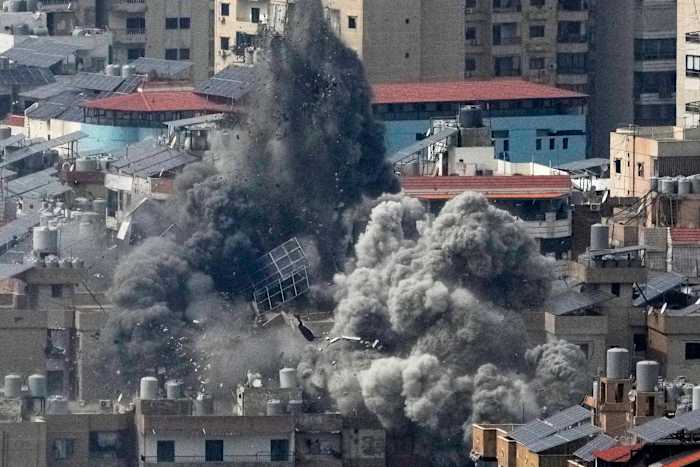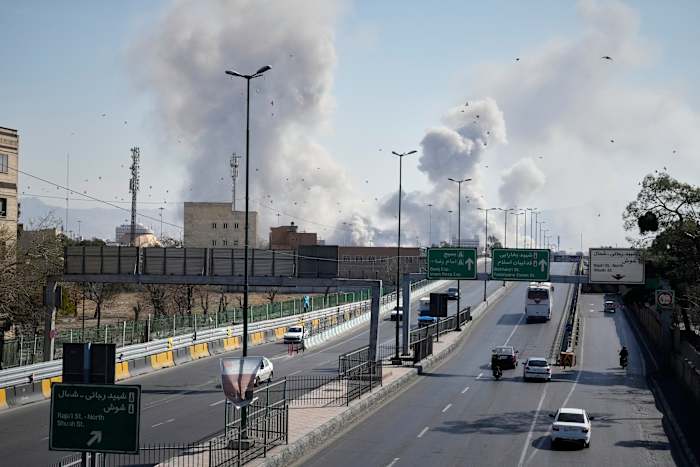
The current escalation in the Middle East represents a shift from a war of attrition to a theater of high-intensity kinetic signaling. The recent strikes on Beirut and Tehran, synchronized with Iranian diplomatic outreach to the Gulf Cooperation Council (GCC) states, indicate a dual-track escalation: Israel is seeking the systemic degradation of the "Axis of Resistance" command structures, while Iran is attempting to decouple its regional security interests from its proxy dependencies. This friction is not merely a series of retaliatory strikes but a fundamental recalibration of the regional power balance, defined by the erosion of traditional deterrence and the emergence of "asymmetric transparency" where intelligence superiority dictates the pace of conflict.
The Triad of Israeli Kinetic Objectives
Israel’s military operations in Lebanon and Iran are governed by three strategic imperatives that move beyond simple territorial defense. To understand the intensity of the "hammering" of Beirut and Tehran, one must analyze the specific utility of these targets. You might also find this connected coverage useful: Strategic Asymmetry and the Kinetic Deconstruction of Iranian Integrated Air Defense.
- Command and Control (C2) Decapitation: The targeting of high-value individuals (HVIs) in urban centers like Beirut serves to induce organizational paralysis. By removing the strategic layer of leadership within Hezbollah, Israel forces the organization into a decentralized, reactive posture. This creates a vacuum where tactical units operate without a cohesive theater-level strategy.
- Infrastructure Attrition: Beyond personnel, the strikes target logistics hubs and specialized munitions storage. The objective is to increase the "replenishment cost" for Hezbollah. If the rate of destruction exceeds the rate of Iranian resupply via the Syrian corridor, the militia’s operational ceiling drops significantly.
- Psychological Dominance and Intelligence Exposure: Conducting strikes in the heart of sovereign capitals (Beirut and Tehran) signals a total penetration of security apparatuses. It informs the adversary that their internal communications and movements are compromised, creating a "paranoia tax" on all future decision-making.
Iranian Diplomatic Pivot: The Gulf Neutrality Gambit
While Tehran faces kinetic pressure at home, its executive branch is deploying a sophisticated diplomatic defensive. President Masoud Pezeshkian’s "apology" or conciliatory tone toward Gulf neighbors is a calculated effort to manage the Iranian Cost Function.
Iran’s regional strategy has long relied on the "Forward Defense" model, utilizing proxies to keep conflict away from Iranian soil. However, the direct strikes on Tehran have collapsed this buffer. The current outreach to the UAE, Saudi Arabia, and Qatar is designed to achieve three specific outcomes: As highlighted in latest coverage by The Washington Post, the results are widespread.
- Airspace Denial: Iran seeks guarantees that Gulf airspace will not be utilized for Israeli or Allied sorties. By framing itself as a victim of "Zionist aggression" and offering apologies for past tensions, Tehran aims to make it politically and logistically difficult for GCC states to assist in Israeli kinetic operations.
- Economic Insulation: Under heavy sanctions, Iran cannot afford a regional blockade or a total rupture in trade with Dubai or Riyadh. Diplomatic warmth serves as a hedge against further economic isolation that would inevitably follow a wider regional war.
- Decoupling the Proxy Narrative: By engaging directly with Gulf leaders, Pezeshkian is attempting to signal that the Iranian state is a rational actor distinct from the ideological rigidity of the IRGC. This is a "good cop, bad cop" dynamic where the presidency seeks to preserve the state's survival while the military apparatus continues the regional struggle.
The Mechanics of Deterrence Decay
The primary reason for the current volatility is the total decay of the 2006-era deterrence model. For nearly two decades, the "Balance of Terror" was maintained by the threat of Hezbollah’s massive rocket arsenal and Israel’s "Dahiya Doctrine." This equilibrium has been disrupted by technological shifts and a change in Israeli risk tolerance.
The Intelligence-Kinetic Loop
The speed at which intelligence is converted into a kinetic strike—the "sensor-to-shooter" timeline—has shrunk to minutes. This technological advantage allows Israel to strike targets with surgical precision in densely populated areas, minimizing (though not eliminating) collateral damage while maximizing the political shock to the adversary. When the adversary cannot hide, the traditional value of "strategic depth" evaporates.
The Failure of the "Ring of Fire" Strategy
Iran’s strategy of surrounding Israel with a "Ring of Fire" (Hezbollah, Hamas, Houthis, and militias in Iraq/Syria) was intended to prevent direct attacks on the Iranian mainland. However, Israel’s decision to bypass the proxies and strike the "head of the snake" in Tehran demonstrates that the Ring of Fire has become a liability. Instead of deterring Israel, it has provided a justification for a broader regional campaign to dismantle the entire network simultaneously.
Risk Assessment: The Escalation Ladder
The conflict is currently at a critical junction where "miscalculation" is no longer the primary risk; rather, the risk is "forced escalation."
- Level 1: Controlled Attrition (Current Status): High-intensity strikes on military and leadership targets with an avoidance of total civilian infrastructure (power grids, water systems).
- Level 2: Sectoral Paralysis: Strikes on energy exports (Iran) or the total blockade of Lebanese ports. This moves the conflict from military to existential for the respective states.
- Level 3: Regional Contagion: Direct engagement between sovereign militaries across borders, involving the activation of the Houthis' long-range capabilities against Red Sea shipping on a systemic scale.
Strategic Constraints and Bottlenecks
Neither party possesses a clear path to a total victory, which creates a dangerous "sunk cost" environment.
Israeli Constraints:
The primary bottleneck for Israel is the depletion of Iron Dome and David’s Sling interceptors. In a sustained, multi-front war, the sheer volume of incoming projectiles could overwhelm the defense system. Furthermore, the economic cost of prolonged mobilization—with hundreds of thousands of reservists out of the workforce—imposes a hard "time-to-objective" limit.
Iranian Constraints:
Iran’s primary weakness is internal stability. A direct, prolonged war risks domestic unrest if the population perceives the regime as prioritizing regional proxies over national survival. The technical inferiority of the Iranian Air Force means that Tehran is almost entirely reliant on its missile and drone programs for offensive capabilities, which are susceptible to GPS jamming and advanced electronic warfare.
The Gulf Cooperation Council’s Strategic Hedging
The GCC states find themselves in a precarious position. While they benefit from the weakening of Iranian-backed proxies (which threaten their own internal security), they fear the spillover of a direct Iran-Israel war.
Their strategy is one of Active Neutrality. They are facilitating backchannel communications while simultaneously upgrading their own defense systems. The "apology" from Tehran is received with skepticism but utilized as leverage to extract concessions regarding Iranian interference in Yemen and Lebanon.
The Structural Realignment of the Levant
We are witnessing the forced restructuring of the Levant. The "Lebanonization" of the conflict—where a non-state actor (Hezbollah) holds the state hostage to its military goals—is being challenged by a concerted effort to return sovereignty to the central Lebanese government, albeit through violent means.
The second-order effect of the strikes in Beirut is the potential shifting of the internal Lebanese political balance. As Hezbollah’s military prestige wanes, rival factions may see an opportunity to reassert control over the state's decision-making processes. However, this carries the risk of civil fragmentation if not managed by a coherent international diplomatic framework.
Operational Forecast and Strategic Play
The conflict will likely intensify in the immediate term as Israel attempts to maximize gains before a potential shift in U.S. foreign policy or international pressure for a ceasefire. The logic of "mowing the grass" has been replaced by "pulling the weeds by the root."
The strategic play for regional actors involves three components:
- Surgical Attrition: Israel will continue to prioritize the decapitation of Hezbollah leadership to prevent a coordinated ground counter-offensive.
- Iranian Diplomatic Shielding: Tehran will ramp up its "charm offensive" in the Gulf to prevent the formation of a formal regional air defense alliance.
- U.S. Containment: The United States will provide the kinetic tools for Israeli strikes while simultaneously placing a "floor" on the escalation to prevent a total collapse of the global energy market.
The ultimate resolution will not be found in a signed treaty, but in a new, grim equilibrium where Iranian proxy capabilities are permanently capped, and Israel accepts a state of permanent high-readiness. The "hammering" of Beirut and Tehran is the violent birth of this new regional order. Organizations and state actors must now prepare for a Middle East where the distinction between "state" and "proxy" is enforced through high-precision ballistics.
The focus must remain on the Resilience of the Command Chain. For Hezbollah, the survival of a tertiary leadership layer is the only path to maintaining relevance. For Israel, the speed of its intelligence-to-strike loop remains its primary competitive advantage. The conflict will be won or lost not on the ground in southern Lebanon, but in the electronic and signals intelligence centers of Tel Aviv and the underground bunkers of Tehran.