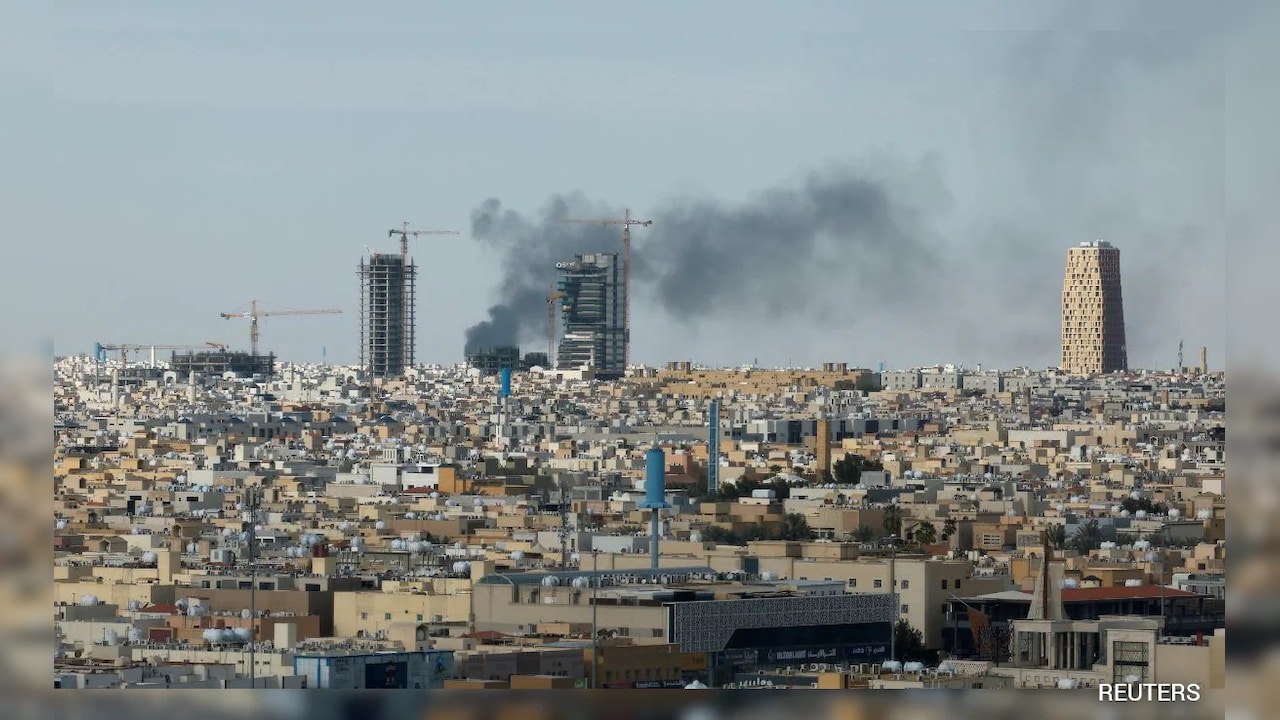
Military stockpiles move quietly through the desert night. Generators hum outside critical municipal water facilities, fueled and tested against a sudden grid collapse. In ministerial offices across Kuwait City, planners look at maps that bear the scars of previous regional conflagrations. The threat of an expanding conflict involving Iran is not a distant geopolitical theory for this small Gulf state. It is an immediate, operational reality that dictates every logistical calculation, every civil defense drill, and every diplomatic maneuver.
The prevailing external narrative often reduces Kuwait to a static bystander, a wealthy hydrocarbon producer nervously watching from the sidelines as larger powers posture. That perspective ignores the complex, high-stakes balancing act Kuwait executes daily. Geographically pinned between regional adversaries, with a significant domestic demographic balance to manage, Kuwaiti authorities are quietly hardening their infrastructure and re-evaluating long-standing security doctrines.
The Logistics of Vulnerability
Geography is an unyielding master. Kuwait sits at the northern tip of the Arabian Gulf, dangerously close to the contested waters of the Strait of Hormuz and directly across from Iranian missile batteries. A major military exchange involving Iran would instantly threaten the maritime corridors that feed the country. More critically, the nation's fragile desalination plants—the literal lifeblood of a population enduring scorching desert summers—sit exposed along the coastline.
Military analysts tracking Gulf security note that Kuwait has accelerated its civil defense preparations significantly over the last several quarters. Underground water storage networks are being expanded, backed by redundant power systems designed to withstand kinetic strikes or cyber sabotage. These are not symbolic gestures. They represent a hard-headed acknowledgment that modern missile and drone technology compresses warning times to mere minutes.
Municipal planners are quietly running simulation exercises that test food supply chains under prolonged blockade conditions. Grain silos are being topped off. Medical reserves are audited weekly. The state learned brutal lessons during the 1990 Iraqi invasion, and institutional memory runs deep. Nobody in the upper echelons of the Kuwaiti military is willing to assume that diplomacy alone will guarantee safety.
The Internal Equation
External threats rarely exist in a vacuum. Kuwait's internal social fabric introduces layers of complexity that neighboring autocracies do not face to the same degree. The country boasts the most politically active and vocal parliament in the Gulf, featuring a diverse populace that includes a substantial Shia minority alongside the Sunni majority.
Managing public sentiment while preparing for potential war requires a delicate touch. Official messaging walks a tightrope. Authorities must convey enough urgency to ensure civil readiness without triggering panic or sectarian finger-pointing.
State security apparatuses maintain a watchful eye on potential fifth-column activities or proxy infiltration. Intelligence sharing with Western and regional partners has intensified, focusing heavily on cyber defense and counter-intelligence. Iranian influence networks, monitored for decades, face tighter surveillance. Yet, Kuwait simultaneously maintains diplomatic channels open with Tehran. Dialogue is not born of naive optimism. It is a calculated survival mechanism for a state that cannot afford to burn bridges with its formidable neighbor.
Economic Exposure and the Energy Shield
Hydrocarbons remain the engine of the state, but they are also a glaring vulnerability. The Mina Al-Ahmadi refinery and surrounding oil infrastructure are prime targets in any regional escalation. While air defense batteries, including Patriot systems, ring these vital assets, military planners know that absolute defense is an illusion.
Financial reserves managed by the Kuwait Investment Authority provide a deep cushion against short-term economic shocks, but a prolonged closure of regional export routes would choke state revenue. Discussions behind closed doors focus on alternative export pathways that bypass the Gulf entirely, though physical infrastructure constraints make these difficult to execute quickly.
Private sector businesses are also adapting. Corporate continuity plans, once treated as bureaucratic paperwork, are now scrutinized by boards of directors. Supply chains are diversifying away from regional choke points where possible, and insurance premiums for maritime shipping in the northern Gulf have climbed to reflect the heightened risk environment.
The Shadow of Past Crises
To understand current preparations, one must look backward. The trauma of the 1990 occupation left permanent marks on the national psyche. It forged a deep-seated institutional paranoia that translates today into rigorous civil defense readiness.
When sirens sound during routine tests, citizens do not merely roll their eyes. They check shelters. They review evacuation protocols. This cultural readiness is a strategic asset that cannot be improvised overnight. It is the product of historical scars.
Foreign diplomats stationed in Kuwait City observe a quiet determination among local officials. There is no bravado. There is only the grim, methodical work of hardening a nation against the storm gathering across the water.
The border posts remain staffed. The radar screens are monitored twenty-four hours a day. Kuwait digs in, fully aware that the next chapter of regional history may be written in its airspace.


