Ninety miles is a distance most of us measure in minutes. It is a quick hop on a regional jet or a lazy afternoon on a fast boat. But for the people watching the horizon from the malecón in Havana, or those pacing the tile floors of a cafecito shop in Little Miami, that stretch of saltwater is a chasm of decades, heartbreaks, and frozen history.
It is a space filled with the ghosts of missed opportunities and the electric hum of what might happen next.
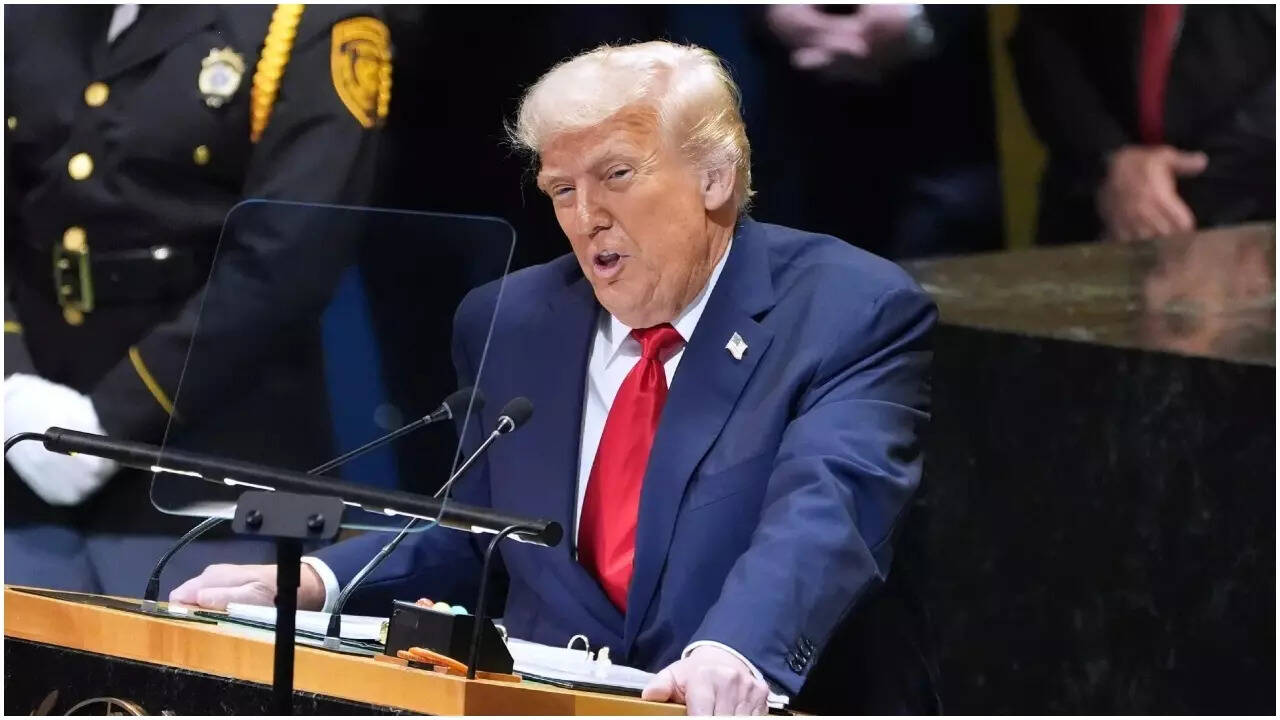
Recently, at a gathering that felt more like a revival than a policy briefing, Donald Trump leaned into a microphone and whispered a promise that has been whispered, shouted, and sung for sixty-four years. He suggested that the Cuban government—the long-standing, stubborn revolutionary pillar—is finally on the verge of a collapse. "It’s going to happen soon," he told the crowd.
Then, he added the kicker. He mentioned Marco Rubio.
The idea of putting Rubio "over there" isn't just a personnel move. It is a signal. It is a symbol. For those who have spent their lives waiting for the island to breathe a different kind of air, those words felt like a tectonic shift. But for the family sitting in a crumbling living room in Old Havana, trying to figure out how to stretch a bag of rice through Tuesday, the words carry a different, heavier weight.
The Architect of the Exile Dream
To understand why this matters, you have to understand the man being sent to the front lines of this rhetorical war. Marco Rubio isn't just a Senator from Florida. He is the son of Mario and Oriales, Cuban immigrants who left the island in 1956. He grew up on the stories of a lost paradise, a place of vibrant casinos and sugar cane fields that turned into a fortress of Soviet-style austerity almost overnight.
When Trump talks about "putting Rubio over there," he isn't just talking about a diplomatic appointment. He is weaponizing a legacy.
Imagine a man who has spent his entire political career as the avatar of the Cuban-American exile experience. Now, imagine him holding the keys to the most powerful State Department on earth. For the hardliners in Miami, this is the ultimate "I told you so." It is the promise that the era of "strategic patience" or the "Thaw" of the Obama years is not just over—it is being buried under ten feet of concrete.
The strategy here is not subtle. It is a pressure cooker. By tightening the screws on an already gasping economy, the administration gambles on a tipping point. They are betting that the hunger, the blackouts, and the sheer exhaustion of the Cuban people will finally outweigh the fear of the state security apparatus.
The View from the Island
But what does "falling" actually look like?
On the ground in Havana, the reality is less about grand political theories and more about the grit of survival. A doctor earns less than a taxi driver who has access to tourist tips. The paint peels from the colonial facades like dead skin. Yet, there is a fierce, complicated pride that often gets lost in the speeches delivered in air-conditioned ballrooms in Palm Beach.
History has shown that the Cuban government is remarkably good at surviving "the end." They survived the fall of the Berlin Wall. They survived the "Special Period" of the 90s when people ate grapefruit peels to stay full. They are masters of the slow-motion crisis.
When an American leader says a regime will fall "soon," the people on the island hear two different things. Some hear a bell of liberation, a hope that the grocery store shelves might one day look like the ones they see on smuggled YouTube clips. Others hear the drums of a coming storm. They worry about what happens in the vacuum. They wonder if "falling" means freedom or if it means a chaotic descent into the kind of instability that has swallowed other nations in the region.
The Invisible Stakes of the Florida Vote
There is a pragmatic, perhaps even cynical, layer to this narrative that has nothing to do with the streets of Santiago and everything to do with the precincts of Hialeah.
Politics is often a game of mirrors. By positioning Rubio as the conqueror of the Caribbean, Trump solidifies a voting bloc that has become the backbone of the Republican shift in Florida. The Cuban-American vote is no longer a monolith, but the "tough on the regime" stance remains the most potent currency in the state.
It is a powerful story to tell: The son of exiles returning to reclaim the homeland. It has the arc of a Greek tragedy or a Hollywood blockbuster. It moves people. It makes them show up at the polls.
But the risk of high-stakes storytelling is that the characters in the story are real people. When policies change, when sanctions tighten, it isn't the generals in Havana who feel the pinch first. It is the grandmother waiting for a wire transfer from her nephew in New Jersey. It is the entrepreneur who opened a small "paladar" restaurant during the brief window of opening and now watches as the supply chains dry up again.
The Sound of the Ticking Clock
Is the end actually near?
The indicators are grim. Record numbers of Cubans are fleeing the island, risking the treacherous waters of the Florida Straits or the long, dangerous trek through Central America. The migration crisis is a silent scream, a statistical proof that the status quo is untenable. When people vote with their feet, they are saying that the "soon" promised by politicians is taking too long to arrive.
Trump’s rhetoric taps into this desperation. He is painting a picture of a house of cards waiting for a single, well-placed gust of wind. By naming Rubio as that wind, he is personalizing a geopolitical conflict that has been impersonal for far too long.
We are watching a collision of two worlds. One is the world of high-level diplomacy, where names like Rubio are chess pieces moved across a map to signal strength and resolve. The other is the world of the 90-mile gap, where families remain divided by a line of water that feels more like an ocean of time.
If the island falls, it won't be because of a single speech or a single appointment. It will be because the internal contradictions of a system finally became too heavy for the people to carry.
But as the headlines swirl and the pundits dissect the latest soundbite, the sun continues to set over the Malecón. The fishermen cast their lines into the dark water, looking north. They aren't thinking about Senate confirmations or electoral maps. They are thinking about the next meal, the next letter, and whether the man on the television in Miami really knows what "soon" feels like when you’ve been waiting your entire life.
The shadow across the water is long. And for the first time in a generation, it feels like the sun might finally be moving.
Would you like me to analyze the historical parallels between this current rhetoric and the 1990s post-Soviet collapse period in Cuba?