Salt gets into everything. It crusts on the eyelashes, leaves a gritty film on the tongue, and eats slowly at the grey steel of a flight deck until the ship smells permanently of iron and ocean.
Ask anyone who has spent months on a nuclear-powered aircraft carrier what time feels like, and they will not tell you about hours or dates. They will tell you about light. They will tell you about the flat, bruised glare of the midday Pacific, the way the sun drops into the water like a lead weight, and the endless, unbroken circle of the horizon that eventually starts to look less like a boundary and more like a trap.
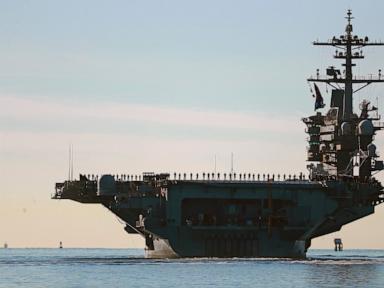
Consider the USS Abraham Lincoln.
To the dry tickers of the news cycle, the Nimitz-class carrier is an asset, a strategic footprint, a deterrence mechanism moving across international waters. To the thousands of sailors living inside its hull, it is a town of five thousand people welded into a floating metal tube. It is a place where laundry water smells faintly of distillate, where the hum of the reactor never stops vibrating through the soles of your boots, and where the concept of tomorrow is entirely dictated by flight schedules and operational readiness.
When an extended deployment stretches past expectations, the psychological weight accumulates silently.
(Note: For the sake of grounding this reality, imagine a young aviation boatswain's mate—let us call him Marcus, based on composite accounts of extended naval tours—staring at a grease-stained letter from home that is three weeks old. The ink is slightly smudged where humidity got to it in the mail sorting bay.)
Marcus knows every square inch of the hangar bay. He knows the exact pitch the ship takes when it hits a heavy swell off the Philippine Sea. He knows the dizzying vertigo of standing near the waist catapults when an F-35 launches with a thunderous crack that rattles teeth. But more than anything, he knows the quiet ache of absence.
For months, the crew has operated on a knife-edge of vigilance. In the Red Sea or the wider Indo-Pacific, routines are forged in high-stakes environments where a single misstep on the flight deck can mean catastrophe. The mind adapts by shutting down the outside world. You stop thinking about grocery stores. You stop thinking about walking on grass without hearing the mechanical roar of ventilation fans. You narrow your universe down to the three feet in front of you, the crewmate next to you, and the aircraft roaring down the track.
Then, the orders change.
The announcement crackles over the 1MMC circuit, the ship-wide broadcast system that has delivered every wakeup call, emergency drill, and deployment extension for months. A port call. Not just any port, but a brief, scheduled stop in Thailand.
Silence falls over the mess decks for a fraction of a second. Then, a roar.
The Geography of Relief
Port visits during a grueling deployment are not vacations. They are psychological decompression chambers.
When the Lincoln pulls in for a scheduled stop in the Kingdom of Thailand, the logistics are staggering. Thousands of sailors need to rotate ashore for liberty. Refueling, resupplying, and minor mechanical maintenance must happen around the clock. The pier becomes a lifeline.
To understand why this matters, you have to understand the claustrophobia of modern naval service. A carrier is essentially a small city operating under industrial conditions, complete with its own zip code, post office, and dental clinics, but lacking windows that open. You cannot step outside to clear your head. You cannot walk away from your workspace when the shift ends because your workspace is ten feet from your rack.
When sailors finally step off the gangway onto solid concrete in Thailand, something physical happens to their posture. They drop their shoulders.
For the first few hours, many experience a strange, disorienting sensation known colloquially as dock rock. Your inner ear, having compensated for the constant rolling and pitching of the ocean for months, insists that the solid earth is still moving. People stumble slightly on flat pavement. They reach out for walls that aren't swaying.
And then the sensory flood begins.
The air smells different. Instead of recirculated air-conditioning, ozone, and JP-5 jet fuel, the air hits them with the thick, vibrant notes of street food, tropical humidity, blooming jasmine, and exhaust fumes from tuk-tuks. It is chaotic, loud, and brilliantly alive.
The Unseen Stakes of Rest
There is a temptation to view military logistics purely through the lens of hardware. We count hulls, aircraft, missiles, and nuclear cores. We map routes across the South China Sea and calculate response times.
We forget the biological battery inside the uniform.
Fatigue is a silent hazard. A sleep-deprived watchstander makes slower calculations. A mechanic running on three hours of broken rest misses a hairline fracture in a hydraulic line. National security is ultimately maintained by human beings standing on tired feet, making split-second decisions in the middle of the night.
Giving a crew a temporary respite in a partner nation like Thailand is not just a reward or a diplomatic courtesy. It is a vital maintenance cycle for the crew's cognitive and emotional well-being. It allows a sailor to sit in a quiet cafe, eat a meal that wasn't prepared in a galley serving thousands, and make a phone call to a loved one without a satellite delay breaking up the words.
It reminds them who they are outside of their rate, their rank, and their battle station.
Consider what happens when Marcus sits down at a small table near a night market in Thailand. He orders a plate of pad thai, the steam rising into the warm evening air. He watches families walk by, children laughing, vendors calling out prices. For a few hours, the gray steel ship anchored out in the harbor feels a million miles away. The tension in his jaw unclenches. The constant, low-grade hum of anxiety that accompanies months at sea simply evaporates into the night.
This is the invisible architecture of power projection. It relies entirely on the resilience of ordinary people doing extraordinary, monotonous, and dangerous work under extreme conditions.
The Return to the Gray
Such reprives are notoriously brief.
The liberty hours tick down too fast. The liberty boats and buses start running payloads back to the pier. The shore leave ends with the familiar, disciplined trudge back up the gangway, past the security checks, and back into the secure, sterile environment of the floating fortress.
The transition is abrupt. One moment you are eating fresh mango under neon signs; the next, you are ducking through watertight doors and stowing your civilian clothes in a canvas seabag beneath your rack.
Yet, the crew returns changed. They carry the warmth of the brief landfall back into the workspaces. They share stories of local markets, friendly locals, and the taste of real food over midnight coffee in the mess decks. The horizon outside the portholes hasn't changed—it is still the same vast, indifferent circle of blue and grey. But the people inside have renewed patience, sharper focus, and a lighter step.
The ship casts off its lines. The tugboats nose against the hull, pushing the massive carrier away from the pier and back toward the deep water. The engine rooms notch up power. The flight deck crew puts on their colored jerseys, picking up their wands, preparing for the first launch of the new leg.
Out on the flight deck, the wind catches the edge of a rain slicker. The sea stretches out infinitely in every direction, waiting. Marcus shields his eyes against the salt spray, looking out toward the edge of the world, ready for whatever comes next.