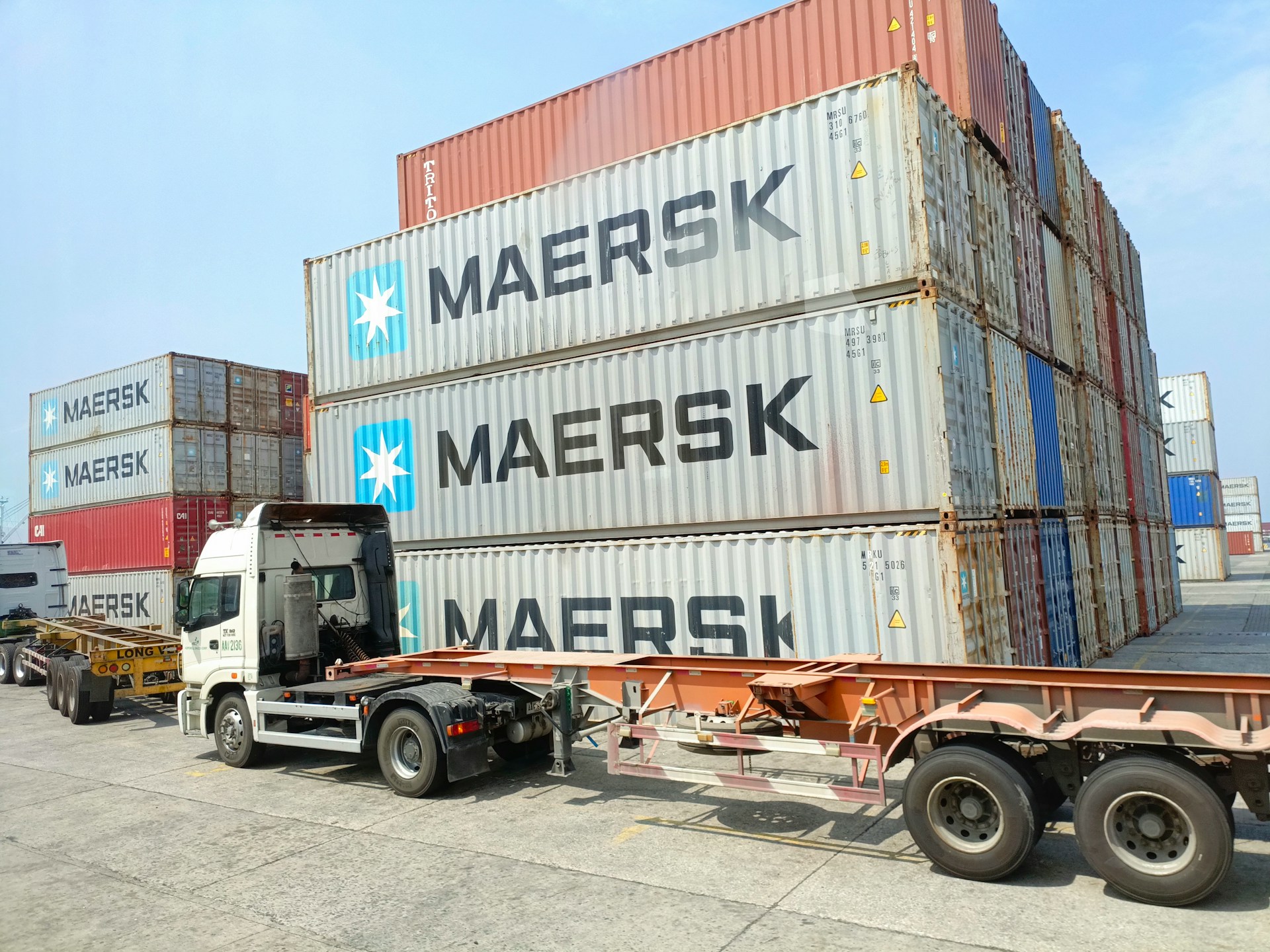
The shipping industry's favorite metaphor just hit a brick wall. People always call Maersk the bellwether for global trade, but right now, that bell is ringing an alarm most retailers aren't ready to hear. By suspending two major services linked to the Middle East, the Danish shipping giant isn't just dodging missiles. They’re signaling a permanent shift in how goods move from East to West.
If you're waiting for things to "get back to normal" in the Red Sea, stop. That version of normal died months ago. The recent escalation in the Iran-Israel conflict has forced Maersk to cut the cord on specific routes that were once the backbone of European and American supply chains. We aren't just talking about a few late holiday decorations anymore. We’re looking at a structural reconfiguration of global logistics that will stay expensive for a long time.
Why Maersk’s Latest Exit Matters More Than the Last One
When the Houthi rebels first started taking potshots at container ships, the industry treated it like a temporary detour. Most firms thought they’d just sail around the Cape of Good Hope for a few weeks and wait for the naval task forces to clear the way. That didn't happen. Instead, the conflict matured. With Iran’s direct involvement reaching new heights, the risk profile for the Strait of Hormuz and the Gulf of Aden has shifted from "dangerous" to "uninsurable."
Maersk specifically suspended its ME2 and ME5 services. These aren't just random strings of ships. They're critical loops connecting India, the Middle East, and the Mediterranean. By pulling these, Maersk is admitting that the cost of protection and the sky-high insurance premiums simply don't make sense anymore. They’d rather leave the cargo on the dock than risk a multi-billion dollar vessel in a combat zone.
The ripple effect is immediate. When a giant like Maersk moves, the rest of the alliance follows. You’re going to see a massive reduction in "blank sailings"—industry speak for canceled trips—which actually makes the remaining space on other ships more expensive. It’s a classic supply squeeze.
The Brutal Reality of the Cape of Good Hope Detour
Sailing around Africa sounds like a romantic throwback to the age of discovery. In reality, it’s a logistical nightmare that burns through cash and fuel. Taking the long way adds about 10 to 14 days to a journey. That doesn't just mean your couch arrives two weeks late. It means the entire global fleet is suddenly "shorter."
Think of it like this. If every bus in a city suddenly has to take a route that's 30% longer, you need 30% more buses just to keep the same schedule. The world doesn't have 30% more container ships just sitting around.
Fuel Costs and Carbon Targets
Burning extra low-sulfur fuel for an extra 3,500 nautical miles isn't cheap. Ships are also speeding up to try and make up for lost time, which triples fuel consumption thanks to the physics of hull resistance. This also nukes every corporate "Green Shipping" goal set for 2026. You can’t claim to be carbon neutral while your fleet is taking the scenic route around an entire continent at full throttle.
The Port Congestion Domino
The ships don't arrive in a steady stream anymore. They arrive in "clumps." This overwhelms ports in places like Algeciras and Tangier. If a port is built to handle five ships a day and suddenly ten show up on Tuesday and zero on Wednesday, the system breaks. Truckers can't find chassis. Warehouses overflow. The "just-in-time" delivery model is officially on life support.
Middle East Geopolitics Are No Longer a Side Note
For years, logistics managers treated geopolitical tension in the Middle East as a background noise—something that might spike oil prices for a week but wouldn't stop the flow of sneakers. That's a dangerous mistake now. The involvement of Iran changes the math because of their influence over the Strait of Hormuz.
While the Red Sea gets the headlines, the Strait of Hormuz is the real jugular of the world economy. Roughly 20% of the world's oil and a massive chunk of its LNG passes through that narrow gap. If Maersk is pulling services because of "Iran war" risks, they're worried about more than just drones in the Bab el-Mandeb. They're worried about a total regional lockdown.
Investors often look at Maersk’s stock price to see how the world is doing. Right now, the stock is volatile because while they're making money on higher freight rates, their operational costs are exploding. It’s a "fake" profit driven by chaos, not by a healthy, growing global economy.
What This Means for Your Wallet
You don't need an MBA to see where this goes. Higher shipping costs always end up at the cash register.
- Inventory Bloat: Companies are terrified of running out of stock, so they're ordering earlier and in larger quantities. This is "Just-in-Case" replaces "Just-in-Time." It’s expensive to store all that extra stuff.
- Surcharges: Maersk and MSC have already slapped on "Peak Season Surcharges" and "Contingency Adjustment Charges." These aren't small. We’re talking $500 to $2,000 per container.
- Inflationary Pressure: Central banks have been trying to cool down inflation, but they can't control Houthi drones or Iranian missiles. If shipping stays this expensive through the end of the year, those 2% inflation targets are a fantasy.
Honestly, the most annoying part is the lack of a clear exit strategy. There’s no "peace treaty" on the horizon that makes the Red Sea safe tomorrow. Even if a ceasefire happened tonight, the mines and the lingering threat would keep insurance rates high for months.
Stop Planning for a Return to 2023
If you're running a business that relies on overseas manufacturing, you have to stop treating this as a temporary "hiccup." It’s a new baseline. The suspension of these Maersk services is the clearest signal yet that the world's largest carriers are hunkering down for a long-term conflict.
Diversify your sourcing immediately. If all your components come through the Suez Canal, you're gambling with your company's life. Look at "near-shoring" options in Mexico or Eastern Europe. It might cost more per unit to manufacture, but at least the goods won't be sitting on a ship off the coast of South Africa while your customers cancel their orders.
Audit your supply chain for "choke point" reliance. If you see "Red Sea" or "Strait of Hormuz" in your primary transit paths, move your freight to the Trans-Pacific route or consider rail options through Central Asia, though those have their own political landmines. The era of cheap, predictable ocean freight is over. Move fast or get left at the port.