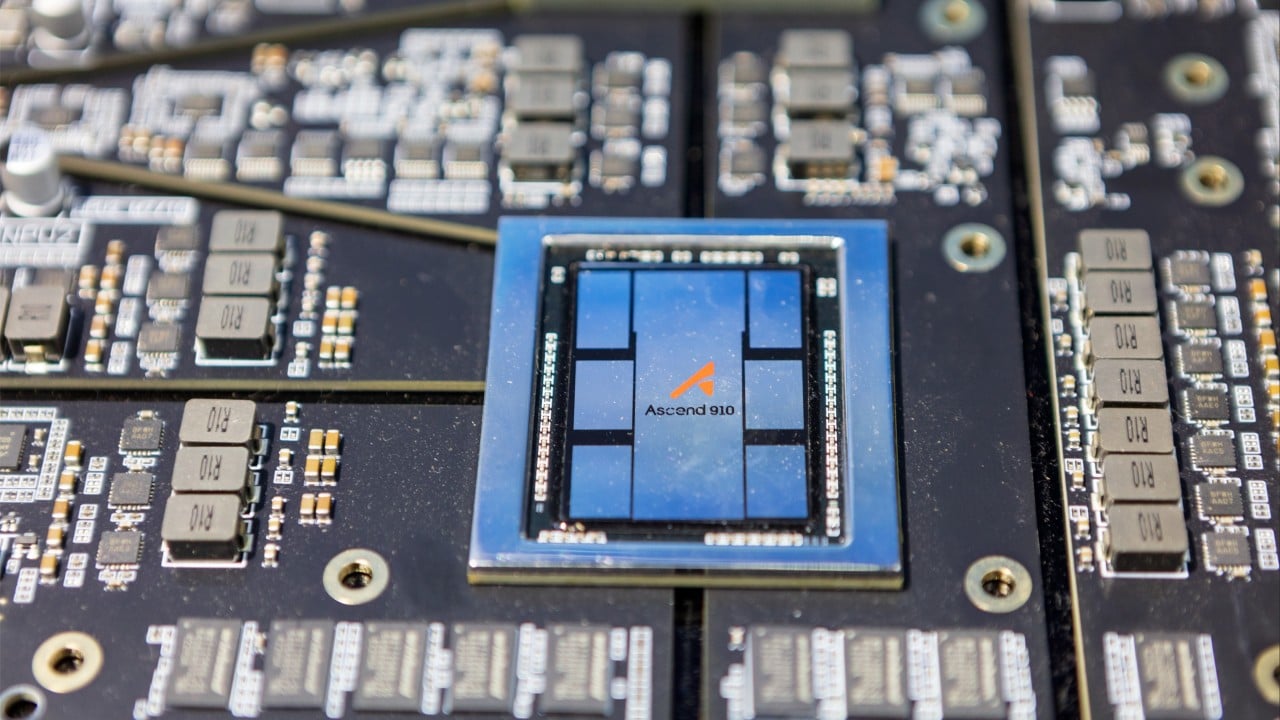
The divergence between technology infrastructure and enterprise application software has reached a structural breaking point. Since the acceleration of artificial intelligence infrastructure deployment in mid-2023, public market equity valuations have disproportionately favored the physical layer of the computing stack. The semiconductor industry's aggregate market capitalization has scaled past $9 trillion, while the application software sector has suffered a parallel contractive trend, retracing significantly from its late-2025 cyclical highs.
This tracking error is not an irrational market anomaly; it is a rational response to a fundamental capital allocation problem. The market is pricing a structural margin compression driven by "cloudflation"—the exponential increase in variable compute costs required to run modern, non-deterministic software models. For enterprise application software to enter a sustained expansionary cycle, the underlying microeconomics of software delivery must shift from variable infrastructure consumption back to predictable, high-margin operating leverage. The inflection point for this transition rests entirely on the impending corporate optimization cycle, where enterprise buyers force a reconciliation between raw computing power and measurable productivity output.
The Three Pillars of Cloudflation
To diagnose the software stagnation, one must map the technical architecture directly to the enterprise profit and loss statement. The economic model of the previous two decades of software-as-a-service (SaaS) relied on a highly predictable, linear cost of goods sold (COGS) structure. Centralized cloud data centers hosted deterministic code: an application database processed structured queries, and the marginal cost of serving an additional user approached zero. This economic dynamic yielded gross margins in the 75% to 85% range.
The transition to intelligent software architectures upends this cost structure through three distinct mechanisms.
The Shift from Storage to Continuous Inference
Deterministic software incurs storage-heavy costs with brief, episodic computing spikes. Intelligent agents and large-scale language models require continuous inference processing. Every user interaction triggers multi-step reasoning loops across billions of parameters. This fundamentally shifts the software cost function from a fixed structural overhead to a compounding, consumption-based variable expense.
The Token-to-Margin Compression Loop
In a consumption-based compute environment, API call volume and token density dictate the software vendor's platform cost. Software applications that act merely as wrappers around third-party foundational models face a structural margin squeeze. They inherit the high variable costs of hyperscale infrastructure providers without possessing the pricing power to pass those costs onto enterprise buyers.
Centralized Public Cloud Diseconomies of Scale
While early-stage cloud migration yielded immense capital expenditure efficiency, hyper-scale data processing has crossed the threshold of optimal returns. The concentration of computing workloads in centralized cloud facilities has driven localized energy capacity constraints, artificially inflating the unit economics of off-premise compute.
[Traditional SaaS P&L Model]
Revenue (Fixed/Subscription) ---> COGS (Low Fixed Hosting) ---> Gross Margin (75-85%)

[Intelligent Agent P&L Model]
Revenue (Fixed or Tiered)   ---> COGS (High Variable Tokens/Inference) ---> Gross Margin (45-60%)
This structural dynamic explains why infrastructure providers and localized hardware manufacturers are capturing the current tech spend. The market capital is chasing the physical asset layer because enterprise application software vendors have yet to prove they can scale user adoption without eroding their operational efficiency.
The Localized Compute Migration Strategy
The primary tactical response to cloudflation is the architectural decentralization of enterprise data processing. The financial strain of running continuous inference cycles in public clouds is driving a hardware refresh supercycle centered on on-premise and corporate edge infrastructure.
Enterprise technology buyers are recognizing that localized private deployments remove the volatile, consumption-based operational expense of public cloud APIs. Once the initial capital expenditure of private hardware is amortized, the marginal cost of executing inference cycles drops significantly. This structural pivot directly impacts how software must be engineered and distributed.
+-------------------------------------------------------------------+
|               THE LOCALIZED PRIVATE COMPUTE CYCLE                 |
+-------------------------------------------------------------------+
|                                                                   |
|   1. Hyperscale Cloud Inflation                                   |
|      (Continuous inference costs erode software vendor margins)   |
|                                                                   |
|   2. Capital Expenditure Allocation Shift                          |
|      (Enterprises redirect IT budgets to private hardware infrastructure)|
|                                                                   |
|   3. Architectural Decentralization                               |
|      (Data workloads shift to on-premise systems and edge nodes)  |
|                                                                   |
|   4. Software Value Recapture                                     |
|      (Application vendors bundle localized software with hardware) |
|                                                                   |
+-------------------------------------------------------------------+
The enterprise software companies positioned to expand margins are those decoupling their applications from public cloud dependencies. By engineering software optimized for localized private deployments, application vendors can shift the compute burden directly onto the customer’s private infrastructure. This operational transition restores the classic SaaS margin profile: the software vendor delivers the intellectual property, while the enterprise buyer absorbs the physical cost of power, cooling, and silicon optimization.
Valuing Realized Output Over Backlog Expectations
The core risk within the current market setup lies in the stark divergence between corporate backlogs and realized income. Valuations across the semiconductor and hardware infrastructure supply chain are reflecting multi-year growth trajectories extrapolated from immediate infrastructure pipelines. However, long-term capital allocation cannot rely solely on the construction of data center space; it requires a downstream consumer capable of monetizing that capacity.
The software sector serves as that downstream consumer. If application software providers fail to monetize intelligent features at a rate that offsets their infrastructure costs, enterprise technology spend will contract. The current tech market expansion hinges on a single, critical sequence:
$$\text{Infrastructure Capex} \longrightarrow \text{Application Deployment} \longrightarrow \text{Enterprise Productivity Gains} \longrightarrow \text{Sustained Revenue Growth}$$
If the third link in this causal chain fails to materialize, the capital expenditure cycle becomes unsustainable. Corporate buyers will refuse to renew expensive software licenses if the deployed applications do not yield explicit headcount efficiencies or measurable revenue acceleration.
The upcoming quarterly financial reports from major enterprise cloud and database providers will provide the structural data necessary to validate this transition. Investors must ignore top-line revenue growth if it comes at the expense of operating margins. The critical metric to track is the contraction or expansion of the core software gross margin percentage, which isolates the true variable cost of compute delivery.
Strategic Asset Allocation
The tactical execution framework for technology asset allocation requires a distinct structural rebalancing. The era of evaluating software companies purely on revenue growth rate or simple rule-of-40 metrics without auditing infrastructure cost structures is over.
- Underweight Public Cloud Wrappers: Reduce exposure to application software providers that lack proprietary model architectures and rely completely on public cloud infrastructure to run high-density workloads. These businesses face permanent margin degradation.
- Overweight Localized Infrastructure Bundlers: Allocate capital to software infrastructure providers that seamlessly integrate with private, on-premise hardware environments. These companies capture enterprise spending as corporations transition away from volatile cloud billing models.
- Target Productivity-Linked Monestization Models: Prioritize software vendors that have successfully transitioned from per-seat licensing to outcome-based or value-based pricing metrics. By tying contract values directly to realized corporate cost savings or output volume, these platforms insulate themselves from IT budget cuts.
The structural lag in software equities represents a prolonged repricing event rather than a permanent secular decline. The market is recalculating the true cost of running complex computing systems. Capital will return to the software application layer only when the industry demonstrates that its platforms can generate net positive economic value above the rising cost of the underlying compute infrastructure.
Software Performance Trends Video
This analysis provides additional macroeconomic context on why software equities have experienced structural volatility relative to the hardware supply chain during the artificial intelligence infrastructure expansion.