The contemporary live music market operates on a bifurcated value proposition: the monetization of legacy IP through high-capital spectacle and the niche cultivation of genre-fluid aesthetic brands. Using the performance archetypes of U2, Snoop Dogg, and Camp Claude as a data set reveals the divergence in how artists capture consumer attention in a saturated attention economy. While legacy acts like U2 utilize architectural innovation to maintain premium pricing power, artists like Snoop Dogg transition from musicians to lifestyle conglomerates, and emerging acts like Camp Claude leverage cross-disciplinary "cool" to survive the collapse of traditional mid-tier touring revenue.
The Architecture of Immersive Dominance: U2 and the CAPEX of Spectacle
U2 represents the pinnacle of the "Event-Horizon" revenue model. Their residency at the Sphere in Las Vegas serves as a case study in high-capital expenditure (CAPEX) as a barrier to entry. In this model, the music is no longer the primary product; the primary product is a proprietary sensory environment that cannot be replicated through digital streaming or standard arena tours.
The economic logic of the Sphere residency rests on three pillars:
- Scarcity and Geographic Concentration: By anchoring to a single high-tech venue, the band eliminates the massive logistics costs of a global tour while forcing the consumer to bear the travel costs. This shifts the financial burden of "reach" from the artist to the fan.
- Technological Moat: The integration of 16K resolution LED screens and spatial audio systems creates a "vertical" experience. Standard concert experiences are horizontal—focused on the stage. U2’s strategy utilizes the entire volume of the venue to justify ticket prices that often exceed the average weekly disposable income of their target demographic.
- The Intellectual Property (IP) Rehearsal: Performing "Achtung Baby" in its entirety is a strategic revalidation of 30-year-old assets. By wrapping legacy IP in modern tech, the band prevents the "aging out" of their catalog, maintaining its relevance for sync licensing and future digital rights management.
The risk in this model is "Spectacle Fatigue." When the technology becomes the star, the artist's brand becomes dependent on the venue's hardware updates. If the visual stimulus fails to evolve at the rate of consumer expectation, the premium price point collapses because the core musical performance—the "human element"—has been de-emphasized in the value chain.
Snoop Dogg and the Diversified Brand Proxy
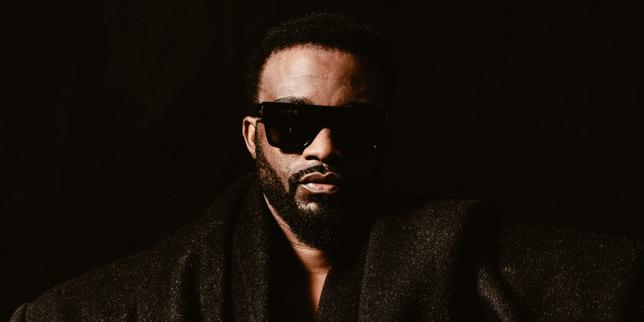
Snoop Dogg’s presence in the modern live circuit operates on a fundamentally different logic: the celebrity-as-infrastructure. He has successfully decoupled his revenue from the necessity of new musical output. His live performances function as promotional activations for a broader ecosystem of consumer goods, including cannabis, spirits, and digital media.
The "Snoop Dogg Effect" can be broken down into a brand-extension matrix:
- Cultural Ubiquity vs. Chart Position: Unlike U2, who still aim for conceptual albums, Snoop Dogg leverages high-frequency, low-stakes media appearances (from the Olympics to cooking shows) to maintain a baseline of cultural relevance. This ensures that his live booking fee remains high regardless of his proximity to the Billboard 100.
- The Nostalgia Utility Function: His performances rely on the "Medley Strategy." By delivering rapid-fire segments of hits from the 1990s and 2000s, he maximizes the dopamine response of the audience without requiring them to engage with new, unproven material.
- Agnostic Audience Capture: Because he has pivoted from a "gangsta rap" icon to a "universal uncle" persona, his market reach has expanded to include demographics that would not have engaged with his 1993 catalog. This lowers his acquisition cost per fan (CAC) across disparate age groups.
This transition illustrates the "influencer-artist" hybrid. The performance is not an end; it is a live-action advertisement for the Snoop Dogg lifestyle brand. The limitation here is the "Erosion of Artistry." Once an artist becomes a caricature of their brand, the ability to pivot back to serious, high-margin artistic endeavors is often permanently lost.
Camp Claude and the Micro-Niche Aesthetic Economy
Camp Claude represents the "third way" in the modern entertainment landscape: the Franco-American trio that prioritizes aesthetic cohesion over mass-market scale. In an era where the middle class of the music industry is shrinking, Camp Claude utilizes "Sky-Wave" (a blend of rock, pop, and electronic) to occupy a specific psychological space rather than a broad market segment.
The survival of mid-tier acts in the current economy depends on the "Aesthetic-Cohesion Formula":
- Multimodal Identity: Lead singer Diane Sagnier’s background as a photographer and director ensures that the band’s visual output is as rigorous as their sonic output. This creates a "total work of art" (Gesamtkunstwerk) on a budget, allowing them to compete with larger acts for visual attention on social media platforms.
- The Global-Local Loop: By singing in English but operating out of the Parisian scene, the band accesses a global market while benefiting from the localized support structures of the European arts funding and festival circuit.
- Genre Elasticity: Their sound is intentionally difficult to categorize. While this creates a "Discovery Bottleneck" (algorithmic playlists struggle to place them), it creates high "Fan Retention." Once a listener invests in the band, they are less likely to substitute them for a generic genre-equivalent.
The primary challenge for Camp Claude and similar acts is the "Scale Ceiling." The cost of touring—fuel, visas, equipment, and crew—has risen by approximately 30-40% since 2019. For a band that relies on high-quality production but lacks the stadium-filling power of a U2, the profit margins are razor-thin. This forces a reliance on "Alternative Revenue Streams," such as fashion collaborations and sync placements in high-end advertising.
The Convergence of Spectacle, Brand, and Niche
When these three archetypes—the Titan (U2), the Brand (Snoop Dogg), and the Aesthetic (Camp Claude)—share a cultural moment, they highlight the fragmentation of the "Music Show." It is no longer a singular category.
The following table categorizes the operational differences:
| Feature | U2 (The Titan) | Snoop Dogg (The Brand) | Camp Claude (The Aesthetic) |
|---|---|---|---|
| Value Driver | Proprietary Technology | Personal Brand/Nostalgia | Visual & Sonic Synergy |
| Primary Risk | CAPEX Obsolescence | Brand Overexposure | Touring Margin Erosion |
| Revenue Core | Premium Ticket Sales | Licensing & Endorsements | Sync & Niche Live |
| Audience Bio | High-Income Boomer/Gen X | Multi-generational Mass | High-Engagement Indie |
The underlying mechanism driving all three is the Scarcity-Access Paradox. In a digital world where music is effectively free and infinite, the only things that retain value are physical presence and unique environments. U2 manufactures this through massive investment; Snoop Dogg through a unique persona; Camp Claude through a curated aesthetic.
The Cost Function of Authenticity in a Post-Digital Market
The transition from "listening to music" to "experiencing a brand" has altered the cost function of being a fan. The "All-In Cost of Fandom" now includes high-velocity content consumption, travel to specific hubs (Vegas, major festivals), and the purchase of physical artifacts that signal membership in a subculture.
The second limitation of this market shift is the "Homogenization of the Middle." As costs rise, artists who are neither large enough to command "Sphere-level" investment nor small enough to operate on "DIY" margins are being squeezed out. This creates a "barbell economy" in the music industry. On one end, we have the ultra-high-budget spectacles; on the other, the hyper-niche aesthetic projects. The middle-tier "rock star" or "pop star" who simply plays theaters is becoming a non-viable business model.
This structural shift is driven by the Attention-to-Dollar Conversion Rate. A fan’s attention is a finite resource. A legacy act like U2 requires a large amount of attention over a short period (the residency), yielding a massive one-time payout. A brand like Snoop Dogg requires a low-intensity, constant stream of attention across multiple platforms, yielding a diversified, continuous payout. A niche act like Camp Claude requires a high-intensity, long-term commitment from a small group, yielding a fragile but loyal revenue stream.
Strategic Realignment for the Next Economic Cycle
To maintain viability in this environment, artists and management must move away from the "Tour-Album-Tour" cycle. The new imperative is the "Multi-Platform Asset Strategy."
First, legacy acts must prioritize Venue Exclusivity. The success of the Sphere suggests that the future of high-end music lies in "Destination Performances." This turns the concert into a pilgrimage, allowing for higher margins and lower environmental impact through reduced travel.
Second, established personalities must focus on Vertical Integration. Snoop Dogg’s model of owning the supply chain of his brand (from the media production to the consumer goods) is the only way to insulate against the volatility of the streaming market, where royalty rates remain stagnant despite inflation.
Third, emerging acts must embrace Visual-Sonic Parity. In a landscape dominated by short-form video (TikTok, Reels), the "sound" of a band is only 50% of the product. The other 50% is a rigorous, consistent visual language that allows the artist to bypass traditional gatekeepers and speak directly to their niche.
The future of the live music industry is not found in the "Music Show" itself, but in the engineering of environments where the music serves as the catalyst for high-margin human interaction. The distinction between a concert, a brand activation, and a curated aesthetic experience will continue to blur until the term "Music Show" becomes an obsolete descriptor for what is actually a sophisticated exercise in cultural capital management.
Invest in the "Platform," not just the "Performer." The performers who survive the next decade will be those who recognize that they are not just creators of sound, but architects of attention and owners of their own distribution ecosystems.