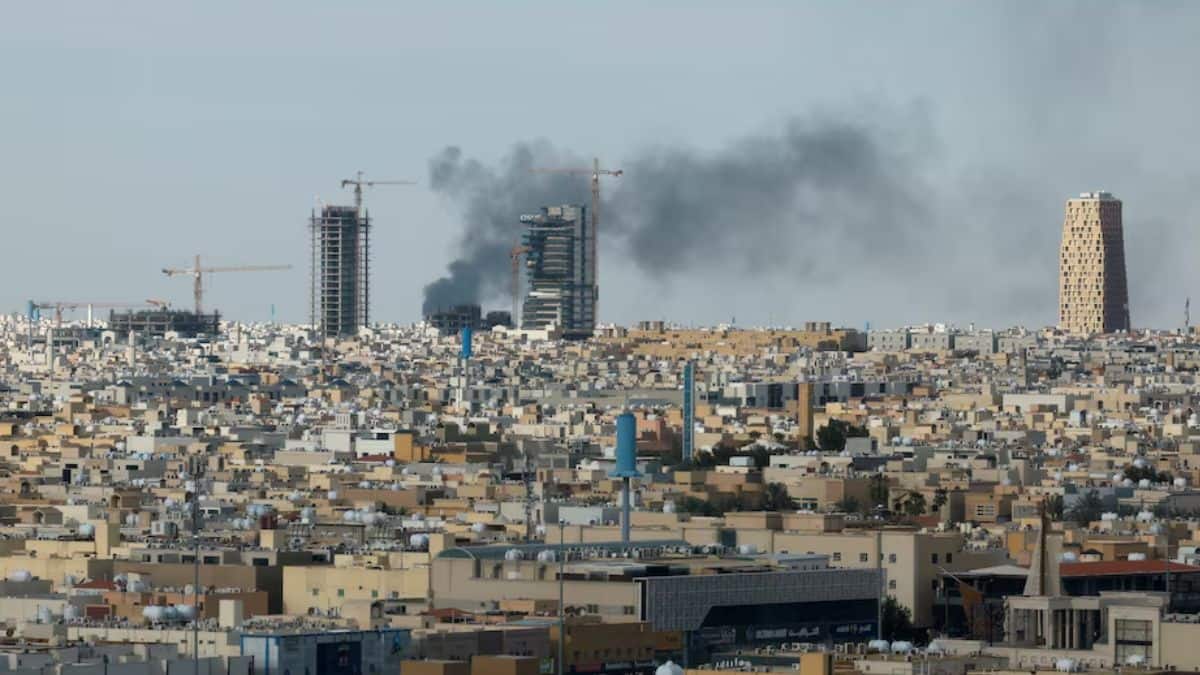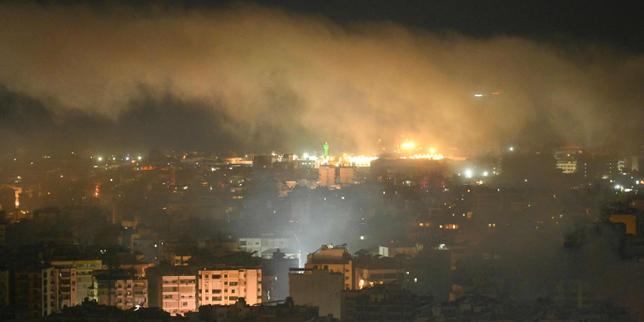
The headlines are carbon copies of a tired script. "Israel targets Iranian Revolutionary Guards in Beirut." The narrative is always the same: a surgical strike, a high-value target neutralized, and a momentary assertion of dominance. Legacy media treats these events like a scoreboard in a vacuum. They focus on the "who" and the "where" while completely ignoring the "so what."
If you think killing a general or a commander in a crowded urban center is a masterstroke of grand strategy, you aren't paying attention. You’re watching a tactical highlight reel while the stadium burns down. For a different look, consider: this related article.
The Precision Trap
We have been conditioned to believe that technological superiority—the ability to put a missile through a specific window in a Beirut suburb—equates to geopolitical control. It doesn’t. In fact, the obsession with "precision" often masks a total lack of long-term objectives.
I have watched defense analysts drool over satellite imagery and strike footage for decades. They call it "decapitation." It’s a clean word for a messy, ineffective process. When you remove a node in a decentralized, ideologically driven network, you don't kill the network. You trigger an evolutionary response. Further insight on the subject has been provided by The Washington Post.
The Iranian Revolutionary Guard Corps (IRGC) is not a Fortune 500 company where the death of a CEO sends the stock price tumbling and the strategy into a tailspin. It is a hydra. For every commander eliminated in a Beirut apartment block, three mid-level officers—younger, more radical, and more desperate to prove their worth—are fighting to fill the vacuum.
The Beirut Urban Legend
The media loves the "Beirut is the new front" angle. It’s dramatic. It’s gritty. It’s also a distraction.
Targeting IRGC personnel in Lebanon isn't a "new" escalation; it’s a symptom of a failed containment policy. If the goal was to deter Iranian influence, the decades of strikes have objectively failed. Look at the map. Influence isn't measured in body counts; it's measured in infrastructure, logistics, and political capture.
While the world watches the smoke rise over Dahiyeh, the actual power dynamics are shifting in ways a Hellfire missile can't touch. We are witnessing the "tacticalization" of foreign policy. This is where leaders opt for the immediate dopamine hit of a successful strike because they have no idea how to handle the grinding, boring, and difficult work of diplomatic or economic shifts.
The Cost of the "Win"
Let’s talk about the math that nobody wants to do.
A strike happens. A target is "confirmed" dead. The military industrial complex pats itself on the back. But what is the actual ROI?
- Intelligence Burn: To hit a specific person in a specific room in a foreign capital, you burn years of intelligence assets. Sources are exposed. Signals intelligence methods are revealed. You trade a decade of hard-won visibility for a single afternoon’s headline.
- The Radicalization Dividend: We pretend that "collateral damage" is just a PR problem. It isn't. It’s a recruitment tool. Every time a residential block is leveled to get one guy in a uniform, the local grievance narrative is fed for another generation.
- Strategic Fatigue: The international community moves from shock to apathy. When "precision strikes" become the daily bread of Middle Eastern news, the aggressor loses the ability to use force as a meaningful signaling tool. It becomes background noise.
Stop Asking if the Strike Succeeded
The question "Did they hit the target?" is the wrong question. It’s the lazy question.
The question you should be asking is: "Does this strike make a regional war less likely?"
The answer is almost always no.
We are seeing a feedback loop where tactical brilliance is being used to compensate for strategic bankruptcy. It’s like a chess player who is incredibly good at capturing pawns but doesn't realize his King is three moves from checkmate.
The "Expert" Delusion
You’ll hear the talking heads on cable news talk about "restoring deterrence." This is a phrase used by people who haven't spent a day studying the psychology of asymmetric warfare.
You cannot deter an adversary that views martyrdom as a promotion.
When Israel or any state actor targets IRGC officials, they are operating under a 20th-century Westphalian logic—the idea that states compete for power and will back down when the cost becomes too high. But the IRGC and its proxies operate on a different timeline. They aren't looking at the next fiscal quarter or the next election. They are looking at the next century.
The Harsh Reality
The reality that no one wants to admit is that these strikes are often a sign of weakness, not strength. They are an admission that the underlying political and ideological issues are unsolvable.
If you could solve the problem through diplomacy, you would. If you could solve it through economic pressure, you would. You resort to kinetic action when you have run out of ideas.
I’ve seen this play out in boardroom-level security briefings. The "tough guy" in the room always wants to take a shot. It feels active. It feels like "doing something." But activity is not the same as progress.
The Nuance the Media Misses
The competitor article will tell you about the caliber of the missiles or the biography of the targeted general. I’m telling you that those details are irrelevant.
What matters is the shift in the "Rules of the Game." For years, there was a shadow war. Now, the shadow is gone, but the war has no exit ramp. By bringing the fight into the heart of Beirut so brazenly, the actors are destroying the very "gray zones" that allowed for de-escalation in the past.
We are moving into a period of "infinite war," where the objective isn't to win, but simply to remain the last one standing in the rubble.
Your Actionable Reality Check
Stop consuming news that treats military strikes like sports scores.
Next time you see a headline about a "targeted killing" in the Middle East, don't look at the name of the guy who died. Look at the reaction of the street. Look at the shift in oil prices. Look at the movement of displaced civilians.
The strike isn't the story. The strike is the curtain being pulled over the real story: the total collapse of regional stability that no amount of "precision" can fix.
Go ahead and celebrate the "surgical" hit if it makes you feel safer. Just don't be surprised when the infection spreads anyway.
The scalpels are sharp, but the patient is already terminal.
Stop looking at the missile. Look at the hole it leaves in the future.