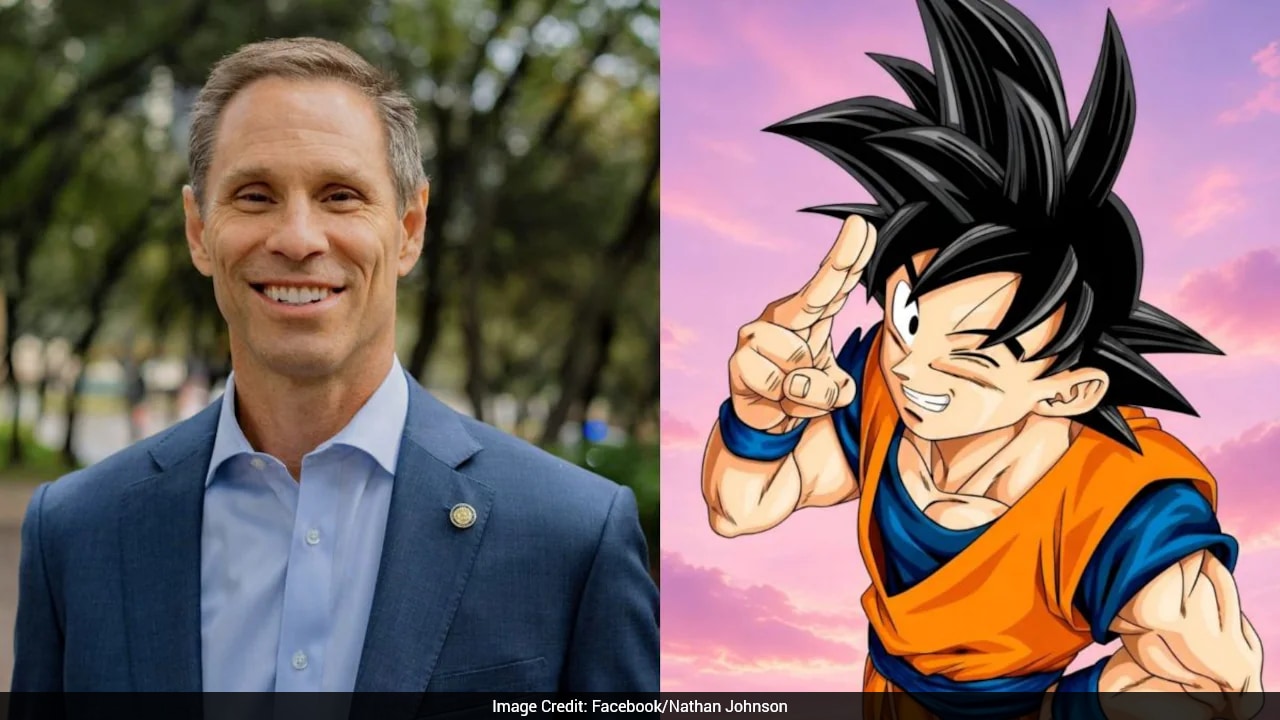
Political capital in contemporary state-level elections rarely originates from linear career progression within party apparatus; instead, asymmetric name recognition built across unrelated cultural industries frequently lowers voter acquisition costs and disrupts entrenched electoral dynamics. The trajectory of Nathan Johnson—who transitioned from composing the English-language replacement score for Dragon Ball Z to serving in the Texas Senate and contending for the office of Texas Attorney General—illustrates a quantifiable shift in how unconventional professional backgrounds translate into institutional authority. Rather than treating his background in anime composition and commercial litigation as a novelty or a contradiction, an operational analysis reveals how multidisciplinary skill sets solve specific bottlenecks in modern campaign execution, coalition building, and legal governance.
Standard political analysis treats entertainment credentials as a superficial curiosity, separating cultural production from legislative competence. This binary framing fails to account for the structural mechanics of attention economies and institutional trust. When a candidate enters a statewide race in a high-cost media market like Texas, the primary barrier to entry is the capital expenditure required to achieve baseline voter awareness. Traditional candidates rely on institutional endorsements, multi-cycle donor networks, and incremental media exposure to build recognition. A candidate possessing pre-existing cultural footprint bypasses the initial awareness deficit, reallocating campaign resources from basic introduction to policy differentiation and turnout operations.
The Architecture of Asymmetric Political Capital
To evaluate how a career in media composition interacts with high-stakes legal and political office, the transition must be broken down into three distinct operational assets: Cultural Footprint Arbitrage, Cognitive Switching Capacity, and Procedural Legitimacy.
- Cultural Footprint Arbitrage: Between 1999 and 2003, Johnson composed musical scores for Funimation’s English dub of Dragon Ball Z, alongside other anime titles. While this work occurred decades prior to his statewide campaigns, syndicated and streaming media creates durable, cross-generational brand equity. In political marketing, organic earned media triggered by an unconventional biography reduces customer acquisition costs—measured in dollars spent per persuaded voter. Journalists cover anomalies; voters remember distinct narratives. The anomaly acts as a hook that forces media gatekeepers to cover substantive policy positions that would otherwise struggle for airtime in crowded primary or general election cycles.
- Cognitive Switching Capacity: Commercial music composition for serialized television requires strict adherence to technical constraints, tight production deadlines, and emotional calibration to narrative arcs. Commercial litigation—Johnson’s parallel career after earning his Juris Doctor from the University of Texas School of Law—demands rigorous statutory interpretation, evidentiary synthesis, and adversarial framing. Operating across both domains builds high tolerance for ambiguity and rapid context switching, both of which are foundational to managing complex legislative portfolios or directing a state legal apparatus with thousands of employees.
- Procedural Legitimacy: Cultural novelty alone collapses under scrutiny if unanchored by institutional competence. Johnson’s tenure representing Texas Senate District 16, beginning after unseating a multi-term Republican incumbent in 2018, established the necessary baseline of procedural legitimacy. By focusing on technical policy areas—healthcare access, energy grid reliability, water infrastructure, and administrative law—he neutralized the primary vulnerability of non-traditional candidates: the perception of dilettantism.
Deconstructing the Texas Attorney General Office as an Operational System
Understanding the significance of Johnson’s trajectory requires mapping the functional demands of the Texas Attorney General’s office. Unlike standard legislative roles, which center on coalition building and statutory drafting, the Office of the Attorney General (OAG) operates as the state’s primary law firm, regulatory enforcement agency, and constitutional litigator.
The OAG manages tens of thousands of active legal matters simultaneously, ranging from child support enforcement—which constitutes the largest share of its administrative headcount and budget—to complex multi-state federal litigation, consumer protection enforcement, and open-records rulings. Over the past decade, the office has increasingly functioned as a vehicle for ideological litigation against federal agencies, shifting resource allocation toward high-profile constitutional challenges.
A transition in leadership from an ideological litigator model to an institutionalist model alters the operational priorities of the agency across four specific vectors:
- Litigation Portfolio Rebalancing: Shifting resources away from speculative federal injunctions toward core statutory mandates, including consumer fraud prosecution, antitrust enforcement, and environmental compliance.
- Administrative Stabilization: Reducing senior-level attrition by restoring traditional civil-service norms and internal legal review processes, which suffer when legal opinions are subordinated to immediate political signaling.
- Intergovernmental Friction Reduction: Recalibrating relationships with municipal governments, school districts, and state agencies, moving from adversarial preemption suits to collaborative statutory interpretation.
- Public Information Enforcement: Strengthening the Open Records Division’s enforcement mechanisms to ensure compliance with the Texas Public Information Act, addressing backlogs and executive-branch resistance to transparency.
The Mechanics of Voter Persuasion in Polarized Media Markets
Texas presents a specific structural challenge for statewide candidates: high geographic dispersion combined with some of the most expensive broadcast media markets in the United States, including Dallas-Fort Worth, Houston, Austin, and San Antonio. Running a conventional statewide campaign requires tens of millions of dollars simply to achieve frequency targets on broadcast television.
In this environment, standard partisan messaging yields diminishing returns. Voters exhibit high banner blindness toward traditional political advertising, filtering out formulaic attack ads and predictable ideological tropes. A biographical profile that includes both commercial litigation and iconic pop-culture composition disrupts this filtering mechanism.
The persuasion mechanism operates through cognitive dissonance resolution. Voters holding rigid stereotypes about political figures encounter a data point—a state senator and attorney who scored an iconic animated series—that contradicts their mental model of a partisan operative. To resolve the dissonance, the voter engages with the biographical narrative longer than they would with a standard political mailer or thirty-second spot. That extended attention window creates the opening required to deliver policy arguments regarding healthcare economics, judicial integrity, or consumer protection.
This dynamic carries clear structural boundaries. Novelty attracts attention, but it does not generate ideological alignment. In a polarized electorate, partisan sorting remains the dominant predictor of vote choice. Cultural recognition can improve margins among low-propensity voters, younger demographics who grew up with the media property, and unaffiliated suburban voters who view unconventional backgrounds as markers of authenticity. However, it cannot overcome fundamental policy disagreements with core partisan bases, nor can it substitute for statewide field organization and institutional fundraising.
Comparative Analysis of Candidate Archetypes
To isolate the strategic advantage of Johnson’s profile, compare three distinct candidate archetypes common in statewide legal and executive races:
- The Career Prosecutor / Judge: High baseline credibility on law-and-order framing and courtroom procedure. Low differentiation in crowded primaries. Vulnerable to attacks based on specific past rulings, plea bargains, or sentencing records. Requires heavy capital expenditure to build name recognition outside their home judicial district.
- The Ideological Firebrand: High efficiency in mobilizing base donors and partisan media ecosystems. Generates abundant earned media through polarization. Structurally disadvantaged in general elections within competitive or shifting states, as the same rhetoric that drives primary turnout alienates moderate swing voters and business-aligned constituencies.
- The Multidisciplinary Institutionalist: Combines verifiable professional credentials (law degree, legislative committee seniority, litigation experience) with an external cultural or private-sector identity. Generates non-polarized earned media, appeals to cross-pressured suburban voters, and projects independence from rigid party orthodoxy. The primary vulnerability lies in perception management: opponents will attempt to weaponize the non-traditional background to frame the candidate as unserious or out of step with traditional state culture.
Johnson’s career maps directly onto the third archetype. When opponents or skeptical observers highlight his work on Dragon Ball Z, they inadvertently reinforce his differentiation from the second archetype while failing to erase his legislative record in the Texas Senate.
Strategic Vulnerabilities and Operational Constraints
No political profile is immune to structural friction. Deploying a multidisciplinary identity in a statewide Texas race encounters three acute constraints that limit its scalability:
First, the seriousness threshold in judicial and legal offices is higher than in legislative races. Voters tolerate eccentricity in legislators because a single representative is one voice among many. An Attorney General holds unilateral executive authority over state legal strategy. Opponents routinely exploit entertainment backgrounds to suggest a lack of gravitas, requiring the candidate to over-index on technical legal fluency during debates, editorial board interviews, and policy rollouts.
Second, generational segmentation limits the reach of specific cultural touchstones. While Dragon Ball Z commands massive brand recognition among Millennials and Gen Z voters, older voting cohorts—who still constitute the most reliable turnout bloc in midterm and off-year elections—lack direct familiarity with the property. Relying on cultural nostalgia without translating the underlying work ethic and creative discipline into terms resonant with older demographics creates an age-stratified appeal that underperforms in high-turnout precincts.
Third, structural partisanship in Texas imposes a hard ceiling on persuasion. Statewide elections in Texas are fundamentally turnout and margin-compression contests. Even the most efficient earned-media engine cannot alter the baseline partisan composition of rural counties. Victory requires maximizing turnout in urban cores while trimming Republican margins in fast-growing suburban ring counties—such as Collin, Denton, Williamson, and Fort Bend—where professional, college-educated voters respond favorably to institutional stability and pragmatic governance.
Translating Unconventional Backgrounds into Governance Frameworks
If an unconventional candidate secures executive legal office, the campaign asset must be converted into an operational management style. The intersection of artistic production and legal practice offers a distinct framework for institutional leadership:
- Iterative Problem Solving: Composing music for picture requires testing themes against visual pacing, discarding work that fails to serve the scene, and refining arrangements under strict constraints. Applied to public administration, this translates into data-driven policy evaluation—piloting enforcement initiatives, measuring compliance metrics, and reallocating legal resources away from unproductive litigation.
- Audience-Centric Communication: Legal opinions and regulatory guidance are frequently written in impenetrable jargon that obscures compliance obligations for citizens and businesses. Applying narrative clarity to public legal communications improves voluntary compliance, reduces administrative friction, and demystifies complex constitutional issues for the public.
- Cross-Functional Collaboration: Film and television scoring requires aligning the work of writers, directors, sound engineers, and executives toward a coherent final product. Running a statewide legal agency requires synchronizing legislative liaisons, appellate attorneys, investigators, and administrative staff so that legal strategy aligns with broader public policy objectives rather than operating in an ideological silo.
The Strategic Play for Modern Political Entrants
The trajectory from anime composer to Texas state senator and Attorney General contender demonstrates that the traditional pipeline for high-level public office is eroding. As media fragmentation continues to drive up the cost of conventional political advertising, candidates possessing pre-existing, non-political cultural equity hold a structural advantage in capturing voter attention.
To capitalize on this shift without succumbing to the perception of novelty candidacy, political strategists and prospective candidates must execute a strict sequencing model:
- Anchor in Institutional Competence First: Never lead with the cultural credential. Establish unassailable domain expertise—through legislative committee work, complex litigation, or executive management—so that the unconventional background functions as an enhancer rather than a substitute for qualification.
- Weaponize the Contrast, Not the Nostalgia: Frame the non-traditional background as evidence of independence, creativity, and real-world problem-solving outside the insular political class. Use it to draw a sharp contrast against career politicians whose entire worldview is shaped by partisan feedback loops.
- Convert Earned Media into Infrastructure: Treat the organic press coverage generated by an unusual biography as a top-of-funnel acquisition tool. Immediately capture the resulting attention to build small-dollar donor lists, recruit precinct-level volunteers, and drive traffic to detailed policy platforms.
- Maintain Operational Discipline Under Attack: Anticipate that opponents will trivialize the creative or non-traditional career path. Respond not with defensiveness, but with granular, technical mastery of the office’s statutory responsibilities, forcing the opposition onto substantive terrain where ideological slogans fail.