The ballot boxes currently arriving in Kathmandu via military helicopter from the high Himalayan passes carry more than just paper. They carry the formal remains of a political era that has dominated Nepal since the end of the civil war. As counting begins following Thursday’s general election, preliminary data shows a voter turnout of approximately 60 percent. While this figure mirrors the 61 percent seen in the 2022 cycle, the atmosphere surrounding this vote is fundamentally different. This was not merely an exercise in civic duty; it was a quiet, disciplined eviction notice served to a generation of leaders who have treated the Prime Minister’s office like a rotating chair in a private club.
The Generation Z Rupture
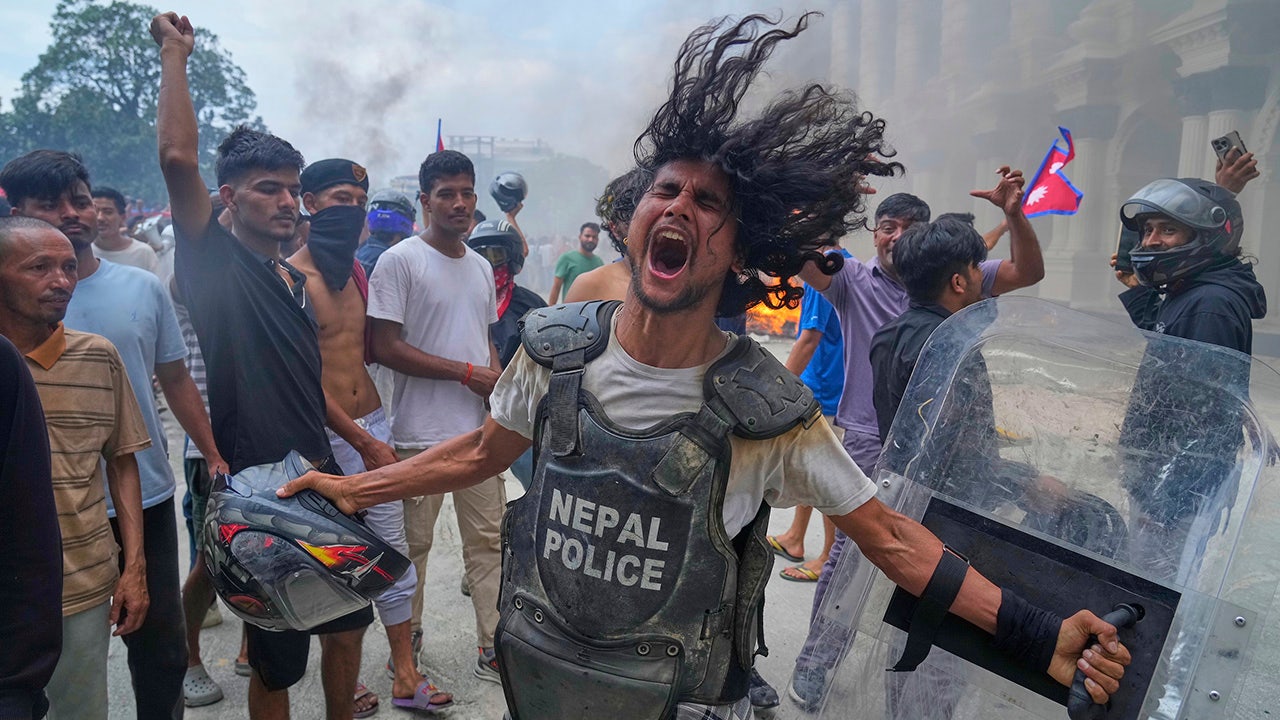
The shadow of the September 2025 youth-led uprising hung over every polling station. That revolt, which forcibly removed former Prime Minister K.P. Sharma Oli from power, was triggered by a clumsy attempt to ban social media but fueled by decades of economic stagnation. For the two million youth who joined the voter rolls since 2022, the "stability" promised by the three-headed dragon of Nepali politics—the Nepali Congress, the CPN-UML, and the Maoist Centre—has looked a lot like a stagnant pond. Also making waves lately: Finland Is Not Keeping Calm And The West Is Misreading The Silence.
The traditional power brokers spent the campaign season recycled the same promises of hydroelectric wealth and infrastructure. Meanwhile, the Rastriya Swatantra Party (RSP), led by the populist rapper-turned-mayor Balendra "Balen" Shah, spoke the language of the street. Early trends suggest the RSP is not just winning; it is cannibalizing the base of the established parties. In Kathmandu and urban centers, the "bell" symbol of the RSP has become a siren song for those tired of seeing 3,000 young Nepalis leave the country every single day in search of work in the Gulf or Malaysia.
A Three-Way Collision of Ideologies
This election was never a simple choice between left and right. Nepal’s political landscape is a tangled web of tactical alliances that would make a Machiavellian blush. More insights regarding the matter are detailed by Associated Press.
- The Established Left: The CPN-UML, under a bruised but defiant Oli, relied on a disciplined grassroots machine. Their pitch remained anchored in "Prosperous Nepal, Happy Nepali," a slogan that has lost its luster as inflation touched 8 percent and the cost of living outpaced the meager growth of a $40 billion economy.
- The Centrist Bloc: The Nepali Congress, led by the perennial Sher Bahadur Deuba, attempted to position itself as the "safe" hand for international investors and neighbors like India. Yet, internal fractiousness and a lack of fresh faces made them look like a relic in an era demanding radical transparency.
- The New Populism: Balen Shah’s platform is less about Marx or democratic socialism and more about "delivery." His "Citizen Contract" promises to double the per capita income to $3,000 and expand health insurance to the entire population within five years. Critics call it math-free populism; the youth call it hope.
The Geopolitical Tightrope
Beyond the domestic anger lies a cold reality: Nepal is a buffer state under immense pressure. New Delhi and Beijing are not just passive observers; they are stakeholders. India’s interest remains rooted in security and the "Agnipath" scheme, which has complicated the traditional recruitment of Gurkhas into the Indian Army. China, meanwhile, continues to push for progress on the Belt and Road Initiative (BRI), viewing Nepal as a vital link to South Asia that bypasses traditional maritime routes.
The rise of the RSP introduces a wildcard into this delicate hedging strategy. While the old guard had well-worn channels of communication with both capitals, Shah’s movement is fiercely nationalistic and unpredictable. If the RSP secures enough seats to lead a coalition, the "Panchsheel" principles of non-alignment will be tested by a leadership that prioritizes domestic optics over diplomatic finesse.
The Mechanics of the Count
The complexity of Nepal’s mixed electoral system means a final tally is still days away. Of the 275 seats in the House of Representatives, 165 are decided by a first-past-the-post (FPTP) system, while 110 are allocated through proportional representation (PR).
| Party | 2022 Seats | Early 2026 Trends (Projected) |
|---|---|---|
| Nepali Congress | 89 | Heavy Losses in Urban Belts |
| CPN-UML | 78 | Holding Rural Strongholds |
| CPN (Maoist Centre) | 32 | Struggling for Relevance |
| Rastriya Swatantra Party | 21 | Massive Gains in Kathmandu/Pokhara |
The PR votes are particularly crucial for the smaller, newer parties. In 2022, the RSP managed to become the fourth-largest party largely on the back of the PR ballot, where voters can choose a party regardless of the candidate in their specific district. This year, the PR count is expected to be a landslide for the "bell," potentially making Balen Shah the kingmaker, if not the king.
The Cost of Apathy
Despite the "peaceful" nature of the vote reported by the Election Commission, the 60 percent turnout is a warning. In 2013, turnout was nearly 78 percent. The decline suggests a growing segment of the population has simply checked out. They don't believe the ballot can fix a system where the Supreme Court has had to intervene twice in three years to reinstate a dissolved parliament.
The immediate challenge for whichever government emerges from the counting centers in Kathmandu is not just forming a cabinet. It is preventing the next September 2025. If the new winners fail to deliver on the "Citizen Contract" within the first hundred days, the energy currently seen at the polling booths will inevitably return to the streets. The transition from a "land-locked" to a "land-linked" nation remains a distant dream while the country’s most valuable export remains its own people.
Watch the urban centers of Jhapa and Kathmandu as the first FPTP results are announced; they will tell you if the old guard is truly dead or just retreating to wait for the next coalition collapse. Would you like me to track the specific district-level upsets as the Election Commission releases the live tallies?