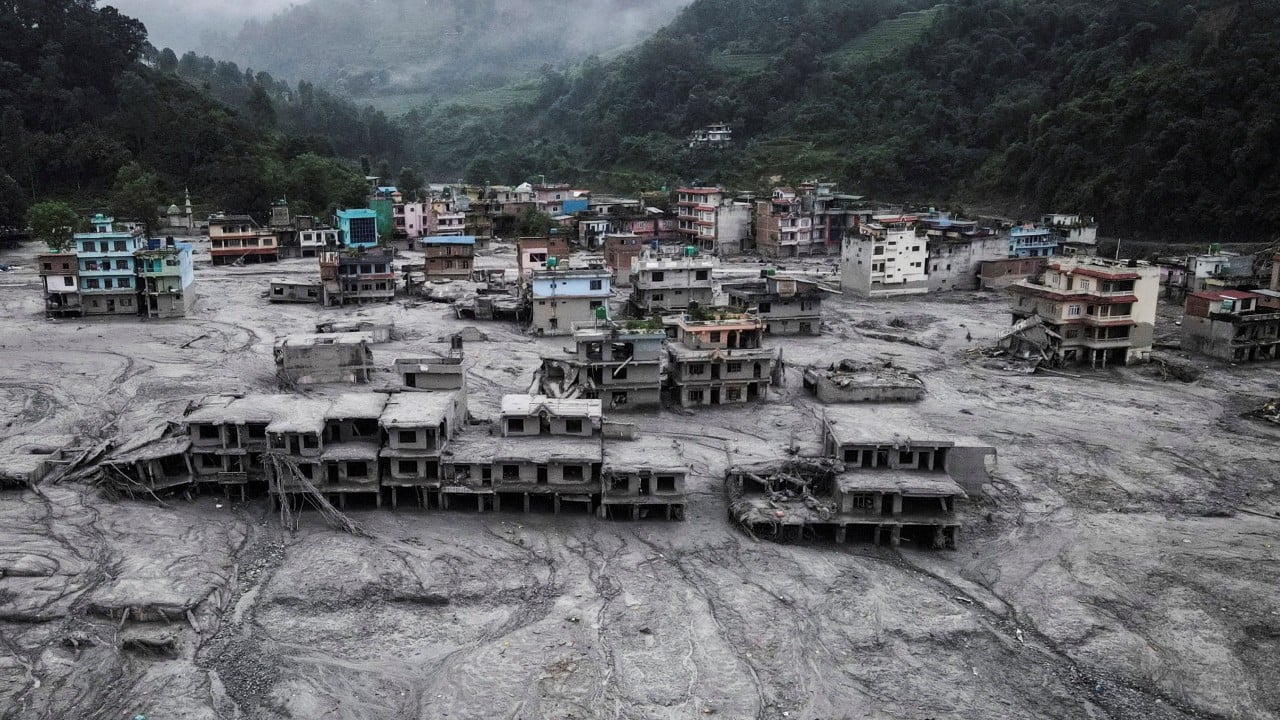
Twenty million dollars. For a mountain nation battered by glacial lake outburst floods, erratic monsoons, and landslides that wipe out entire valleys, twenty million dollars sounds like a headline. In reality, it is a rounding error dressed up as justice.
Coverage around Nepal’s first-ever payout from the UN’s Loss and Damage fund leans hard on triumphalism. First-ever. Historic milestone. Proof the global mechanism works. That framing is lazy consensus, and it lets wealthy emitters off the hook while setting expectations so low that even a tiny disbursement looks like a victory.
I have spent years watching climate finance roll out across vulnerable economies, from municipal resilience grants to multilateral adaptation funds. I have seen governments and international agencies blow millions on workshops, feasibility studies, and committee meetings that never poured a single bag of cement where a hillside was sliding. When you look closely at how a US$20 million payout actually moves through bureaucracy, the celebration starts to look premature.
The Wrong Question Everyone Keeps Asking
Most coverage asks whether Nepal will get the money on time or how much more the fund should raise. Both questions miss the point. The real question is whether a grant-based diplomacy model can ever match the scale and speed of physical destruction in high-risk terrain.
Loss and damage, in climate policy terms, refers to harm that occurs despite mitigation and adaptation efforts—economic losses like destroyed roads and lost crops, alongside non-economic losses like displaced communities, lost lives, and cultural heritage. That distinction matters because adaptation pays to prepare for future shocks, whereas loss and damage addresses harm already inflicted. Confusing the two turns every disaster into a turf war over definitions and eligibility rules.
When commentators treat a US$20 million tranche as proof of concept, they ignore scale. Floods and landslides in Nepal regularly inflict hundreds of millions of dollars in damage in single seasons, and long-term infrastructure deficits run into billions. Calling a twenty-million-dollar payout a breakthrough is like handing a band-aid to someone with a fractured femur and calling the emergency room a success.
Even heavy hitters in climate economics and disaster risk—researchers associated with institutions like the Grantham Research Institute on Climate Change and the Environment, the Overseas Development Institute, and the Intergovernmental Panel on Climate Change—have repeatedly pointed out that pledges and headline disbursements rarely equal rapid, locally accessible capital. Money pledged is not money spent. Money approved by an international board is not money reinforcing a river embankment before the next monsoon hits.
Why "People Also Ask" Gets the Premise Wrong
Is a US$20 million UN payout enough to rebuild after climate disasters in Nepal?
No, and asking whether it is "enough" assumes the fund was designed as a comprehensive reconstruction insurer. It was not. Even well-run disaster relief programs struggle with unit costs in mountainous regions where transporting steel, gabion wire, and heavy machinery takes weeks and costs multiples of lowland prices.
Treat US$20 million as a pilot disbursement or a targeted intervention in specific high-risk districts, not a nationwide recovery check. If policymakers spread it thin across dozens of municipalities to keep everyone politically happy, every project will be underfunded and half-finished.
Does receiving this money mean wealthy countries are finally paying for climate damage?
It means a small fraction of political goodwill has turned into an initial transfer. Calling that "paying for climate damage" overstates the commitment by orders of magnitude. Historical emissions from industrialized economies created a massive carbon debt, and a single twenty-million-dollar payout does not settle that ledger.
Worse, celebrating initial payouts can create moral hazard. Wealthy nations get good press for modest sums while delaying deeper emissions cuts or larger, predictable financing streams. Symbolic generosity is cheap. Structural accountability is hard.
How can Nepal make sure the money actually reaches vulnerable communities?
By cutting out middlemen wherever legally and practically possible, publishing project-level tracking in plain language, and tying disbursements to verifiable physical milestones rather than endless reporting cycles. Bureaucracy eats small funds alive. If administrative overhead and consultant fees take a noticeable slice of US$20 million, the people living below an unstable slope will see almost nothing.
The Mechanics That Slow Real Money Down
To see why a headline payout often disappoints on the ground, follow the money from international approval to a local valley.
First comes governance friction. Multilateral climate funds rely on boards, accreditation standards, fiduciary checks, and project pipelines. Those safeguards exist for a reason—nobody wants funds vanishing into opaque accounts—but slow processes collide brutally with fast disasters. A river does not wait for a twelve-month project approval cycle.
Second comes implementation capacity. Even when capital arrives, turning funds into resilient bridges, early-warning systems, drainage channels, and safer housing requires engineering capacity, local procurement speed, and clear land-use enforcement. Building on floodplains or steep, deforested slopes guarantees repeat losses no matter who writes the check.
Imagine a scenario where a district loses a key highway bridge in July. A grant process starts in September, undergoes environmental and fiduciary reviews through winter, and breaks ground the following spring. Another monsoon arrives before the structure is finished, washing out temporary access again. That delay is not a minor scheduling quirk; it is the difference between recovery and compounding poverty.
Compare the two ways climate finance gets talked about versus how it operates in practice:
| Dimension | Headline Narrative | Operational Reality |
|---|---|---|
| Scale of payout | Historic, transformative milestone | Modest pilot sum relative to annual losses |
| Speed of delivery | Urgent response to climate harm | Multi-stage approval and execution lag |
| Primary risk | Not raising enough money at summits | Dilution across too many small projects |
| Accountability metric | Announcements and pledges made | Physical risk reduced on the ground |
My Contrarian Bet—And Where It Can Fail
My contrarian stance is straightforward: stop celebrating small multilateral payouts as structural breakthroughs, and start judging every dollar by speed, concentration, and measurable risk reduction. Instead of trying to solve all of loss and damage through slow global summits, vulnerable countries should push for rapid-response liquidity mechanisms, pre-agreed triggers, and concentrated investments in high-return protective works—while keeping pressure on major emitters for serious mitigation and far larger finance.
I have to admit the downsides to pushing this hard. If you call a US$20 million payout a drop in the bucket too loudly, you risk sounding cynical or discouraging diplomats who spent years negotiating the fund into existence. Politics often requires incremental wins to keep momentum alive.
There is also a real governance risk in concentrating funds rather than spreading them evenly. Concentration can create political friction among regions that feel left out, and if a concentrated project is poorly chosen or badly executed, the failure is more visible. A contrarian approach only works if project selection is transparent, technically sound, and shielded from pure patronage.
What Actually Works Next
If you work in policy, development finance, or disaster risk, stop writing victory lap press releases for pilot disbursements. Demand transparent, line-item tracking from day one so citizens and researchers can see what gets built, what it costs, and how fast it moves.
For governments and implementing agencies handling funds like this, pick a tight set of high-impact priorities—critical lifelines, early-warning systems tied to local evacuation plans, and watershed stabilization—and fund them properly instead of peanut-butter spreading cash across every district.
And for anyone following global climate coverage, read past the "first-ever" hook. Ask who gets paid, how long it takes to reach a real community, and how much risk actually goes down.
Twenty million dollars is a start, not a settlement.