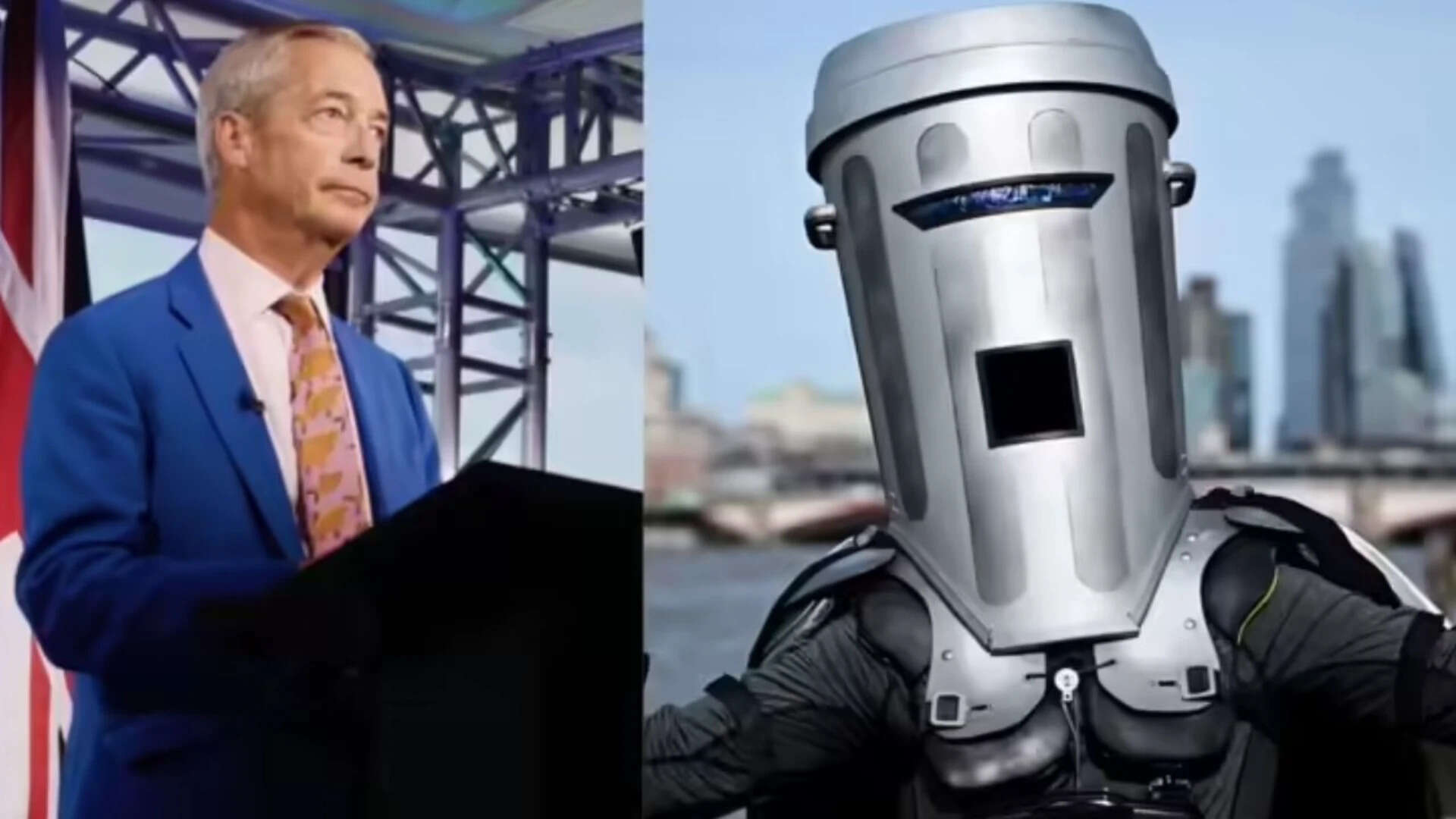
Nigel Farage wanted a circus, but he accidentally handed the ringmaster’s whip to a man wearing a silver cape and a rubbish bin on his head.
The Reform UK leader’s decision to quit his seat as the Member of Parliament for Clacton to immediately run for it again in a snap by-election was supposed to be a masterstroke of political theater. Facing a massive parliamentary probe over an undeclared £5 million gift from a cryptocurrency billionaire, Farage tried to pull off his classic move: frame himself as the victim of a vindictive establishment and dare the public to vote him out.
Instead of playing along, the establishment walked out of the theater. The major political parties refused to field candidates, calling the election a desperate stunt. That left Farage alone on the stage, until Count Binface—the satirical intergalactic space warrior played by comedian Jon Harvey—stepped into the spotlight.
What looked like a minor joke has quickly turned into a major headache for the populist leader.
The High Cost of the Clacton Circus
Farage pitched the upcoming August by-election as a definitive battle of "the people versus the establishment." But you can't fight the establishment when they refuse to show up. Labour Chancellor Rachel Reeves shrugged off the move, noting that if Farage wants to spend his entire summer arguing with a bin, nobody is going to stop him. Opposition leader Kemi Badenoch dismissed it as a fake election brought on by a political hissy fit.
The strategy behind the boycott is obvious. By refusing to run, the mainstream parties are denying Farage the high-profile platform he craves.
The public isn't buying the martyrdom act either. A recent Ipsos poll revealed a staggering collapse in Farage’s personal appeal. In a hypothetical head-to-head matchup, 33% of British adults said they would prefer Count Binface to win the Clacton seat, while just 21% backed Farage. Another 32% picked neither, and the rest were undecided.
A net approval rating sinking to minus 27 percentage points shows the broader electorate is growing exhausted by the endless drama. The same polling shows that 74% of people believe the parliamentary standards commissioner should keep investigating the Reform leader's finances. An overwhelming 73% insist that the probe must continue even if he wins the seat back.
The Serious Business of Satirical Politics
It is easy to laugh off a candidate who promises to nationalize the singer Adele, cap the price of a 99p Flake ice cream at exactly 99p, and build "at least one affordable house." But underestimating Count Binface is exactly how politicians get embarrassed on national television.
Satire works in British politics because it punctures the heavy, polarized air that populists thrive on. When Farage claims he represents ordinary folks against a corrupt elite, Binface offers a devastatingly simple counter-argument.
"Logically, there are only two conclusions," Binface noted in a recent interview. "One, I am the embodiment of the British establishment, which is curious. The only other possible conclusion is that Nigel is talking out of his posterior."
This isn't just an online joke anymore. While Farage relies on massive, mysterious influxes of cash from wealthy backers, Binface launched a grassroots crowdfunding page that quickly pulled in thousands of individual donations, yielding over £15,000 in a matter of days. He is using that money to actively campaign on the ground.
For voters who want to send a message but feel completely alienated by traditional political parties, a protest vote for a space alien suddenly feels like a completely reasonable option.
The Investigation Farage Can't Evade
The real reason for this sudden electoral chaos isn't a sudden burst of democratic passion from Farage. It is a desperate attempt to outrun the law.
The parliamentary standards commissioner, Daniel Greenberg, has been aggressively looking into Farage’s failure to declare a £5 million gift from Christopher Harborne, a crypto billionaire based in Thailand. The investigation hit a critical flashpoint when reports surfaced that bankers had raised red flags with the National Crime Agency over the potential origins of the money. Farage is also facing intense scrutiny over separate, undeclared luxury benefits—including private security and housing—provided by his close aide George Cottrell, a convicted fraudster.
By resigning his seat, Farage triggered a technical loophole that temporarily suspends the parliamentary standards investigation. But it is a temporary fix. The moment the by-election concludes, the probe will resume. If he wins and is subsequently found guilty of serious rule-breaking, he faces a formal suspension from the House of Commons, which could trigger another by-election.
He has engineered a political cul-de-sac.
What Happens When the Bluster Fails
Clacton is a deeply eurosceptic coastal town, and Farage won it comfortably in 2024 with more than 46% of the vote. Many local retirees still fiercely defend him, viewing the financial scandals as a coordinated smear campaign by mainstream politicians who fear his influence. He will most likely win the seat back in August.
But the victory will taste incredibly sour.
Instead of a triumphant moment of national validation that elevates Reform UK, Farage is stuck running a costly, £350,000 campaign against a menagerie of novelty candidates, including wildlife activists in fox suits and an intergalactic space warrior.
The broader strategy for anyone looking to counter right-wing populism is becoming clear. Don't feed the media machine. When a politician tries to turn serious allegations of financial misconduct into a culture war spectacle, sometimes the best response is to step aside and let them explain themselves to a giant trash can.
Keep an eye on the donation trends and local campaign stops over the next three weeks. If Binface manages to clear the 5% threshold to keep his electoral deposit, it won't just be a hilarious night at the election count—it will be a definitive sign that the populist spell has finally started to break.