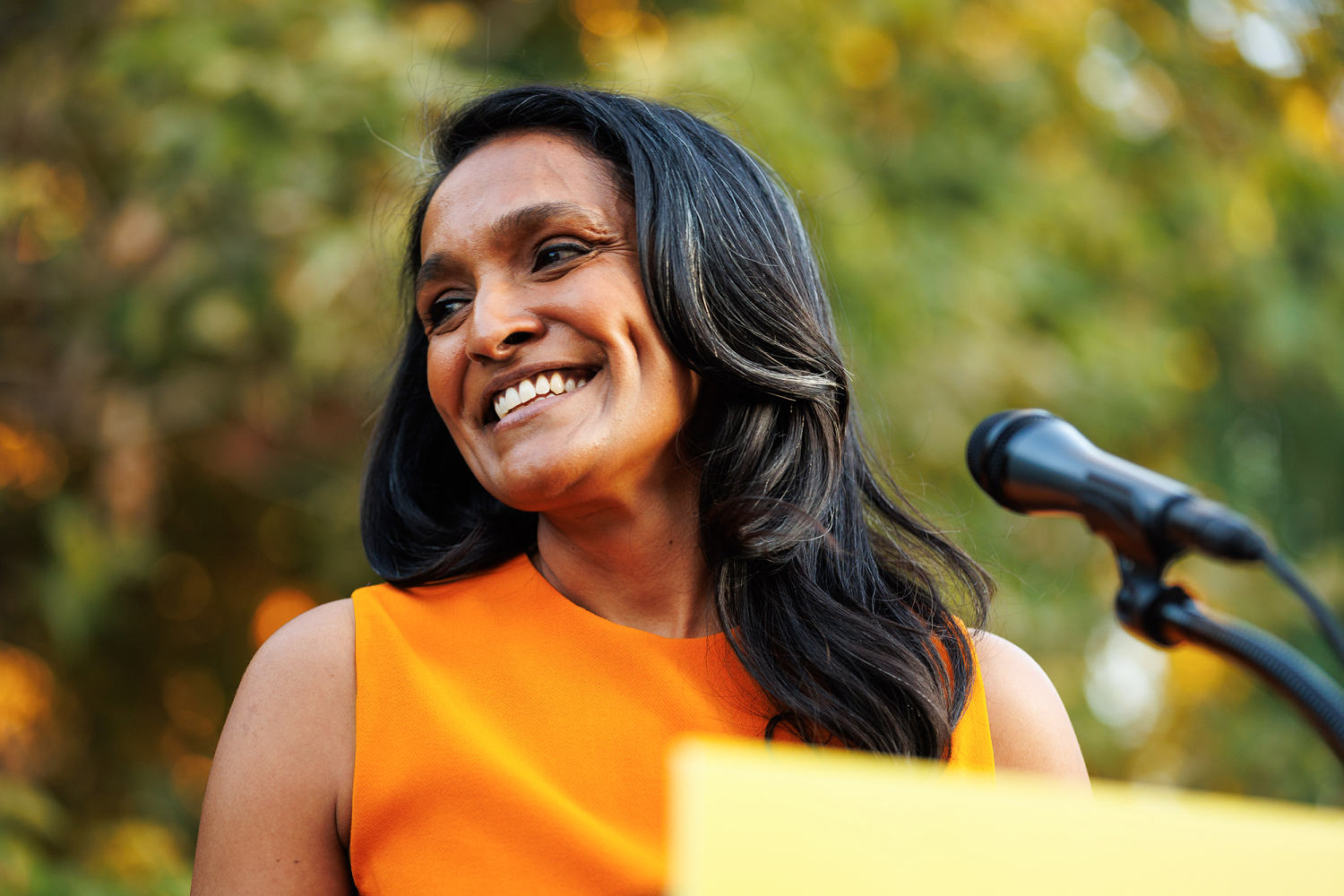
Los Angeles voters just delivered the biggest political shock in modern city history. Democratic socialist City Councilmember Nithya Raman defeated incumbent Mayor Karen Bass, unseating a first-term mayor in a city where incumbents almost never lose.
Honestly, most political insiders didn't see this coming six months ago. Bass entered the 2026 election cycle with massive institutional backing, high name recognition, and the full weight of the California Democratic establishment behind her. Yet when the ballots were counted, Raman's grassroots coalition overcame a massive fundraising disadvantage to claim City Hall. You might also find this related coverage insightful: Asymmetric Aviation Disruption Across European Airspace.
If you're trying to understand how a progressive insurgent toppled one of Los Angeles's most established political figures, you have to look past the surface-level headlines. This wasn't just an ideological upset. It was a referendum on four years of governance, housing policy, and voter frustration across the sprawling metropolis.
The Coalition That Took Down an Incumbent
Conventional wisdom in L.A. politics says you cannot win citywide without deep-pocketed business support and major labor endorsements. Raman proved that rule obsolete. As highlighted in detailed articles by Reuters, the results are worth noting.
Her campaign relied heavily on the Democratic Socialists of America (DSA-LA) ground game, tenant unions, and younger renters who rarely show up in off-cycle local elections. While Bass focused on traditional media buys and endorsements from established political figures, Raman's volunteers knocked on hundreds of thousands of doors across the San Fernando Valley, the Eastside, and South L.A.
They had a simple message. Rent is too high, the streets still aren't fixed, and City Hall protects landlords over working families.
In 2020, Raman shocked the political establishment by unseating incumbent Councilmember David Ryu in District 4. She survived a brutal 2024 redistricting battle and a well-funded challenge from Ethan Weaver, proving her electoral machine wasn't a fluke. By 2026, she had perfected a hyper-local organizing model that turned out low-propensity voters in neighborhoods traditional consultants usually ignore.
Where Karen Bass Lost Her Grip on City Hall
When Karen Bass defeated billionaire developer Rick Caruso in 2022, she promised a new era of collaboration and urgency. Her signature program, Inside Safe, aimed to move unhoused Angelenos off the streets and into interim motel housing rapidly.
At first, the public cheered the visible reduction of major encampments. Then the bills came due.
Critics, including City Controller Kenneth Mejia, repeatedly raised alarms about the staggering costs of Inside Safe and the slow pace of moving people from temporary motel rooms into permanent supportive housing. Voters saw hundreds of millions of dollars spent, yet tent encampments kept reappearing in different neighborhoods. You can't convince someone walking past an encampment every morning that a $250 million program is working seamlessly, even if the behind-the-scenes metrics show thousands of placements.
Bass also faced mounting criticism over her handling of city budgets and labor negotiations. As Los Angeles grappled with a severe structural budget deficit, the mayor pushed through expensive police union contracts while essential city services—like street lighting repairs, tree trimming, and sidewalk maintenance—ground to a halt. For regular residents, the city simply felt broken.
The Housing Divide That Split the Electorate
If homelessness was the emotional center of the race, housing policy was the structural fault line.
Bass pitched herself as a pragmatic consensus-builder, signing Executive Directive 1 (ED1) to fast-track 100% affordable housing projects. That policy actually worked well at first, generating thousands of new affordable unit applications. Then Bass bowed to pressure from wealthy homeowner associations in single-family neighborhoods, modifying ED1 to exclude single-family zones from streamlined affordable development.
Raman pounced on that retreat. As an urban planner by training, she argued that protecting single-family zoning in wealthy enclaves while cramming all new apartment buildings onto busy, polluted boulevards was fundamentally unjust.
Her platform centered on aggressive tenant protections, stronger rent stabilization rules, and building social housing across every district—including affluent Westside and Valley neighborhoods. Renters make up roughly 63% of Los Angeles households. Once Raman successfully framed the race as renters versus corporate landlords and NIMBY homeowners, Bass's coalition began to fracture.
What Most People Get Wrong About DSA Politics in Los Angeles
National pundits love painting Los Angeles as a monolithic progressive stronghold, or conversely, claiming voters are swinging hard to the right on crime. Both takes miss reality.
Los Angeles is deeply skeptical of City Hall bureaucracy. When voters backed progressive candidates like Nithya Raman, Hugo Soto-Martinez, and Eunisses Hernandez over the past few years, they weren't necessarily signing up for socialist theory. They were voting against a political machine plagued by FBI corruption indictments—like former councilmembers Jose Huizar and Mark Ridley-Thomas—and decades of stagnation.
Raman didn't win because she used radical slogans. She won because she talked relentlessly about nuts-and-bolts municipal governance. She focused on bus lanes, broken streetlights, tenant harassment, and transparent budgeting. While her opponents tried to caricature her as an extremist who wanted to defund the police, Raman spent her time in Council District 4 proving she could deliver constituent services while pushing structural reforms.
The Roadblocks Waiting for Mayor Raman
Winning the election is one thing. Governing Los Angeles with a strong-council, weak-mayor charter is something else entirely.
Unlike New York City, where the mayor holds massive unilateral authority, the Mayor of Los Angeles shares immense power with the 15-member City Council. Even with a growing progressive bloc on the council, Raman will face fierce resistance from moderate and conservative councilmembers who represent more suburban districts in the Valley and Westside.
She also inherits a financial mess. The city's reserve funds have been depleted, liability payouts for LAPD misconduct continue to drain tens of millions from the general fund every year, and federal pandemic relief money is gone.
Add the looming pressure of the 2028 Summer Olympics and the 2026 FIFA World Cup, and Raman has zero honeymoon period. International eyes are watching how Los Angeles manages transit, public safety, and street homelessness ahead of those global events. Business leaders and downtown property owners are already nervous about what a democratic socialist mayor means for commercial real estate taxes and development fees.
How Angelenos Can Track What Happens Next
Whether you voted for Raman, backed Bass, or sat this election out, the next twelve months will determine the trajectory of Los Angeles for a decade. Don't just rely on cable news soundbites to judge how the new administration performs.
Watch three specific indicators over the next year:
- The May Budget Proposal: Look closely at where Raman cuts spending to close the city's structural deficit and whether she challenges police overtime budgets to fund basic infrastructure repairs.
- Executive Directive Revisions: Pay attention to whether she restores or expands streamlined housing approvals into single-family neighborhoods, which will trigger immediate legal battles with homeowner groups.
- LAHSA Restructuring: Watch how she reforms the Los Angeles Homeless Services Authority, an agency long criticized for lack of accountability and opaque contracting.
If you live in Los Angeles, get involved at the neighborhood council level or sign up for public comment alerts on the City Clerk's Council File Management System. The grassroots movement that put Nithya Raman in the mayor's office only works if voters stay engaged long after the ballots are cast.