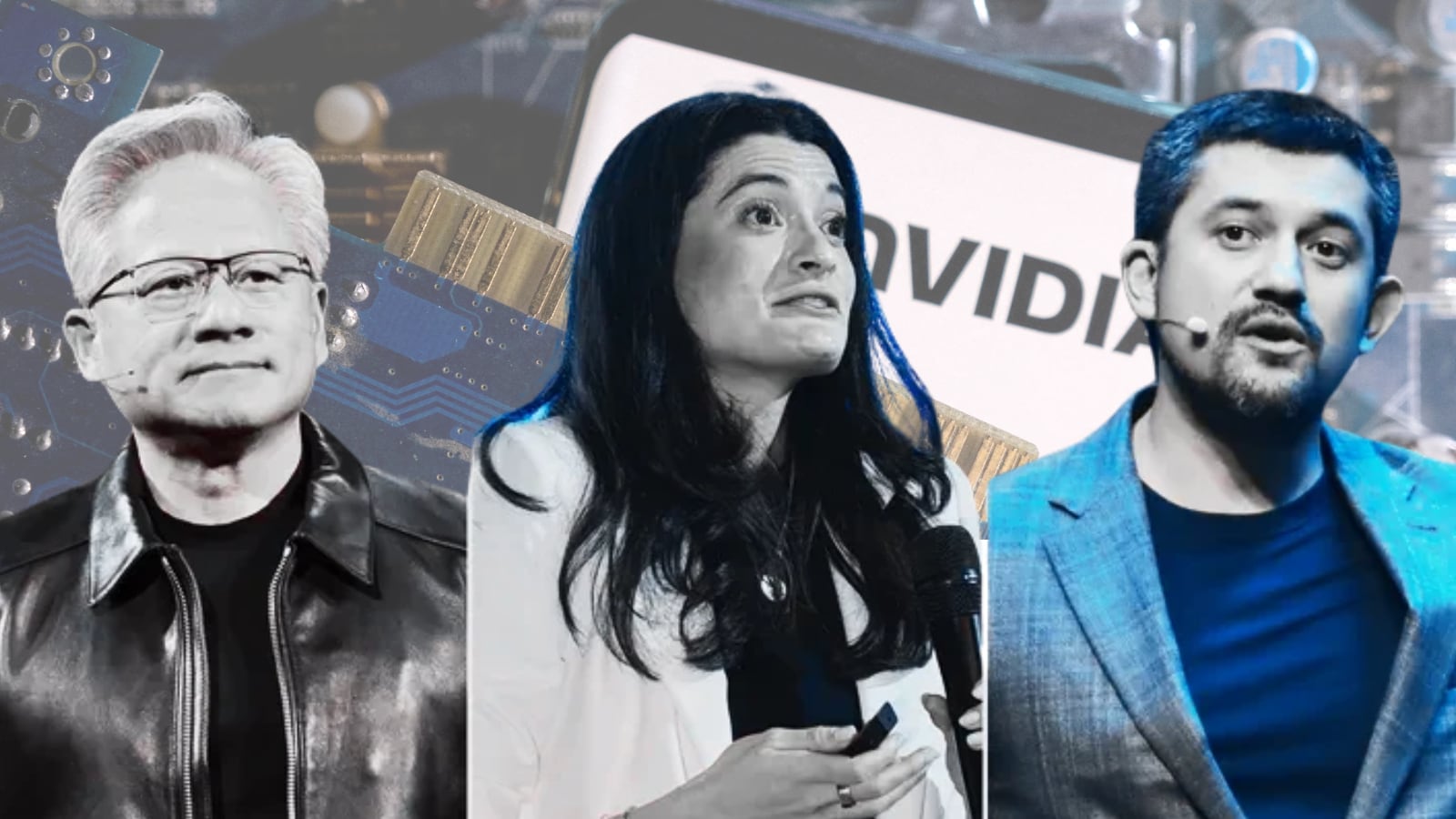
Evaluating corporate succession at Nvidia requires separating family lineage from institutional governance. As Nvidia transitioned from a specialized graphics chip designer into the primary infrastructure provider for artificial intelligence, the question of who succeeds co-founder and CEO Jensen Huang became a central risk factor for institutional investors. While financial media often frames the presence of Huang’s children—Madison and Spencer Huang—within the company as a potential dynastic transition, an operational analysis of Nvidia’s organizational structure, corporate governance, and leadership pipeline demonstrates that internal domain tenure and functional execution outweigh familial proximity.
The Governance Constraint on Dynastic Succession
Publicly traded technology enterprises operating at multi-trillion-dollar valuations face structural barriers to hereditary leadership. Unlike founder-controlled conglomerates with dual-class voting shares that insulate management from activist shareholders, Nvidia operates under a single-class common stock structure. Jensen Huang holds a significant personal equity stake, yet institutional asset managers, pension funds, and index providers control the overwhelming majority of voting power.
In a single-class governance environment, the Board of Directors retains strict fiduciary obligations to maximize shareholder value through meritocratic executive selection. Appointing a successor based on lineage rather than proven C-suite operational mastery would trigger immediate governance downgrades, proxy battles, and capital flight. The board’s compensation and nominating committees evaluate executive readiness through quantifiable metrics: profit-and-loss ownership at scale, multi-year product roadmap execution, and supply chain crisis management.
This governance architecture establishes a clear boundary. Family members employed within the organization do not inherit executive authority; they operate as mid-to-senior-level managers subject to the same performance reviews, technical milestones, and peer competition as external hires.
Operational Profiles of Madison and Spencer Huang
Understanding the actual trajectory of Madison and Spencer Huang requires examining their specific functional roles, prior external experience, and current placement within Nvidia’s flat organizational hierarchy. Both entered the company after establishing independent career tracks outside the semiconductor sector, a prerequisite for credibility inside an engineering-driven culture.
Madison Huang and the Omniverse Ecosystem
Madison Huang joined Nvidia in 2020, transitioning from a background in hospitality and culinary arts management. Following studies at the Culinary Institute of America and experience in international hospitality operations, she completed an MBA at London Business School. This non-technical background initially appeared divergent from semiconductor architecture, yet her placement within Nvidia reflects a specific strategic need: translating complex simulation technologies into commercial enterprise workflows.
Operating as a director of product marketing within the Omniverse division, her mandate centers on industrial digitalization, digital twins, and virtual simulation platforms. Omniverse represents Nvidia’s software-layer expansion, attempting to lock enterprise customers into its hardware ecosystem through 3D design collaboration and physical AI training environments.
Her operational function involves:
- Ecosystem Translation: Bridging the gap between core rendering engineers and non-traditional enterprise buyers in automotive, manufacturing, and retail logistics.
- Go-To-Market Execution: Structuring commercial narratives around Universal Scene Description (OpenUSD) standards to drive adoption among industrial software vendors.
- Cross-Functional Coordination: Aligning product marketing deliverables with enterprise software engineering teams.
This role sits multiple organizational layers below the executive leadership team. While Omniverse is strategically vital for Nvidia’s long-term software recurring revenue, product marketing leadership within a single software division does not equate to enterprise-wide capital allocation authority.
Spencer Huang and Robotics Simulation
Spencer Huang followed a distinct path, entering Nvidia in 2022 after living in Taiwan and operating a successful, non-technology hospitality venture in Taipei. Following that entrepreneurial stint, he pursued an MBA at New York University’s Stern School of Business before joining Nvidia’s robotics division.
His work focuses on robotics simulation and the Isaac platform, specifically addressing the data bottleneck in physical artificial intelligence. Training autonomous machines requires synthetic data generation and physics-accurate virtual environments before deployment in real-world warehouses or factories. As a product line manager, Spencer Huang’s responsibilities center on the operational mechanics of robotics software infrastructure.
His functional scope includes:
- Product Lifecycle Management: Defining feature roadmaps for simulation tools used by third-party robotics developers.
- Developer Adoption: Monitoring friction points in software development kits (SDKs) to ensure hardware lock-in for Nvidia’s Jetson and Thor edge-computing modules.
- Vertical Alignment: Coordinating software capabilities with the hardware compute requirements dictated by the data center and automotive engineering groups.
Like his sister, Spencer Huang occupies a middle-management product role. Both individuals are positioned in emerging software and simulation verticals—Omniverse and Robotics—rather than the core data center GPU architecture or CUDA software engineering teams that generate the vast majority of Nvidia’s operating income.
The Structural Reality of Nvidia’s Leadership Architecture
To assess why mid-level product roles do not constitute a succession runway, one must analyze Jensen Huang’s management design. Nvidia famously operates with an exceptionally flat organizational chart. Jensen Huang maintains roughly 40 to 60 direct reports, eliminating traditional layers of vice presidents and business unit general managers.
This structure produces three distinct operational effects:
- Information Velocity: By removing middle-management filters, technical bottlenecks and market shifts reach the CEO directly without political sanitization.
- Distributed Accountability: Direct reports are expected to be deep domain experts who execute without micromanagement. There is no "Chief Operating Officer" role serving as an obvious heir apparent.
- Meritocratic Attrition: Executives who fail to maintain technical fluency or execution speed are sidelined regardless of tenure or personal relationships.
Because Jensen Huang does not utilize a traditional hierarchical ladder, there is no designated "crown prince" seat. Succession in this model cannot occur through gradual title inflation. Any viable internal candidate must already command a core revenue engine, manage global supply chain dependencies with partners like TSMC, and hold deep technical authority over silicon and systems architecture.
Quantifying the True Succession Pipeline
When institutional analysts model Nvidia’s post-Huang continuity, they examine the senior vice presidents and functional leaders who currently manage the company’s existential dependencies. A credible successor must master three simultaneous vectors: silicon engineering cadence, software ecosystem lock-in, and hyperscaler customer negotiations.
The primary internal contenders represent decades of tenure within these exact domains:
- Hardware and Silicon Architecture: Leaders overseeing GPU architecture, networking interconnects (InfiniBand and Spectrum-X), and custom silicon design. These executives manage multi-billion-dollar research and development budgets and multi-year tape-out schedules where a single architectural flaw destroys market share.
- Enterprise and Data Center Systems: Executives managing relationships with cloud service providers (Microsoft, Amazon, Google, Meta) and sovereign AI initiatives. This role requires balancing allocation scarcity, pricing power, and custom system integration.
- Software and Developer Ecosystems: Leaders responsible for CUDA, AI Enterprise software suites, and foundational model optimization. Maintaining the software moat that prevents customers from migrating to custom ASICs (Application-Specific Integrated Circuits) is the single highest-margin priority for the firm.
Neither Madison nor Spencer Huang manages P&L at the multi-billion-dollar scale, oversees silicon fabrication timelines, or negotiates foundational supply agreements with foundries and memory suppliers. Their current trajectories build operational literacy in emerging application layers—physical AI and industrial simulation—rather than core compute infrastructure.
The Strategic Value of Second-Generation Placement
If Madison and Spencer Huang are not being groomed to assume the CEO role, their employment within Nvidia serves alternative strategic and cultural functions. In founder-led technology firms, second-generation family members often act as cultural anchors and long-term horizon scanners rather than operational commanders.
First, their placement in Omniverse and Robotics aligns with Nvidia’s ten-year thesis. While data center GPUs drive current cash flow, Jensen Huang has explicitly identified physical AI—autonomous machines, humanoid robotics, and industrial digital twins—as the next wave of computing expansion. Placing trusted, high-context managers inside these nascent divisions ensures the CEO receives unfiltered ground truth about customer friction in markets that do not yet move the quarterly earnings needle.
Second, their presence reinforces long-term alignment. Founders who view their enterprise as a multi-decade institution rather than a financial asset value having family members embedded in the daily operational grind. It signals to internal teams and external partners that the founder’s personal stake in the company’s cultural durability extends beyond his own active tenure.
However, this dynamic carries specific organizational risks. In high-performance engineering cultures, perceived nepotism degrades morale among senior technical fellows if promotion velocity appears decoupled from technical output. Nvidia mitigates this risk by keeping both individuals in roles commensurate with their post-MBA experience levels and outside the core silicon engineering hierarchy.
Evaluating the Succession Risk Premium
For institutional investors, corporate strategists, and competitors analyzing Nvidia’s durability, tracking the careers of Madison and Spencer Huang provides insight into the company's long-term software bets, not its executive succession plan. The true succession risk at Nvidia lies in the structural difficulty of replacing a founder who simultaneously acts as chief architect, chief strategist, and chief salesperson.
No single internal executive possesses Jensen Huang’s combined technical authority and market-making capability. Consequently, when the transition eventually occurs, Nvidia’s Board of Directors will almost certainly abandon the flat, founder-centric management model in favor of a traditional C-suite structure—splitting the operational load across a technically grounded CEO, a dedicated Chief Operating Officer, and empowered business unit presidents.
Analysts monitoring Nvidia’s governance should disregard familial narratives and track three concrete indicators instead: the expansion of P&L authority granted to senior vice presidents in the data center and networking groups, the retention rates of principal silicon architects, and the formalization of executive committee structures within board filings. Those metrics, rather than family lineage, will dictate the continuity of Nvidia’s market dominance.