When Edmonton-based lawyer Prabjot Singh Wirring refused to pledge true allegiance to King Charles III as a mandatory condition for joining the Alberta bar, he did not just spark a routine professional dispute. He triggered a seismic constitutional reckoning. For an Amritdhari Sikh, taking an absolute oath to a worldly sovereign directly violated an unshakeable, lifelong vow already given to Akal Purakh, the divine being in Sikhism. The resulting legal battle laid bare an uncomfortable reality within modern democratic institutions. Rigid historical requirements, preserved through sheer administrative inertia, frequently collide with the foundational Charter rights of multicultural citizens trying to enter professional fields.
The conflict began in June 2022 when Wirring launched proceedings against the statutory requirements governing bar admission in Alberta. Lower courts initially dismissed his challenge. The Court of King’s Bench ruled in October 2023 that the oath was merely symbolic, interpreting it as an affirmation of the rule of law and the Canadian constitutional framework rather than a literal demand of fealty to an individual monarch. That reasoning offered a convenient legal fiction for the state, yet it ignored the lived reality of practitioners whose faith strictly forbids pledging subordinate loyalty to any human authority.
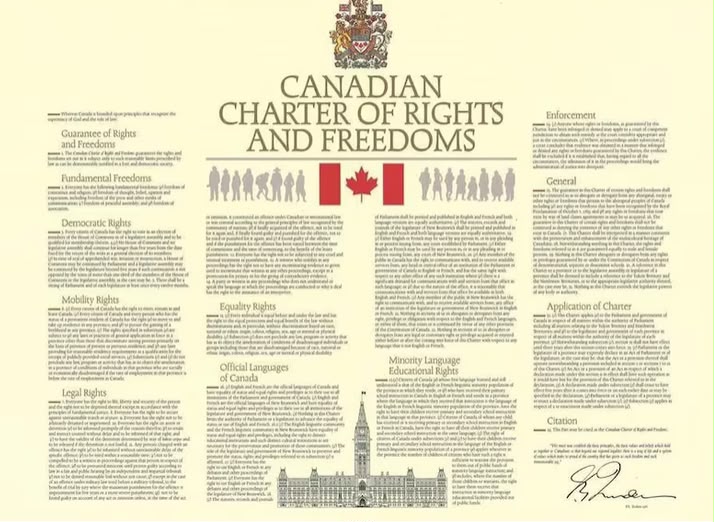
A unanimous three-panel bench of the Alberta Court of Appeal dismantled that defense in December 2025. The appellate court ruled that forcing prospective lawyers to choose between their professional licensure and their religious convictions constituted a real and substantial burden on religious freedom under Section 2(a) of the Canadian Charter of Rights and Freedoms. Crucially, the court highlighted the logical inconsistency of the province's stance. Other Canadian jurisdictions, such as Saskatchewan, admit lawyers without requiring any such oath to the crown, proving that the ritual is hardly an indispensable pillar of professional competence.
Rather than quietly rewriting provincial regulations to accommodate diversity, the Alberta government escalated the fight, applying to take the constitutional question before the Supreme Court of Canada. This move ensures that the dispute will test the upper boundaries of state-mandated symbolism. Legal analysts note that while parliamentary and citizenship oaths enjoy specific constitutional insulation, professional licensing requirements occupy
The Oath the Crown Lost Prabjot Singh Wirring and Canada Constitutional Reckoning
news, law
Prabjot Singh Wirring did not start a revolution with a bullhorn or a blockade. He started it with a quiet refusal, a fountain pen sitting dry on a table, and a fundamental challenge to the machinery of British tradition transplanted onto Canadian soil.
When the Law Society of Ontario demanded that candidates for the bar swear allegiance to King Charles III and his heirs, Wirring drew a line. For him, swearing an oath to a monarch whose institution carries historical baggage tied to colonization, foreign subjugation, and hereditary privilege was incompatible with his conscience as a Sikh and his understanding of modern constitutional equality. The resulting legal battle exposed a deep fault line in Canadian jurisprudence. It forced courts to weigh the sacredness of ancient constitutional conventions against the living, breathing charter rights of modern citizens.
The issue goes far beyond a single legal practitioner standing his ground in Toronto. It strikes at the heart of how democratic states manage symbolic loyalty. Most people skate through bureaucratic rituals without a second thought. They sign the paper, raise the hand, mumble the words, and get back to work. But when an individual forces the state to justify why an overseas monarch remains a mandatory prerequisite to earning an honest living in a secular democracy, the state often finds its arguments resting on dust and habit rather than logic.
The Mechanics of Mandatory Fealty
To understand why Wirring's challenge hit a nerve, you have to look at the plumbing of the Canadian legal profession. Law societies across the Commonwealth operate under statutory mandates that historically mirrored British governance structures. Becoming a lawyer requires more than passing exams and paying fees. It requires a formal admission ceremony where applicants pledge allegiance to the Crown.
For centuries, this was treated as benign folklore. It was viewed as a harmless nod to history, akin to wearing woolen robes in a courtroom or addressing a judge as "My Lord." But legal formalities cease to be harmless when they are legally mandatory and carry professional exclusion as the penalty for non-compliance.
Wirring argued that forcing a Canadian citizen—particularly one whose faith and heritage intersect with a complex history of British imperial rule—to swear fealty to a hereditary sovereign violates freedom of conscience under Section 2(a) of the Canadian Charter of Rights and Freedoms. Conscience is not merely religion. It encompasses deeply held moral convictions, ethical commitments, and foundational beliefs about equality and human dignity.
When the state tells you that your right to practice your chosen profession depends on swearing personal loyalty to a king, it creates a coercive moral dilemma. It demands that you compromise an internal conviction to satisfy an external tradition.
Historical Shadows and Modern Realities
Canada's constitutional monarchy is a peculiar beast. It functions through a separation of powers where the Crown acts largely on the advice of elected officials, rendering the monarch politically powerless in daily governance. Defenders of traditional oaths argue that this system provides stability, continuity, and a symbolic anchor above partisan politics.
Yet symbols matter precisely because they represent power. The British Crown is not an empty signifier. It is the historical head of an empire that subjugated millions, including the Sikh homeland in the Punjab during the nineteenth century. While modern British monarchs bear no personal responsibility for colonial actions, the institution itself remains the legal embodiment of that history.
For a Sikh lawyer, whose religious and cultural history includes severe friction with British imperial expansion, an oath of allegiance to the Crown is not an abstract exercise in civics. It carries tangible historical resonance. Expecting citizens from diverse post-colonial backgrounds to enthusiastically pledge loyalty to the historic symbol of their ancestors' subjugation reveals a profound lack of historical empathy within institutional legal bodies.
The Law Society defended its position by pointing to the continuity of the constitutional order. They argued that the oath is a foundational pillar of the Canadian state, ensuring that officers of the court swear loyalty to the supreme law-making authority. But this argument collapses under close scrutiny. Canadian judges and politicians have increasingly found ways to accommodate diverse perspectives, and several jurisdictions have re-evaluated mandatory oaths in public service. The insistence on absolute conformity in the legal profession looked less like a constitutional necessity and more like institutional stubbornness.
The Ripple Effects Across Commonwealth Jurisdictions
Wirring’s case is not an isolated tremor. Across the Commonwealth, from the Caribbean to the Pacific, nations are actively untangling themselves from the vestiges of British royal oversight. Barbados removed the British monarch as head of state and became a republic. Jamaica is moving down the same path. Even within Canada, Indigenous communities and racialized minorities frequently question the legitimacy of a system that places a hereditary European monarch at the apex of its constitutional hierarchy.
When a legal challenge succeeds or even gains serious traction, it alters the negotiating power between marginalized citizens and entrenched state institutions. It proves that ancient statutes are not immutable laws of nature. They are human constructs, written by people with specific worldviews, and they can be dismantled by people with better ones.
The legal arguments in Wirring's corner did not rely on sentimentality. They relied on strict constitutional doctrine. Freedom of conscience is designed to protect individuals from being forced by the state to express beliefs they do not hold. An oath of allegiance is, by definition, an expression of belief and loyalty. When the state compels it as a condition of economic survival, it crosses the line from civic integration into ideological coercion.
The Cost of Standing Apart
Taking on a provincial law society is not a comfortable endeavor. It requires financial resources, immense psychological resilience, and a willingness to become a public target for critics who view any deviation from tradition as an attack on Canadian identity.
In conservative legal circles, challengers of tradition are often painted as disruptive or ungrateful. Commentators prone to nostalgic nationalism frame these legal battles as an assault on the fabric of society. They warn of a slippery slope where every tradition is erased in the name of hyper-modern sensitivity.
This argument misreads the nature of resilient legal systems. A constitution that cannot withstand the scrutiny of its own citizens is inherently fragile. True stability does not come from forcing compliance through outdated rituals; it comes from earning voluntary allegiance through fairness, justice, and respect for individual conscience. If the Canadian legal system truly values the rule of law, it should welcome challenges that test whether its practices align with its supreme charter.
Wirring’s victory forces a reckoning that the legal establishment has avoided for decades. It exposes the laziness of administrative inertia. Law societies will now have to decide whether they wish to modernize their admission processes voluntarily or wait for more court battles to systematically dismantle their favorite traditions one by one.
The ink on the bar admission papers may eventually dry, but the stain of institutional rigidity remains visible. Prabjot Singh Wirring demonstrated that the most effective way to challenge an unyielding system is not to shout at its gates, but to quietly, rigorously demand that it live up to the very laws it was created to uphold.