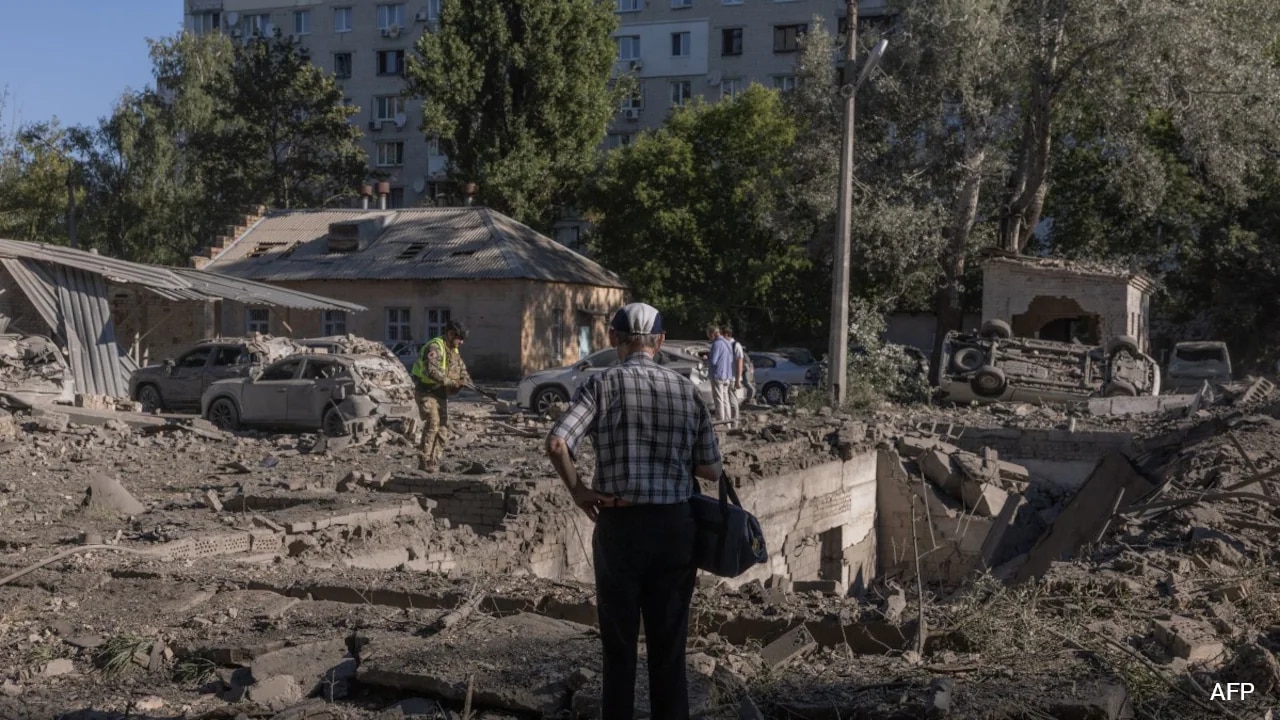
Every time a projectile arcs across the southern Arabian Peninsula and hits an industrial yard or a civilian enclave, the global media machine grinds into its predictable gear. We get the breathless casualty counts. We get the standard-issue condemnation of asymmetric warfare. We get the immediate, knee-jerk panic over regional stability.
Seventy-three people wounded. That was the headline from a past flare-up involving Houthi cross-border strikes into Saudi Arabia. The numbers are treated as a humanitarian outrage and a tactical escalation. But focusing on the bruised flesh and the shattered glass misses the entire architecture of modern proxy conflict. Expanding on this theme, you can find more in: The Distortion Engine How We Confuse Digital Spectacle for Human Suffering.
The lazy consensus in international relations holds that these minor-league missile volleys are attempts to win a military campaign or inflict maximum physical attrition on a heavily armed G20 economy. That premise is fundamentally illiterate.
Militias firing low-cost loitering munitions and modified scrap-metal ballistic missiles are not trying to conquer territory or match air-defense batteries dollar for dollar. They are executing a masterclass in economic asymmetry. They have figured out that you do not need to defeat a giant's army if you can force the giant to spend a thousand dollars every time you throw a fifty-dollar rock. Experts at BBC News have also weighed in on this matter.
I have spent years analyzing supply chain vulnerability and defense economics. I have watched defense budgets balloon while critical infrastructure remains astonishingly fragile against low-tier saturation attacks. When a Patriot battery or an advanced interceptor system fires a multi-million-dollar kinetic kill vehicle at a crude drone built with off-the-shelf lawnmower parts and hobbyist guidance chips, the physics of the exchange tell you everything you need to know about who is actually winning.
The real story isn't the seventy-three wounded. The real story is the math problem facing Riyadh, Washington, and every major shipping insurer on the planet.
The Cost Curve of Modern Defense
Let us look at the ledger.
A typical Iranian-designed Quds-2 cruise missile or a Samad drone costs next to nothing to manufacture. Labor costs in sanctioned or insulated supply chains are negligible. Components are sourced through shadow networks of front companies spanning Dubai, Hong Kong, and Eastern Europe.
Now look at what it takes to stop them.
Western-supplied air defense systems are marvels of engineering. They track multiple targets at supersonic speeds, calculate intercept trajectories in milliseconds, and obliterate incoming threats high above civilian populations. They are also astronomically expensive. Each interceptor missile carries a price tag that routinely clears the million-dollar mark.
When you scale that dynamic across dozens of sporadic attacks, you realize the defense establishment is bleeding capital on a tactical treadmill.
Imagine a scenario where a local utility plant or oil processing facility takes a hit. The physical damage is repaired within forty-eight hours. Concrete is poured, steel is welded, production resumes. But the psychological and financial footprint of that single strike lingers for months. Insurance premiums for tankers traversing the Red Sea spike. Shipping companies reroute vessels around the entire African continent, adding fuel costs and transit delays that ripple straight down to the price of consumer goods in European and Asian ports.
The media focuses on the emergency room triage. The market focuses on the freight index.
This is where the conventional security analysts get it wrong every single time. They look at regional conflicts through a nineteenth-century lens of territorial conquest and direct kinetic damage. They count casualties and measure craters. They fail to understand that modern asymmetric warfare is an economic attrition strategy disguised as a military campaign.
Why Conventional Deterrence Fails
For decades, the standard playbook for dealing with cross-border missile fire has been straightforward: retaliate with disproportionate air strikes, impose tighter economic sanctions, and demand that international bodies issue sternly worded resolutions.
It does not work.
Sanctions assume the target actor cares about traditional macroeconomic health. When a governing authority or militant movement operates entirely outside the formal banking system, relies on black-market oil smuggling, and derives its internal legitimacy from perpetual conflict, sanctions are just background noise. They hurt the civilian populace at the margins while elite leadership adapts seamlessly to the underground economy.
Air strikes present an even bigger conceptual trap. Dropping precision munitions on empty warehouses or abandoned training camps feels satisfying in a Pentagon briefing room. It generates footage for evening news broadcasts. But strategically, it often plays directly into the adversary's hands. It validates their narrative of external aggression, rallies domestic populations around the flag, and consumes high-end munitions from Western stockpiles that are already struggling to keep pace with global demand.
You cannot deter an adversary who values endurance over efficiency.
When your opponent operates on a timeline measured in decades and measures success simply by staying in the fight, conventional military dominance becomes a blunt, clumsy instrument. It is like trying to swat a swarm of hornets with a sledgehammer. You might hit one eventually, but you are going to exhaust yourself and break a lot of furniture along the way.
Redefining the Metric of Security
If the old playbook is broken, what does a functional response actually look like? It starts by throwing out the obsession with total interception.
No defense grid is one hundred percent airtight. Treating every incoming drone or missile as an existential crisis that requires a pristine interception record creates an impossible standard. It hands the initiative entirely to the attacker, who dictates when, where, and how resources are spent.
Instead, regional security architects need to pivot toward hardening critical nodes and leveraging non-kinetic countermeasures.
Electronic warfare and directed-energy weapons are the only logical evolution here. Spending a million dollars to shoot a drone out of the sky is a losing game. Jamming its GPS, spoofing its guidance system, or frying its electronics with a high-powered microwave array for the cost of a few gallons of diesel fuel changes the economics entirely.
Until defense procurement shifts away from legacy prestige platforms toward scalable, low-cost counter-drone architectures, these border incidents will continue to serve as masterclasses in how a lean, determined actor can exhaust a superpower's wallet without ever winning a pitched battle.
Stop looking at the casualty boards. Look at the ledger. That is where the war is being lost.