Three hikers walked into a Hong Kong country park expecting a quiet afternoon on the trails and ended up injured by a landing paraglider. It sounds like a freak accident. Honestly, if you spend enough time on Hong Kong’s ridges or follow local aviation safety reports, you know this kind of collision was waiting to happen.
Hong Kong has a unique geographical problem that turns weekend recreation into a high-stakes traffic jam. Steep, dramatic peaks drop straight into dense urban sprawl and narrow coastal strips, leaving very few flat spots where both hikers and pilots want to be. When a landing paraglider collides with pedestrians in a country park, the immediate reaction is usually to blame a reckless flyer or an oblivious walker. Both takes miss the bigger structural issue. Shared airspace and shared ground in places like Ma On Shan, Lantau Peak, and Pat Sin Leng create natural pinch points where foot traffic and air traffic converge at the exact same moment.
Understanding how these incidents unfold—and why the current rules struggle to prevent them—requires looking at the physics of landing a wing in gusty mountain terrain alongside the reality of Hong Kong’s booming outdoor culture.
What Happens When a Landing Paraglider Meets a Crowded Trail
Most people imagine paragliding accidents involve dramatic mid-air emergencies or sudden structural failures. In reality, the vast majority of injuries happen during the final thirty seconds of a flight.
A paraglider isn't a helicopter. It doesn't hover in place or drop vertically onto a dime. To land safely, a pilot has to fly into the wind, bleed off forward speed at just the right height, and flare the brake lines to touch down on their feet. Even a light recreational wing travels at roughly 20 to 35 kilometers per hour relative to the air. Add a sudden thermal gust or a rotor coming off a ridge, and the pilot’s margin for error shrinks to almost nothing.
Once a pilot commits to a final approach below 50 feet, their options disappear fast. Turning sharply near the ground causes the wing to dive, accelerating downward into the terrain. At that altitude, a pilot can't simply hit a "go-around" button like a commercial airliner. Gravity has the final say.
Now place three hikers directly in that landing corridor. Hikers rarely look up while navigating uneven stone steps or dusty ridge paths. Paragliders are also nearly silent. Unlike a drone or a light aircraft, an approaching wing makes nothing louder than a faint nylon rustle in the wind. By the time a walker hears the canopy overhead or sees a shadow cross the grass, impact is often less than two seconds away.
The Geography Trap Inside Hong Kong Country Parks
You can't talk about paragliding safety in Hong Kong without talking about terrain. Roughly 40 percent of Hong Kong’s land area is designated as country parks, yet almost all of that land consists of steep slopes, dense scrub, and rocky ridgelines. Flat, obstacle-free grass fields are practically nonexistent.
According to guidelines from the Civil Aviation Department (CAD) and the Hong Kong Paragliding Association (HKPA), pilots are restricted to specific approved flying areas and designated landing zones. Popular spots include:
- Ma On Shan (specifically the Ngong Ping plateau area)
- Sai Kung (including Long Ke Wan and Sai Wan)
- Lantau Island (stretching from Sunset Peak toward Pui O and Cheung Sha)
- Pat Sin Leng and Shek O (Dragon’s Back)
Look closely at that list. Every single one of those locations is also a premier destination for weekend hikers, trail runners, campers, and day-trippers.
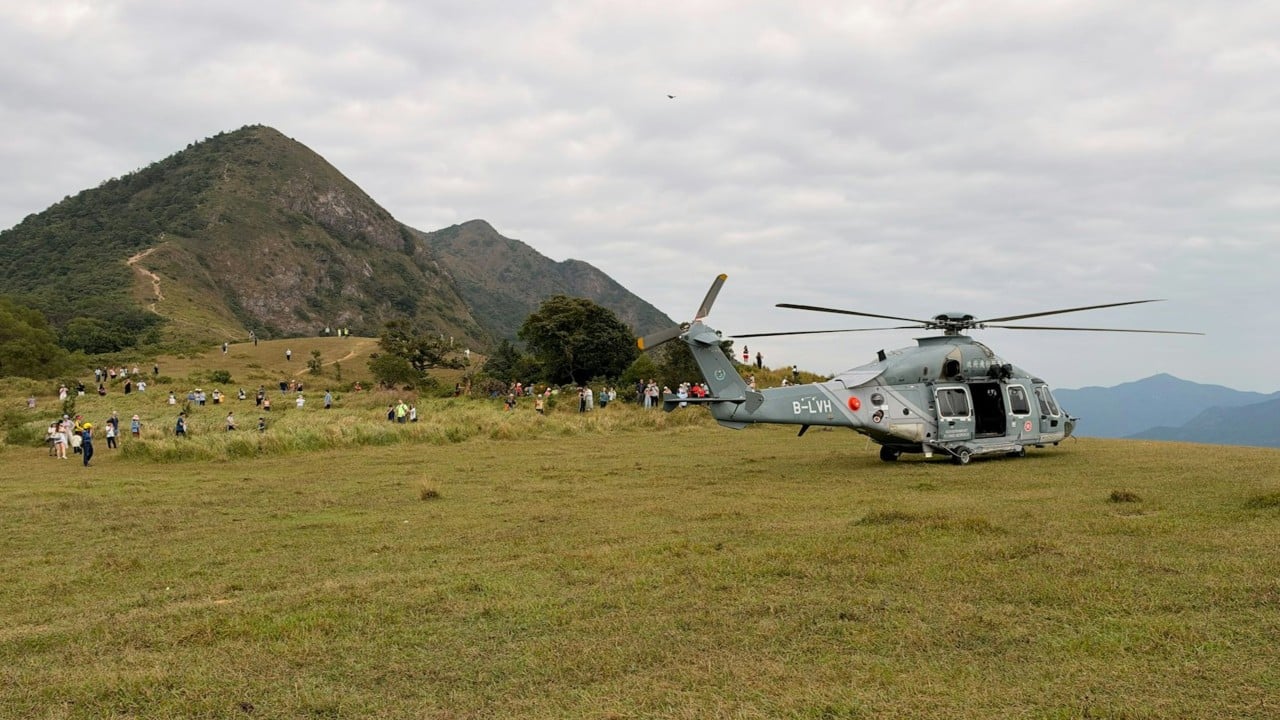
Take Ngong Ping in Ma On Shan as an illustrative example of this spatial conflict. The wide, grassy plateau sits high above Sai Kung, offering sweeping views and steady ridge lift. For pilots, it's one of the best top-landing and launch sites in the territory. For hikers, that exact same flat meadow is the natural place to stop, unpack lunch, take photos, and spread out on picnic blankets. Nobody puts up a physical fence because the plateau is public country park land managed by the Agriculture, Fisheries and Conservation Department (AFCD).
When winds shift unexpectedly or sink develops faster than anticipated, a pilot aiming for a clear patch of grass might suddenly lose altitude over a busy footpath. Three people walking abreast on a narrow ridge trail take up the entire width of a safe touchdown strip.
Who Actually Regulates Paragliding in Hong Kong
A common misconception after any country park incident is that paragliding operates in a legal gray area. It doesn't, though enforcement on remote mountainsides is notoriously difficult.
In Hong Kong, paragliding falls under the Air Navigation (Hong Kong) Order 1995. The Civil Aviation Department oversees airspace rules, prohibiting pilots from flying in controlled airspace near Hong Kong International Airport, over congested urban areas, or in ways that endanger persons or property on the ground. In recent years, following several high-profile accidents and search-and-rescue operations, the CAD tightened oversight and required formal permits for commercial tandem flights.
Still, recreational solo flying relies heavily on self-regulation through the HKPA and adherence to CAD safety leaflets. Pilots are expected to hold recognized ratings, check meteorological forecasts from the Hong Kong Observatory, and maintain strict separation from bystanders.
Here is where theory collides with reality on a busy Sunday afternoon.
- No exclusive ground rights. Even at recognized landing zones, pilots have zero legal priority over pedestrians. Under country park regulations, hikers have every right to stand, walk, or sit anywhere on public trails and open lawns.
- Micro-weather shifts. Hong Kong’s coastal mountains generate complex sea breezes and thermal turbulence. A landing zone that looks completely empty from 500 feet up can fill with a group of hikers emerging from a tree line thirty seconds later.
- Skill gaps among visiting or newer pilots. While experienced local pilots know the quirks of every ridge and gully, less experienced flyers often struggle when forced to execute an off-field emergency landing on a busy trail.
Why Injuries Happen Even at Low Speeds
People sometimes wonder how a fabric wing with no engine can injure three adults at once. The physics are straightforward once you factor in human momentum and hard terrain.
A standard solo paragliding setup—pilot, harness, reserve parachute, helmet, and wing—weighs anywhere from 85 to 115 kilograms. If that mass hits a pedestrian at 25 kilometers per hour, the kinetic energy transfers directly into whoever is standing in the way. Knocking one person off balance on a rocky Hong Kong trail frequently causes a domino effect, sending neighboring hikers tumbling onto stone steps, drainage channels, or jagged boulders.
Bruises, sprains, head impacts, and fractures are common outcomes in these low-altitude collisions. The pilot rarely walks away unscathed either. Trying to swerve at the last second to avoid hitting hikers almost always results in a hard wingtip stall, slamming the pilot sideways into the ground.
What Hikers and Pilots Both Get Wrong
Blame tends to split neatly along tribal lines whenever news breaks about injured hikers in a country park. Hikers complain that pilots treat public trails like private runways. Pilots complain that hikers walk blindly into clear landing fields, stand directly under low-flying wings to film videos on their phones, or ignore verbal warnings.
Both sides have a point, and both sides make predictable mistakes.
Common Mistakes Hikers Make on Ridge Trails
If you hike in Ma On Shan, Dragon’s Back, or Lantau, you're sharing space with aircraft. Treating a ridge meadow like an indoor shopping mall creates unnecessary risk.
- Stopping in wide, flat grassy clearings near cliffs. On steep mountains, any flat grass patch free of boulders is almost certainly a primary takeoff or landing zone. Taking a twenty-minute group break right in the middle of it blocks the safest touchdown area on the mountain.
- Wearing noise-canceling earbuds on exposed ridges. You won't hear a pilot shouting "Clear the landing zone!" from fifty feet up if your audio is cranked up.
- Freezing or running unpredictably. When people suddenly notice a glider swooping low, panic makes them dart back and forth, which makes it impossible for the pilot to steer around them.
Where Pilots Cross the Line
Pilots carry the primary legal and ethical responsibility to avoid people on the ground. Aviation rules everywhere operate on a simple hierarchy—the more maneuverable craft yields to the less maneuverable one, and aircraft always yield to pedestrians.
- Forcing a top landing in crowded conditions. Landing back at the launch site looks cool and saves a long hike up from the valley. When weekend crowds pack the ridge, insisting on a top landing instead of heading down to a wider beach or valley landing zone is an avoidable gamble.
- Assuming shouting clears a path. Yelling from the air rarely works in a 15-knot headwind. By the time hikers hear you, look up, process what's happening, and move their backpacks, you've already reached the ground.
- Flying in marginal wind conditions. Hong Kong’s monsoon transitions bring gusty, unpredictable crosswinds. Pushing flights when gusts exceed safe thresholds increases the odds of an unplanned trail landing.
Practical Steps to Stay Safe on Hong Kong’s Shared Ridges
You don't need to avoid Hong Kong’s best trails, and pilots don't need to ground their wings. Small adjustments in situational awareness cut the risk of a collision dramatically.
If you're heading out for a hike in a known flying zone like Ma On Shan, Sai Kung, Lantau, or Shek O:
- Scan the sky when you reach open saddles and plateaus. If you see colorful wings circling overhead, you're in an active flight zone.
- Keep your breaks to the edges of clearings. Sit near boulders, trail markers, or tree lines rather than the center of open grass fields. That leaves a clean runway down the middle for anyone forced to land.
- Hold your line if a glider comes in low. Stand still or step steadily to the nearest edge of the trail so the pilot can read your movement and steer behind you.
- Keep one ear open. Save the noise-canceling headphones for the MTR ride home.
If you're flying in Hong Kong, treat every grassy plateau on a weekend or public holiday as an active pedestrian zone before you even launch. Commit early to lower, wider landing areas when ridge crowds build up, brief visiting pilots thoroughly on local trail traffic, and never rely on hikers knowing aviation right-of-way rules.
Hong Kong’s country parks are too steep, too narrow, and too popular for anyone to operate on autopilot. Pay attention to what's happening above the trail and below the wing, and everyone gets off the mountain in one piece.