The fan was still spinning.
On a Tuesday evening in late November, in a fourth-floor walk-up in Sham Shui Po, the plastic blades of a standing oscillating fan whirred lazily against the stagnant humidity, pushing around air that smelled faintly of damp concrete, frying ginger, and the exhaust of double-decker buses idling four stories below. Outside, the temperature hovered at a muggy twenty-five degrees Celsius. Inside, Mrs. Chan—a hypothetical composite of ten thousand retired seamstresses and dishwashers living in Hong Kong’s subdivided flats—was wearing a sleeveless cotton house dress, fanning herself with a folded supermarket flyer.
Forty-eight hours later, she was wearing three sweaters, a wool beanie pulled down over her ears, and sitting on her mattress with her knees tucked to her chin, watching her breath plume faintly in the dim fluorescent light.
The thermometer outside had dropped to sixteen degrees.
If you live in Chicago, London, or Toronto, sixteen degrees Celsius is patio weather. It is the glorious morning in April when you finally unzip your jacket, order an iced coffee, and walk the dog without gloves. When international wire services pick up a meteorological bulletin from the Hong Kong Observatory announcing that a northeast monsoon is about to slash temperatures to a minimum of sixteen degrees, readers in the temperate West tend to chuckle. They picture spoiled city-dwellers dramatically pulling out Canada Goose parkas for a mild autumn breeze.
They are wrong. Completely, dangerously wrong.
To understand why a sudden plunge to sixteen degrees in Hong Kong is not a meteorological footnote—why it is, in fact, an acute physiological shock, an architectural failure, and a quiet public health emergency—you have to stop looking at the thermometer and start looking at the concrete.
The Architecture of Perpetual Summer
Hong Kong is a vertical city built almost entirely on the assumption that it will never get cold.
From April through October, the city is locked in a subtropical sauna where the air feels like a warm, wet sponge pressed against your face. Consequently, every square inch of the built environment—from gleaming glass-and-steel towers in Central to forty-year-old tong lau tenements in Kowloon—is engineered for one singular purpose: shedding heat.
Walk into a typical Hong Kong apartment and look closely at the walls and windows. You will find single-pane glass rattling loosely in aluminum frames that were never sealed against drafts. You will find reinforced concrete walls with zero thermal insulation, designed to let heat radiate outward into the night. Most critically, you will not find central heating. Almost nowhere in the territory—not in luxury high-rises, not in public housing estates, not in schools—is there a furnace, a radiator, or insulated ductwork.
Now, consider the physics of what happens when a dry, muscular northeast monsoon sweeps down from mainland China across the Pearl River Delta.
Think of a concrete apartment building as a giant, porous sponge. For seven months of the year, that sponge absorbs staggering amounts of moisture and heat from the South China Sea. Then, almost overnight, a cold front arrives. The wind shifts to the north. Relative humidity plummets from eighty-five percent to forty-five percent, and the air temperature drops by eight to ten degrees in less than thirty-six hours.
Because concrete has high thermal mass and zero insulation, the building cannot trap the warmth it held the day before. Instead, the concrete rapidly bleeds its heat into the rushing northern wind, turning the walls, the tiled floors, and the very air inside the apartment into a giant refrigerator. In winter, it is a well-documented quirk of Hong Kong microclimates that the interior of an unheated flat is routinely two to three degrees colder than the sunlit street outside.
You do not merely walk into the cold in Hong Kong. You live inside it. You sleep inside it. You wash your dishes in water that runs straight from uninsulated rooftop tanks chilled by the night wind.
The Invisible Shock of the Drop
I learned this the hard way during my third winter living in a walk-up in Sai Ying Pun.
I had grown up in the American Midwest, where sub-zero blizzards were an annual rite of passage. When my local colleagues warned me in late November that a cold front was coming—forecasting a "plummet" to fifteen or sixteen degrees—I laughed it off. I kept my windows cracked for fresh air and went to sleep under a thin cotton sheet.
I woke up at 3:30 AM shivering so violently my teeth clicked together. The tiled floor beneath my bed felt like a slab of morgue marble. The dampness trapped in my mattress had turned icy, pulling heat directly out of my core through conduction. When I stumbled into the bathroom, my knuckles were stiff and aching, and the cold air stung my lungs. Outside my window, the wind howled down the concrete canyon of Centre Street like a freight train.
That visceral, bone-deep chill is what meteorologists call thermal contrast, and human biology hates it.
The human body is an extraordinary thermoregulatory machine, capable of adapting to Arctic tundras or Saharan deserts—provided you give it time. Acclimatization takes roughly ten to fourteen days. During those two weeks, your blood vessels learn to constrict more efficiently at the skin's surface to preserve core heat, your metabolic rate nudges upward, and your endocrine system adjusts.
A Hong Kong cold front gives your body thirty-six hours.
When the ambient temperature drops precipitously from twenty-six degrees to sixteen degrees, your peripheral blood vessels slam shut in a panic to protect your vital organs. Blood pressure spikes. Your heart has to pump harder and faster against narrower vascular pathways. Blood viscosity increases slightly as the sudden dry air accelerates invisible fluid loss through respiration.
For a healthy twenty-eight-year-old office worker in Causeway Bay, this physiological scramble merely translates into an excuse to buy a hot roasted sweet potato from a street cart and complain on Instagram.
For a seventy-nine-year-old retiree with hypertension living alone in a subdivided flat in Kwun Tong, that sudden vascular constriction is a loaded gun.
What the Hospital Admissions Show
Every year, epidemiologists at the Chinese University of Hong Kong and the University of Hong Kong track the exact same grim curve. They don't need to wait for frostbite or snowstorms to see winter's toll; they see it the moment the mercury dips below seventeen degrees.
Studies analyzing decades of Hong Kong Hospital Authority data have revealed a stark, counterintuitive truth: cold weather kills significantly more people in subtropical Hong Kong than extreme heat waves do, and the mortality spike begins at temperatures that would make a Scandinavian laugh.
Specifically, researchers have identified a threshold around sixteen to seventeen degrees Celsius. Once the daily minimum drops to this level—especially when accompanied by a rapid twenty-four-hour temperature plunge—emergency room admissions for acute myocardial infarction (heart attacks), ischemic stroke, and chronic obstructive pulmonary disease (COPD) surge within forty-eight to seventy-two hours.
Why? Because in Toronto, when it hits minus ten, you step from a heated twenty-two-degree bedroom into a heated car, drive to a heated office, and step outside into the cold for perhaps four minutes at a time, wrapped in engineered down. Your core temperature never falters.
In Hong Kong, at sixteen degrees, an elderly resident sits motionless in a fourteen-degree concrete room for sixteen hours a day. They cannot afford to run an energy-guzzling space heater—electricity in Hong Kong is expensive, and older buildings frequently suffer electrical fires when residents plug high-wattage heaters into overloaded, ancient extension cords. So they put on layers of old acrylic sweaters that trap sweat against the skin, sit still to conserve energy, and slowly lose core body heat.
Hypothermia in Hong Kong rarely happens on a hiking trail in Tai Mo Shan. It happens in bed, under three heavy quilts, in the middle of a densely populated metropolis where ten million people live stacked atop one another.
The Rhythm of the Monsoon
To watch a cold front arrive in Hong Kong is to watch the city undergo an instant personality transplant.
The weather system itself is a classic atmospheric collision. Throughout autumn, warm, moisture-laden air lingers over the South China coast like a heavy velvet curtain. Meanwhile, across the vast landmass of Siberia and northern China, bitter continental air pools and builds pressure, growing denser and heavier until it spills southward over the Nanling Mountains—the natural barrier separating central China from Guangdong province.
When the surge is strong enough to breach those mountains, it accelerates across the flat Pearl River Delta straight toward the coast.
You can smell it before you feel it. Around dusk, the thick, salty harbor haze suddenly clears. The distant peaks of Lantau Island, blurred for weeks by humidity and pollution, snap into razor-sharp focus against a bruised, cobalt sky. The wind flips abruptly from a sluggish easterly breeze to a brisk, insistent northerly gust.
Down on the street level, the transformation is immediate.
At 5:00 PM, commuters exit the MTR stations in shirtsleeves and light blouses. By 8:00 PM, the night markets in Temple Street and Mong Kok are awash in quilted nylon jackets, fleece vests, and scarves. Claypot rice stalls—which sit dormant or half-empty during the sweltering summer—suddenly have lines snaking down the sidewalk. People huddle over bubbling earthenware pots of rice, preserved sausage, and soy sauce, letting the steam thaw their faces.
Even the city's vocabulary shifts. News anchors on TVB transition seamlessly from typhoon warnings to issuing the Cold Weather Warning—an official alert triggered whenever the Observatory anticipates temperatures dropping to twelve degrees or lower, or when wind chill and rapid drops threaten vulnerable populations. Social workers fan out across Sham Shui Po, Yau Ma Tei, and Tsuen Wan, distributing thermal blankets, vacuum flasks, and hot meal boxes to street sleepers huddled under flyovers.
The Trap of the "Mild" Forecast
There is a dangerous psychological trap embedded in the number sixteen.
Because sixteen degrees sounds benign—almost pleasant—people systematically underestimate it. Visitors stepping off flights at Chek Lap Kok airport in November or December routinely pack light jackets, expecting spring-like weather, only to spend their first morning frantically buying thermal underwear at Uniqlo in Tsim Sha Tsui.
Longtime residents fall into a different trap: stubbornness.
Nobody wants to admit that winter has arrived when the calendar still reads November, and nobody wants to drag vacuum-sealed winter duvets down from the top of cramped wardrobes for a cold snap that might only last four days before bouncing back to twenty-two degrees. Hong Kong winters do not settle in like a steady siege; they arrive in jagged, erratic waves. A cold surge hits on Thursday, peaks on Saturday morning, moderates by Monday, and vanishes by Wednesday—only to return ten days later with sharper teeth.
This rollercoaster pattern lulls people into complacency. You tough out the first night without proper bedding. You skip warming up before an early morning jog along the waterfront promenade, pulling a hamstring in the crisp air. You leave the exhaust fan running in the bathroom, creating a wind tunnel that chills the entire flat.
And if you are frail, or living on the margins, that three-day gap between "I'll just put on another sweater" and "I need to turn on a heater" is precisely where the danger lives.
How to Outsmart a Subtropical Chill
Surviving—and actually enjoying—a Hong Kong cold front requires unlearning everything you know about cold weather in temperate climates. You cannot rely on your building to protect you, and you cannot fight the damp chill with bulk alone. You have to manage moisture, airflow, and microclimates.
Consider what actually works when the mercury plunges:
Seal the envelope, not the lungs. The biggest mistake residents make is leaving windows cracked open out of summer habit. When a dry north wind hits, an open window turns your apartment into a heat-extraction chamber. Close the windows tightly, and if aluminum frames rattle or leak drafts, stuff rolled-up towels along the sills. Keep a small gap open only in the kitchen or bathroom when cooking or showering to prevent condensation from turning your walls into mold factories.
Trap heat at the body, not the room. Heating an uninsulated concrete room with a portable electric heater is like trying to fill a bathtub with the drain open; the walls absorb the heat almost as fast as the coils produce it. Instead, heat the immediate microclimate around your body. Electric heated mattress pads—used for thirty minutes before you climb into bed, then switched off—eliminate the shock of cold, damp sheets for pennies a night. Hot water bottles tucked near the feet keep peripheral blood vessels dilated, preventing the nighttime blood pressure spikes that trigger cardiovascular events.
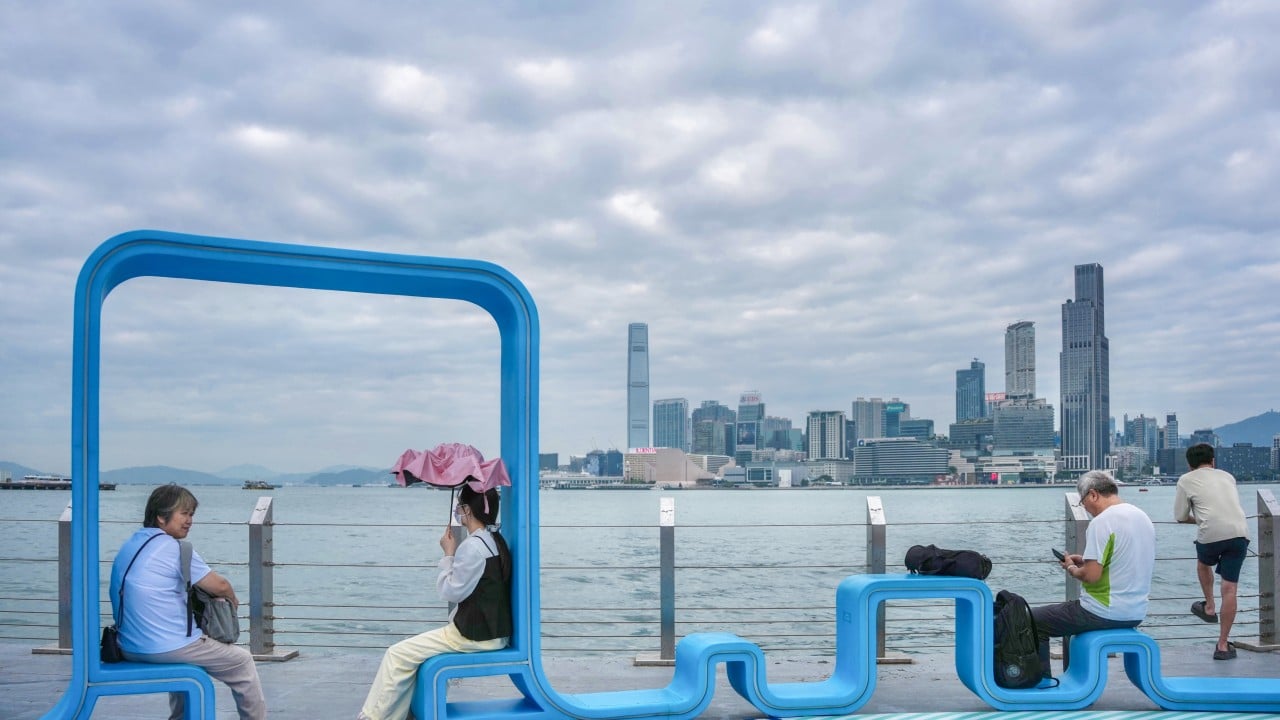
Respect the wind chill on the water. Sixteen degrees in a sheltered alley in Central feels vastly different from sixteen degrees waiting for the Star Ferry in Tsim Sha Tsui or walking along the Tseung Kwan O promenade. Northerly winds funneling down Victoria Harbour routinely strip away body heat at twice the rate of still air. A windproof outer shell matters infinitely more than a thick cotton hoodie; cotton absorbs ambient moisture and turns icy, while a light windbreaker blocks convective heat loss instantly.
Check on the quiet doors. In a city where neighbors often pass each other in narrow hallways without speaking, a sudden cold front is the single most important time to knock. Elderly neighbors living alone frequently ration warmth out of habit or thrift, unaware that their core temperature is drifting downward. A thermos of hot ginger tea and a five-minute check-in does more to flatten the winter hospital admission curve than any public service announcement ever could.
The Sudden Stillness
By Saturday morning, the cold front reaches its peak.
At 6:30 AM, the sky over Victoria Peak is a hard, crystalline blue, scrubbed completely clean of haze by the northern gale. Down in Sham Shui Po, the streets are quieter than usual. The air smells sharp—like cold stone, roasted chestnuts, and eucalyptus balm.
Inside her fourth-floor walk-up, Mrs. Chan finally steps out from beneath her heavy quilted blanket. The standing fan in the corner sits unplugged, wrapped in a plastic dust cover, looking like a relic from another life. She walks carefully across the cold tile floor in thick wool socks, fills an electric kettle with water, and flips the switch.
As the water begins to rumble and steam rises toward the bare concrete ceiling, she presses both palms against the warm stainless steel sides of the kettle, waiting for the heat to reach her wrists.