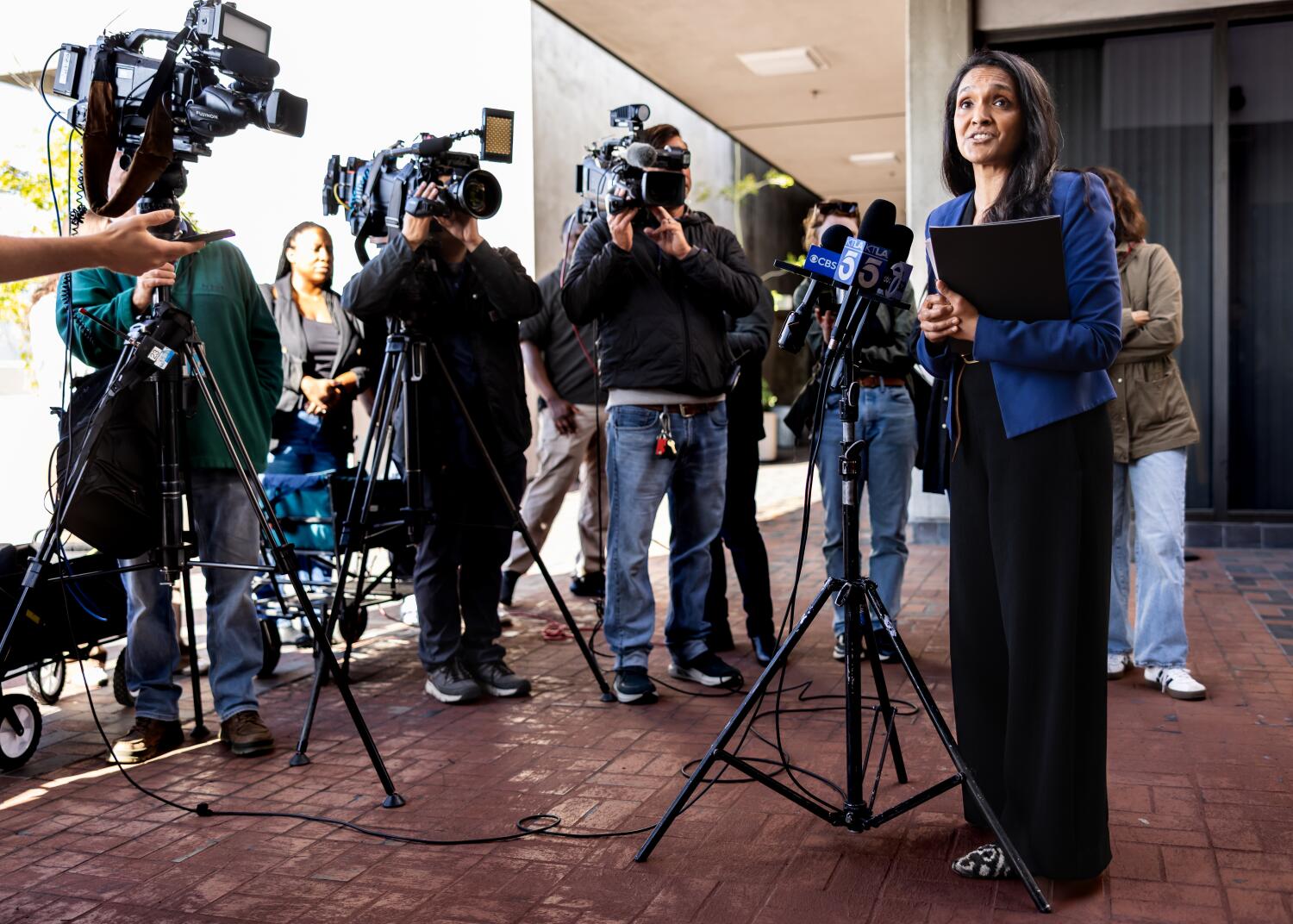
Most political pundits in Los Angeles thought Nithya Raman was committing career suicide when she entered the 2026 race for L.A. mayor. They looked at a two-term City Councilmember from District 4, backed by the Democratic Socialists of America (DSA), challenging a sitting Democratic mayor—or stepping into a fractured, anxious post-2024 political environment—and immediately wrote her off as a protest candidate.
They missed the point entirely. For an alternative view, read: this related article.
If you've spent any time tracking local politics in Southern California over the last six years, you know Raman doesn't enter races just to make a speech and lose gracefully. She's an urban planner with a degree from MIT who spent years working on municipal governance and homelessness policy before ever putting her name on a ballot. Her run for mayor isn't an ideological vanity project. It's a calculated bet that Los Angeles voters are exhausted by incrementalism and ready for someone who treats City Hall like an actual operational system rather than a press-conference backdrop.
Why Nithya Raman's Campaign Caught Everyone Off Guard
To understand why Raman's mayoral bid rattled the L.A. political establishment, you have to look at how she got to City Hall in the first place. Further reporting on this matter has been provided by BBC News.
In 2020, nobody gave her a chance against David Ryu, the incumbent councilmember in District 4—a sprawling, wealthy, and notoriously moderate district stretching from Silver Lake through Hollywood and over the hill into Sherman Oaks and Encino. Ryu had the unions, the developers, and the Democratic Party machine behind him. Raman had an army of grassroots volunteers, a hyper-specific policy platform on homelessness, and a message that resonated with renters who felt completely ignored by City Hall.
She won by nearly five points. It was the first time a challenger had unseated a sitting L.A. City Councilmember since 2003.
Then came 2024. Redistricting had radically altered her district, stripping away progressive strongholds like Silver Lake and Los Feliz and adding more conservative, homeowner-heavy neighborhoods in the San Fernando Valley. Her opponents poured millions of dollars into independent expenditure campaigns, painting her as an out-of-touch radical. Political insiders predicted she wouldn't even make it out of the primary. Instead, she won outright in March with over 50% of the vote, avoiding a November runoff altogether.
That's the context people forget when they call her mayoral run "improbable." You don't survive a targeted redistricting purge and win outright in a reshaped district unless you know how to build a coalition that goes way beyond socialist Twitter.
The Core Argument Behind Her Run for L.A. Mayor
Los Angeles has a structural problem, and everyone living here feels it every time they walk down the sidewalk or look at their rent bill. For years, the city's leadership has operated on a cycle of massive ballot measures—Proposition HHH, Measure ULA—followed by agonizingly slow execution. Voters approve billions of dollars to fix housing and homelessness, and then watch as bureaucratic bottlenecks, neighborhood vetoes, and departmental silos stall the work for years.
Raman's entire pitch for the mayor's office comes down to execution and structural reform.
While traditional L.A. politicians campaign on vague promises of "bringing people together" or throwing more overtime money at the LAPD, Raman talks about municipal mechanics. She points out that the mayor of Los Angeles actually has relatively weak formal powers compared to mayors in New York or Chicago—the real power sits with the 15 City Councilmembers who control land use and local budgets in their districts.
Her argument is blunt. The current system is designed to fail because nobody is truly accountable when housing gets blocked or shelter beds sit empty. By running for mayor, she's trying to force a citywide referendum on whether Angelenos want to keep managing decline or actually overhaul how the city builds, shelters, and budgets.
Homelessness Policy Beyond the Soundbites
Ask ten people in Los Angeles about Nithya Raman, and eight of them will immediately bring up homelessness. It's the issue that made her career, and it's the issue her critics use as a cudgel against her.
Before entering politics, Raman co-founded SELAH Neighborhood Homeless Coalition, a volunteer group in Silver Lake that didn't just hand out supplies—it collected granular data on unhoused residents to figure out why city outreach teams were failing to connect people with services. What she found became the backbone of her policy platform. The city was relying heavily on sweep-and-clear tactics (like enforcing Municipal Code 41.18, which bans sitting, lying, or sleeping near schools, parks, and overpasses) without having actual permanent housing or even functional interim shelter beds ready for the people being displaced.
Critics hammered her for opposing 41.18 enforcement, arguing she was letting encampments take over public spaces. Homeowners in the Valley were furious. Business owners complained that storefronts were suffering.
Raman didn't back down, and honestly, that stubbornness is what kept her credible with her base. She argued that sweeping encampments without housing is just paying city workers to push human beings three blocks down the street, wasting millions of dollars while solving nothing. Instead, she pushed for expanding tenant protections—like L.A.'s historic just-cause eviction ordinance—to stop people from falling into homelessness in the first place. In a city where tens of thousands of families are one unexpected medical bill or rent hike away from living in their cars, prevention isn't a bleeding-heart talking point. It's basic math.
The Housing Crisis and the Myth of the Progressive NIMBY
There's a weird tension inside progressive politics in California. On one hand, progressives demand affordable housing and tenant rights. On the other hand, some progressive groups routinely oppose new apartment buildings because they aren't 100% affordable or because they might alter neighborhood character.
Raman broke with that orthodoxy early on. As a trained urban planner, she understands supply and demand. You cannot solve a housing shortage in a city of nearly four million people without building a massive amount of new housing across every single neighborhood—including wealthy, single-family-zoned enclaves.
She consistently backed dense transit-oriented developments, fought to streamline permitting for affordable projects, and supported Mayor Karen Bass's Executive Directive 1 (ED1), which dramatically sped up approvals for 100% affordable housing developments—until the city started walking back parts of ED1 to protect single-family neighborhoods from multi-story apartment buildings. Raman publicly pushed back against carving out single-family zones from affordable housing mandates. That stance earned her respect from YIMBY ("Yes In My Backyard") housing advocates who normally clash with democratic socialists, even as it made her a target for wealthy homeowner associations.
What Makes Her Campaign So Difficult to Pull Off
Let's be real here. Winning a City Council seat with 100,000 voters is one thing. Winning a citywide race in Los Angeles—a sprawling metropolis of 500 square miles where turnout skews older, wealthier, and vastly more conservative than the city's overall demographics—is an entirely different beast.
Raman faces three massive structural hurdles that could easily sink her candidacy before a single ballot is counted.
1. The Public Safety and Police Budget Minefield
In 2020, following the murder of George Floyd, Raman campaigned on reimagining public safety, shifting funds away from the Los Angeles Police Department (LAPD) toward unarmed crisis response teams, and scrutinizing the massive share of the city's general fund eaten up by policing.
That message worked in 2020. By 2026, the political mood in Los Angeles has shifted sharply. High-profile smash-and-grab robberies, property crime anxieties, and aggressive media coverage of retail theft have put public safety back at the top of voters' minds—especially in working-class Latino and Black neighborhoods in South L.A. and the East Valley, not just wealthy enclaves like Brentwood or Hancock Park.
Opponents will relentlessly play clips of her past statements on policing. To survive citywide, she can't just dodge the question or rely on academic jargon about root causes. She has to convince everyday voters who take the Metro or lock up their small businesses at night that her vision of public safety actually keeps them safe right now, not ten years from now.
2. The Independent Expenditure Juggernaut
Los Angeles municipal elections are awash in dark money and independent expenditure (IE) committees. When you challenge the status quo on land use, policing, and corporate taxation, the checks start flying fast.
Real estate developers, police unions (specifically the Los Angeles Police Protective League), and business coalitions have poured tens of millions of dollars into recent L.A. elections to defeat progressive candidates. In a citywide mayoral race, those groups won't just spend $2 million like they did in District 4—they'll spend $15 million or $20 million blanketing local television, YouTube ads, and mailboxes with attack ads framing Raman as soft on crime and hostile to small businesses.
Grassroots fundraising and small-dollar donations can keep a campaign alive, especially with L.A.'s public matching funds program, which multiplies small contributions from city residents. Still, matching funds hit a cap. Outspending an unlimited corporate IE machine requires an extraordinary ground game and earned media strategy that few local candidates have ever pulled off.
3. Geography and the Turnout Gap
Los Angeles isn't really one city; it's a federation of distinct regions with wildly different priorities. A voter in Venice cares deeply about coastal access and local encampment policies. A voter in Sylmar or Watts cares about freeway congestion, industrial pollution, and basic municipal services like street lighting and pothole repair.
Historically, progressive candidates in L.A. run up huge margins in the central corridor—Silver Lake, Echo Park, Koreatown, Hollywood, and parts of the Westside—only to get crushed in the San Fernando Valley, where voter turnout is consistently among the highest in the city. Raman proved she could win over parts of the Valley in her 2024 council race, particularly around Sherman Oaks and Studio City. Translating that appeal to the deeper, more working-class stretches of the North and West Valley, while simultaneously building trust in South L.A., is the puzzle every progressive mayoral candidate since Antonio Villaraigosa has struggled to solve.
How Raman's Strategy Differs From Traditional L.A. Campaigns
If you look closely at how Raman operates on the campaign trail, you'll notice she avoids the standard playbook used by career politicians in California.
Most candidates spend their time chasing endorsements from every major labor union, trade association, and elected official in town, trading quiet promises of future appointments or policy vetoes in exchange for institutional backing. Raman takes the opposite route. She leans heavily into hyper-local organizing and policy transparency.
During her council races, her team built one of the most sophisticated field operations in California politics. Rather than relying on paid canvassers reading off generic scripts, they trained thousands of volunteers to have long, substantive conversations at doors—actually listening to why a homeowner was frustrated about an encampment down the street before explaining how permanent supportive housing works.
She also treats voters like adults who can handle complex policy details. Watch one of her town halls or read her campaign memos. She doesn't speak in focus-grouped platitudes. She talks about zoning codes, federal housing vouchers, municipal bond structures, and the exact bureaucratic reasons why a shelter project gets delayed by eighteen months. For voters tired of slick politicians who never answer a direct question, that candor is magnetic—even when they disagree with her conclusions.
What Her Candidacy Means for the Future of L.A. Politics
Whether Nithya Raman wins the mayor's office or falls short, her campaign exposes a deep fault line inside the Democratic Party in America's second-largest city.
For decades, L.A. politics was governed by a comfortable consensus between moderate Democrats, business leaders, and traditional labor unions. That coalition promised steady growth and incremental progress. Yet under their watch, Los Angeles became the epicenter of the nation's housing affordability crisis, saw tens of thousands of residents die on the streets over a decade, and struggled to build basic public transit ahead of major global events like the 2026 World Cup and the 2028 Olympics.
Raman represents a younger, urbanist wing of the party that believes the old consensus has completely failed. Her supporters don't want minor tweaks to a broken machine; they want to rewrite the city charter, strip away exclusionary zoning, overhaul how the city budgets for emergency response, and treat housing as a basic public utility.
If you live in Los Angeles—or if you're watching how major American cities navigate the collision between progressive urbanism and moderate backlash—don't make the mistake of writing off Nithya Raman based on conventional political wisdom. Watch how she campaigns in the San Fernando Valley, pay attention to whether housing advocates and tenant unions unite behind her, and look closely at the city's primary turnout numbers. Those three indicators will tell you immediately whether L.A. is sticking with the establishment or preparing for another political earthquake.