Everyone wants a simple headline. You see a report claiming Saudi Arabia just offered billions of dollars to the Houthis while Pakistan's army chief, General Asim Munir, steps into the negotiation room, and your first instinct is to think Riyadh is buying off an enemy. That's only half the story. Honestly, if you look at the geopolitical chessboard in the Middle East right now, this isn't just a payoff—it's a high-stakes survival maneuver involving three distinct power centers trying to keep a regional fire from burning down their own houses.
Reports circulating about Saudi financial incentives to Yemen's Houthi movement, alongside the reported involvement of Pakistan's Chief of Army Staff General Asim Munir, have sparked intense debate across diplomatic circles. To understand why this matters, you have to look past the shock value of the dollar figures. Riyadh has spent years trying to extract itself from the Yemen quagmire without handing Iran a permanent, uncontested launchpad on its southern border. Bringing a heavyweight military interlocutor like Asim Munir into the equation changes the math completely.
Why Riyadh Is Putting Billions on the Table
Let's be blunt about the money. Saudi Arabia has been negotiating a permanent ceasefire and political settlement with the Houthis for years, with Oman acting as the primary backchannel. The core sticking point has always been financial: paying public sector salaries in Houthi-controlled territories, rebuilding destroyed infrastructure, and lifting economic blockades on ports like Hodeidah and Sanaa Airport.
When headlines talk about "billions of dollars" offered to the Houthis, they're usually referring to a mix of reconstruction funds, central bank liquidity injections, and salary disbursements for Yemeni civil servants. Riyadh isn't handing blank checks to Houthi commanders for weapons. They're trying to create an economic dependency that makes peace more profitable than war.
Think about the alternative. Continued conflict means persistent threats to Saudi oil facilities, stalled Vision 2030 megaprojects, and billions spent on air defense interceptors. Investing a few billion dollars into stabilizing Yemen is actually the cheaper option for Crown Prince Mohammed bin Salman. If the Houthis have to govern and pay millions of hungry citizens, they become accountable to local economic realities rather than just ideological warfare.
The Trap of Reconstruction Funds
Money doesn't automatically buy loyalty in Sanaa. The Houthis have spent a decade building a war economy funded by taxes, customs duties, and external backing from Tehran. If Saudi cash flows into Yemen without strict oversight, critics argue it simply frees up Houthi domestic revenue to fund more drones and ballistic missiles.
Riyadh knows this risk well. That's why every round of Saudi-Houthi talks has bogged down over verification mechanisms, revenue-sharing formulas between Sanaa and the internationally recognized government in Aden, and guarantees against cross-border attacks. Offering the money is the easy part; controlling where it goes is the real headache.
What General Asim Munir Brings to the Negotiation Room
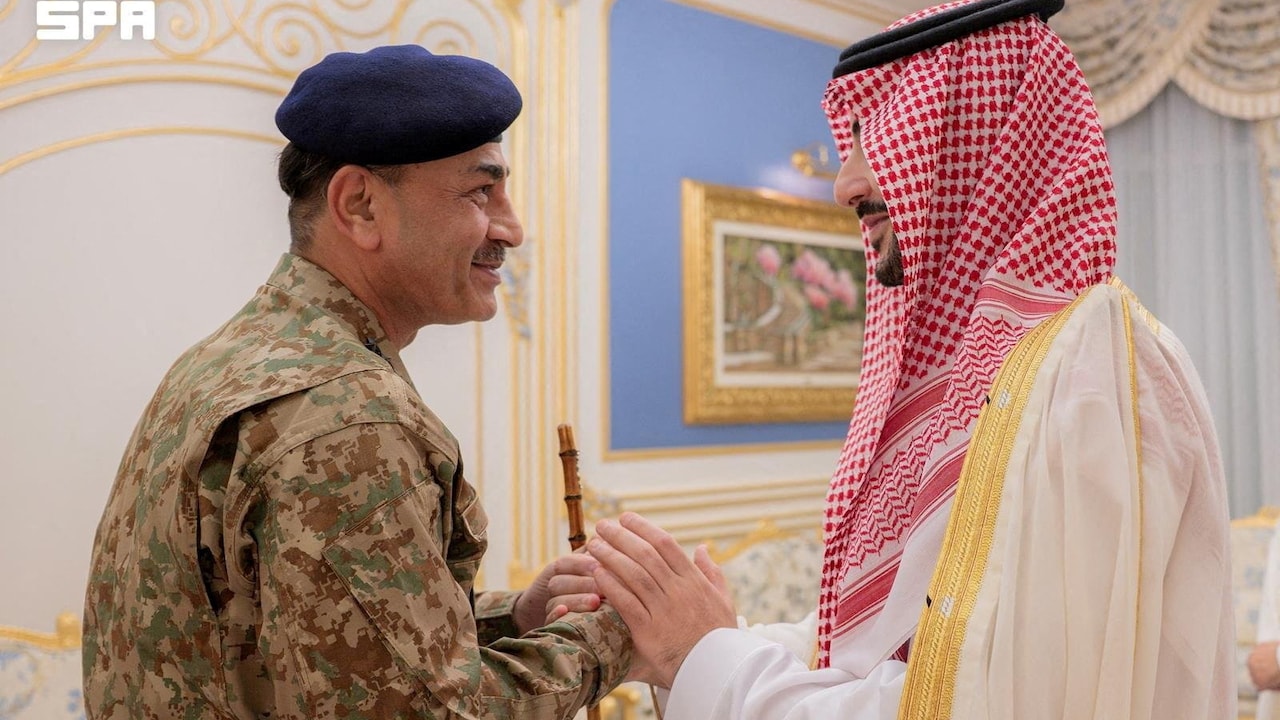
Now let's talk about the wild card in these reports: Pakistan's Army Chief, General Asim Munir. Why would the head of Pakistan's military be involved in talks involving Saudi Arabia and the Houthis? Because Islamabad sits at a unique intersection of Middle Eastern security alliances.
Pakistan and Saudi Arabia share a decades-old defense relationship that goes far deeper than standard diplomatic treaties. Pakistani troops have trained Saudi forces for generations, and Riyadh has repeatedly bailed out Pakistan's economy with multi-billion-dollar deposits and deferred oil payments. When Saudi security is on the line, Rawalpindi listens.
At the same time, Pakistan maintains a delicate balancing act with Iran. Sharing a volatile 900-kilometer border with Tehran means Islamabad cannot afford to be seen as a purely anti-Iranian proxy. Remember back in 2015 when Saudi Arabia asked Pakistan to join the military coalition in Yemen? Pakistan's parliament famously voted to stay neutral, a move that strained ties with Riyadh for years.
Why Asim Munir Is Different Now
Under Asim Munir, Pakistan's military establishment has worked aggressively to repair and deepen strategic trust with Gulf capitals, particularly Riyadh and Abu Dhabi. Munir isn't just a military commander; he's effectively Pakistan's top geopolitical envoy when it comes to Gulf security and investment.
Having Munir involved in or adjacent to these discussions serves two clear purposes:
- Security Guarantees for Riyadh: If a deal is struck with the Houthis, Saudi Arabia needs credible military backing and intelligence coordination to ensure the border stays quiet. Pakistan's military muscle provides a silent deterrent.
- A Bridge to Tehran: Because Pakistan maintains direct security channels with Iran—the Houthis' primary patron—Munir can deliver messages that Saudi officials can't easily send directly. When Islamabad talks to Tehran about regional de-escalation, Iran pays attention because both countries share immediate border security interests.
The Red Sea Factor Nobody Can Ignore
You can't separate any Saudi-Houthi deal from what's happening in the Red Sea. Since late 2023, Houthi attacks on commercial shipping have upended global trade routes, forcing major shipping lines to reroute around the Cape of Good Hope and costing billions in delayed cargo and higher insurance premiums.
Saudi Arabia has walked a tightrope through all of this. Notice how Riyadh deliberately stayed out of the US-led naval coalitions striking Houthi targets in Yemen? That wasn't an accident. Mohammed bin Salman refused to let Houthi missiles start flying back toward Riyadh and Jeddah just to bail out Western shipping lanes.
By keeping its own bilateral peace track alive—and dangling massive financial reconstruction packages—Saudi Arabia is trying to insulate itself from the broader regional fallout. The message to Sanaa is straightforward: you can keep fighting your ideological battles in the Red Sea if you want, or you can take Saudi money, rebuild Yemen, and leave our border alone.
Does Washington Approve of This?
Publicly, US officials have consistently voiced support for a Yemeni-led peace process under UN auspices. Privately, Washington has been deeply frustrated at times by Riyadh's willingness to cut a separate peace with a group that the US re-designated as a Specially Designated Global Terrorist entity.
If Saudi billions flow into Houthi-controlled Yemen while Houthi drones are still targeting international vessels, expect major friction between Washington and Riyadh. Sanctions compliance alone becomes a nightmare. How do Saudi banks transfer reconstruction funds or salary support into Sanaa without running afoul of US Treasury restrictions? That technical hurdle is one of the biggest reasons talks frequently stall behind closed doors.
Three Misconceptions Driving the Media Frenzy
Whenever reports about secret deals, billions of dollars, and intelligence chiefs hit the news cycle, bad takes multiply fast. Here's what most commentators get completely wrong:
- Myth 1: Saudi Arabia is surrendering. Calling a negotiated settlement a surrender ignores military reality. Nearly a decade of airstrikes failed to dislodge the Houthis from Sanaa. Pivoting from an unwinnable war of attrition to economic containment isn't surrender; it's basic realism.
- Myth 2: The Houthis will abandon Iran for Saudi cash. Never going to happen. The Houthi ideological identity and military survival are tied directly to Tehran's "Axis of Resistance." They will take Saudi reconstruction money with one hand while keeping Iranian missile engineers on speed dial with the other.
- Myth 3: Pakistan is sending combat troops to Yemen. Asim Munir's involvement in talks does not mean Pakistani infantry divisions are deploying to the Saudi-Yemeni border. Pakistan's domestic economy and internal security challenges on its western border with Afghanistan make a foreign ground deployment virtually impossible. Munir's role is strategic diplomacy, intelligence sharing, and deterrence—not boots on the ground.
What Happens If the Deal Falls Apart?
Diplomatic leaks like the ones surrounding Saudi offers and Asim Munir's participation often surface at the exact moment negotiations hit a wall. Sometimes one side leaks the terms to pressure the other; sometimes regional rivals leak details to sabotage a deal they don't like.
If the Houthis reject the financial terms—or demand conditions that humiliate Riyadh, such as full control over oil-rich provinces like Marib—the ceasefire holds by a thread. A return to full-scale cross-border warfare would devastate Saudi Arabia's economic transformation plans and trigger an even worse humanitarian catastrophe inside Yemen, where millions already rely on international aid just to eat.
On the flip side, if Riyadh, Sanaa, and their regional interlocutors like Munir manage to lock in a phased economic agreement, it reshapes the entire Arabian Peninsula. Yemen stays divided in practice, the Houthis cement their rule in the north, and Saudi Arabia finally gets to turn its attention back to domestic economic survival.
If you're tracking this story for geopolitical or market impact, stop watching the sensational headlines about dollar amounts and focus on three concrete indicators over the coming weeks:
- Watch commercial flight schedules and port traffic: A real breakthrough will immediately show up in expanded commercial flights out of Sanaa Airport and lifted customs restrictions at Hodeidah port.
- Track Saudi-Pakistani military and economic summits: Any joint statements mentioning "regional maritime security" or new Saudi financial deposits in Islamabad will confirm how deeply Asim Munir's mediation is tied to bilateral incentives.
- Monitor Red Sea shipping insurance rates: Underwriters in London and New York react faster to real intelligence than cable news does; if war-risk premiums in the southern Red Sea start dropping, a backchannel truce is actually holding.