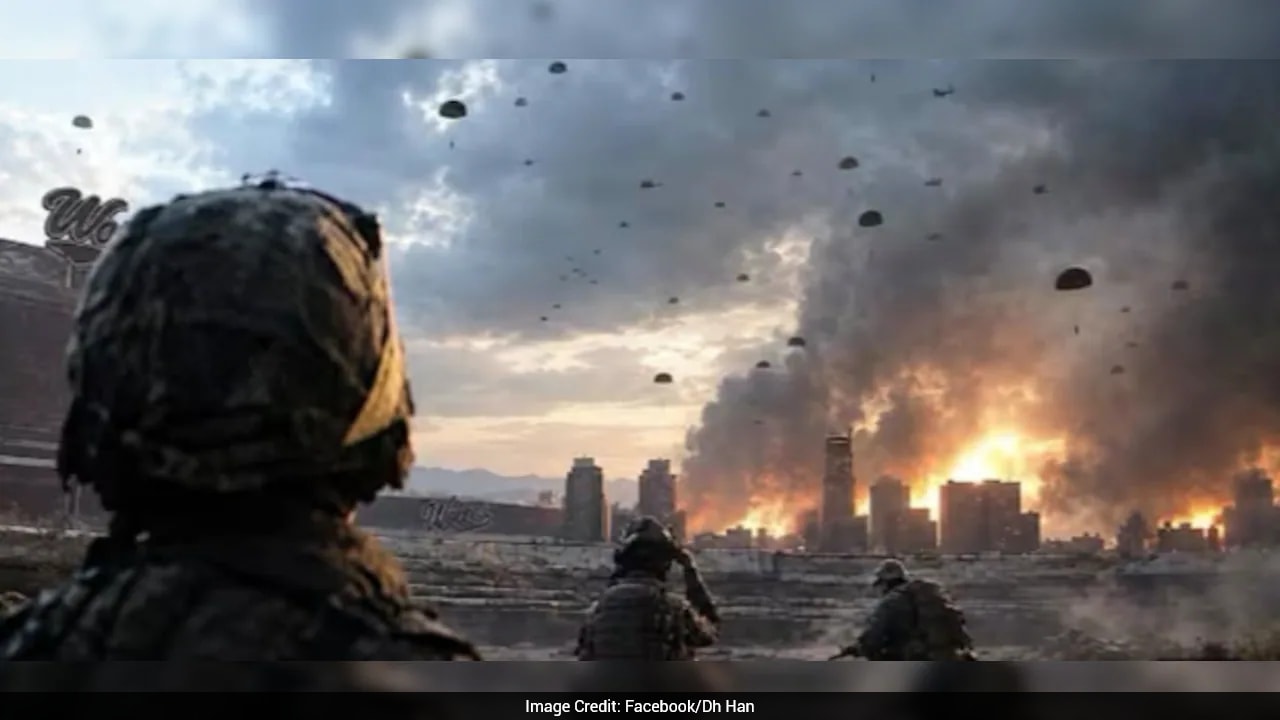
When South Korean National Assembly member Yoo Yong-won urged President Yoon Suk Yeol to play Call of Duty during a parliamentary defense audit, the international press treated it like a punchline. Headlines framed the moment as an eccentric politician telling a head of state to pick up a controller to prepare for war with North Korea. That framing misses the point entirely. Yoo, a longtime defense correspondent turned lawmaker, was not suggesting that a commercial first-person shooter is a substitute for military readiness. He was using a globally recognized cultural touchstone to expose a dangerous blind spot in Seoul's national security apparatus—the widening gap between traditional hardware-focused military doctrine and the realities of modern asymmetric warfare, drone swarms, and cognitive combat.
To understand why a seasoned defense analyst would invoke a video game in the middle of a high-stakes National Defense Committee session, you have to look at the mechanics of political theater in Seoul and the specific vulnerabilities currently facing the Republic of Korea Armed Forces.
The Anatomy of a Viral Parliamentary Stunt
In South Korean politics, the annual National Assembly audit—known as the Gukjeong Gamsa—is a gladiatorial arena where lawmakers have minutes to capture media attention and force ministerial accountability. Subtle policy briefs rarely make the evening news. Visual props, sharp soundbites, and pop-culture references do.
Yoo Yong-won spent decades covering the South Korean military for the Chosun Ilbo before entering politics as a proportional representative for the ruling People Power Party. He knows the Pentagon-style bureaucracy of Seoul's Ministry of National Defense inside and out. When he brought up Call of Duty—specifically pointing to the franchise's depictions of small-unit tactics, drone warfare, and urban combat—he was attempting to shock senior officials out of a Cold War mindset that still prioritizes artillery counts, tank divisions, and conventional deterrence along the Demilitarized Zone.
His question, "Are we prepared?" was aimed squarely at how South Korea's leadership conceptualizes future conflict. In recent installments of Call of Duty, players routinely navigate scenarios involving commercial-grade first-person-view (FPV) suicide drones, electronic jamming, subterranean tunnel networks, and hybrid warfare where civilian infrastructure is compromised before a single shot is fired. These are not sci-fi fantasies. They are the exact tactics currently dominating battlefields in Ukraine and the Middle East, and they represent the precise asymmetric toolkit Pyongyang has been aggressively developing to offset its conventional inferiority.
What Video Games Get Right About Modern Asymmetric Warfare
Military planners have relied on wargaming for centuries, from 19th-century Prussian Kriegsspiel tabletop exercises to modern classified Pentagon simulations. Commercial video games have increasingly blurred the line between entertainment and genuine tactical visualization.
Consider how Call of Duty portrays drone integration. A soldier on the ground deploys a compact, low-cost quadcopter, identifies a target behind cover, and strikes within seconds. Compare that to the reality of December 2022, when five North Korean drones crossed the Military Demarcation Line and breached South Korean airspace. One flew directly over northern Seoul, entering the no-fly zone around the presidential office in Yongsan. South Korea's multi-billion-dollar air defense network, built to intercept supersonic fighter jets and ballistic missiles, failed to shoot down a single one of the slow-moving, low-altitude craft. Attack helicopters fired roughly 100 rounds without scoring a hit, and a KA-1 light attack aircraft crashed during the scramble.
That incident was a wake-up call, yet institutional inertia remains a massive hurdle. Military procurement favors massive, visible, expensive platforms—stealth fighters, Aegis destroyers, and heavy armor. Those systems sustain defense contractors and look impressive at Armed Forces Day parades. Low-cost drones, counter-drone electronic warfare gear, and decentralized infantry training are harder to turn into political trophies.
By referencing Call of Duty, Yoo was highlighting a specific cognitive shift. Younger generations—including the conscripts who make up the bulk of South Korea's standing army—understand intuitively how networked sensors, autonomous munitions, and rapid information loops dictate survival on a modern battlefield. Senior policymakers, many of whom formed their strategic worldview decades ago, often struggle to grasp the speed and chaos of decentralized warfare until a crisis forces their hand.
The Real Crisis Behind the Headline
The deeper issue in South Korea is not whether the president plays video games, nor is it a lack of spending. South Korea maintains one of the world's largest defense budgets and boasts a booming defense export industry, selling K2 tanks, K9 self-propelled howitzers, and FA-50 light combat aircraft to countries like Poland and Australia. On paper, Seoul's conventional military is a juggernaut.
The vulnerability lies in demographic collapse and doctrinal rigidity.
South Korea has the lowest fertility rate in the world, hovering around 0.72 births per woman. For a military built on universal male conscription, the math is brutal. Within the next fifteen years, the pool of eligible 20-year-old men will shrink by nearly half. The military cannot maintain its current troop levels of roughly 500,000 active-duty personnel. It must transition toward a smaller, technology-intensive force where individual soldiers operate alongside unmanned systems.
Yet training regimens for conscripts have been slow to adapt. For decades, basic training emphasized rigid hierarchy, repetitive drill, and basic marksmanship designed for mass-infantry clashes. When lawmakers push for "gamified" training or point to commercial tactical shooters, they are pointing toward simulation-based readiness.
How Militaries Actually Use Gaming Tech
The bridge between commercial gaming and military training is already well-established globally, even if public officials rarely discuss it candidly:
- Virtual Battlespace Systems: Militaries across NATO and East Asia use modified versions of commercial game engines—such as Bohemia Interactive's ARMA series—to train squad leaders in terrain navigation, convoy ambushes, and close-air support coordination without spending millions on live ammunition.
- Controller Familiarity: The U.S. Navy famously replaced complex, proprietary periscope joysticks on Virginia-class submarines with off-the-shelf Xbox 360 controllers. Sailors already knew how to use them, cutting training time from hours to minutes and saving tens of thousands of dollars per unit.
- Cognitive Conditioning: Fast-paced tactical games train players in situational awareness and split-second threat prioritization under sensory overload. While a game cannot replicate the visceral terror of live fire or the physical exhaustion of carrying an 80-pound ruck, it does build mental models for how urban environments break down into overlapping fields of fire.
South Korea's military has begun investing in virtual reality shooting ranges and synthetic training environments, yet bureaucratic friction often stalls deployment at the unit level. Equipment sits unused because commanders fear safety incidents or lack technicians to maintain the software.
The Limits of the Gaming Analogy
Taking Yoo's comment seriously requires acknowledging where the comparison breaks down. Commercial shooters, even those marketed on gritty realism, are designed to be fun, balanced, and navigable by a single hero. Real warfare is none of those things.
In Call of Duty, communications never fail unless scripted to do so. Logistics do not exist; ammunition is scavenged off the floor, and wounded soldiers regenerate health behind a chest-high wall after five seconds. In a real conflict on the Korean Peninsula, the opening hours would be defined by blinding electronic warfare, severed fiber-optic cables, jammed GPS signals, and catastrophic artillery barrages hitting civilian population centers within minutes.
Furthermore, North Korea's primary threat is not a tactical firefight that a president needs to understand at the squad level. Pyongyang's asymmetric strategy relies on nuclear coercion, cyber warfare, and gray-zone provocations. North Korean state-sponsored hacking groups like Lazarus have stolen billions in cryptocurrency to fund missile programs while probing South Korean power grids, defense contractors, and hospital networks. A head of state does not need to understand how to clear a room in a video game; they need to understand escalation management when a cyberattack cripples Seoul's subway system during a missile test.
There is also a distinct cultural irony in a South Korean politician praising a Western military shooter. South Korea is a global gaming powerhouse, home to esports legends and massive publishers like Krafton, Nexon, and NCSoft. Yet for years, conservative and progressive lawmakers alike treated gaming primarily as a social pathology—passing restrictive laws like the "Cinderella Law" (which banned minors from playing online games after midnight until its repeal in 2021) and lobbying the World Health Organization to classify gaming disorder as a clinical addiction.
Seeing a lawmaker suddenly hold up a video game as a benchmark for presidential strategic awareness highlights a persistent contradiction in Seoul: politicians love the economic output of the tech sector and the viral punch of gaming metaphors, while remaining deeply ambivalent about gaming culture itself.
North Korea's Parallel Obsession With Asymmetric Tools
While South Korean lawmakers debate simulation training, Pyongyang has been quietly studying the exact same modern conflicts—and translating those lessons into hardware at alarming speed.
Kim Jong Un's regime has deepened its military alliance with Moscow, supplying Russia with millions of artillery shells and ballistic missiles for use in Ukraine. In return, North Korea is gaining something far more valuable than cash or fuel: real-world battlefield data and technical assistance. North Korean engineers and observers are learning firsthand how Western air defenses operate, how electronic warfare disrupts precision munitions, and how cheap FPV drones can neutralize multi-million-dollar armored vehicles.
In August 2024, North Korean state media released images of Kim Jong Un overseeing tests of new "suicide drones" capable of striking targets on land and at sea. Visually, the aircraft bore a striking resemblance to Russia's Lancet loitering munitions and Israeli Harop drones. Pyongyang is no longer just building massive, parade-ready ICBMs to deter Washington; it is mass-producing cheap, expendable tactical weapons designed to overwhelm South Korean defenses at the border.
This is the backdrop against which Yoo Yong-won made his remark. When an adversary is rapidly fielding low-cost, high-volume autonomous weapons, a defense establishment fixated solely on legacy platforms risks fighting the last war.
Beyond the Soundbite
Political communication in an era of fragmented media rewards provocation. If Yoo had stood before the committee and delivered a dry critique of South Korea's Defense Reform 4.0 initiative—specifically its slow integration of manned-unmanned teaming (MUM-T) at the battalion level—nobody outside a handful of defense journalists would have noticed. By telling the president to play Call of Duty, he forced an uncomfortable conversation into the mainstream news cycle.
The danger is that the conversation stops at the joke. Dismissing the remark as an out-of-touch stunt lets defense officials off the hook for the genuine doctrinal gaps the lawmaker was trying to expose. South Korea's security depends on whether its leadership can adapt faster than its adversaries—not by picking up a console controller, but by dismantling the bureaucratic walls that keep its military tethered to 20th-century assumptions while 21st-century threats gather just miles north of the Han River.